Why does my cat bite me? Fear or play, and what to do
Why does my cat bite me? Cats Protection, the UK cat charity, says a cat usually has a good reason, and that even a bite that seems to come out of nowhere often follows signs that were missed. The two main reasons are fear or stress, and overexcitement, when a cat aims its hunting play at you. This guide covers the signs to watch for, what to do the moment you are bitten, and how to make it less likely to happen again.
Everything here comes from Cats Protection's guide "Why does my cat bite me?", opened for this article.
Why does my cat bite me? The two main reasons
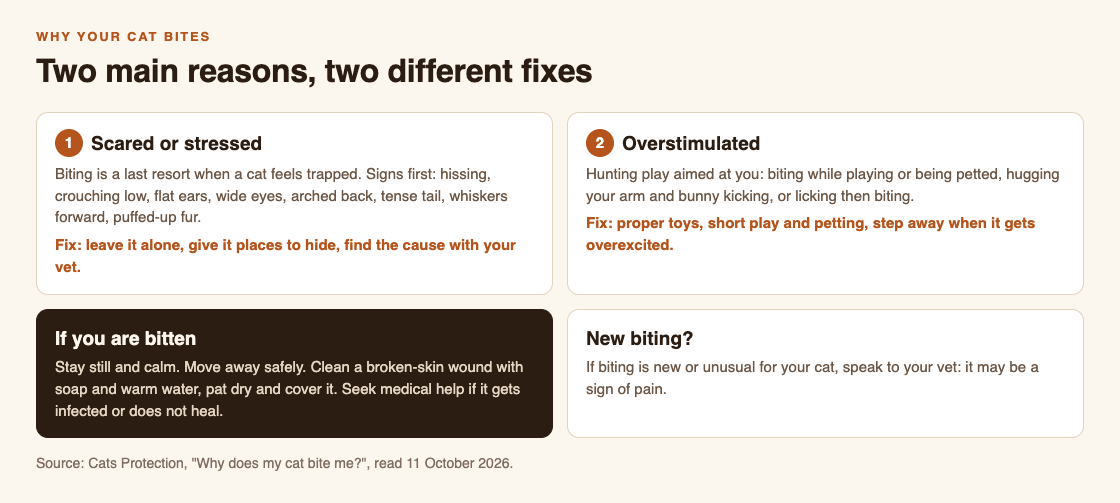
Two reasons a cat bites, and the fix for each, from Cats Protection's guide.
1. Scared or stressed
A scared or stressed cat usually prefers to run away and hide. Biting or scratching is a last resort, when it feels trapped and cannot escape. Before that point, the charity says, there are usually several clues:
- hissing
- crouching low to the ground
- flat ears and wide eyes
- an arched back and a tense tail
- whiskers pointing forwards and puffed-up fur
If you see these signs, leave the cat alone and let it run off and hide somewhere it feels safe. The stress may not even be about you: another cat in the home it does not get on with, or a neighbourhood cat coming into its territory, can make a cat redirect its aggression onto you. If aggressive biting is new for your cat, speak to your vet, as it may be a sign of pain.
2. Overstimulated
If your cat bites while playing or while you stroke it, it may be overexcited and aiming some of its hunting behaviour at you. Cats are natural hunters, and if they have nothing suitable to hunt, such as cat toys, they may pounce on you instead.
The charity says this can start in kittenhood. Kittens encouraged to play with fingers and toes during their socialisation period, from two to seven weeks old, can learn to see hands and feet as toys and keep attacking them when they are older, with much sharper teeth and claws. This kind of biting is usually fairly gentle, but it can still hurt and leave a wound.
The arm hug, and the lick then bite
Two patterns puzzle a lot of owners. Cats Protection explains both.
- Hugging your arm and biting. This is a classic hunting move. With large prey, cats grasp it with their front legs and bite while bunny kicking with their back legs. If your cat does it to your arm or leg, it is aiming hunting behaviour at you. A kicker toy gives the bunny kicks somewhere better to go.
- Licking, then biting. Licking people or other cats is usually a bonding act that shares scent and feels good. Paired with biting, the cat is probably overexcited or feeling playful. Redirect it to a toy, or if the biting goes on, leave it alone for a while to calm down. Our guide on why your cat licks you covers the licking side.
Why it bites you and not your partner
It depends on the reason. If the biting comes from fear, the cat may be afraid of that one person, perhaps because they are new in the home or did something that frightened it. It will usually show body language clues first that it wants to be left alone.
If the biting comes from overexcitement, Cats Protection lists four possible reasons that person gets bitten more:
- they are around more and interact with the cat more often
- they have encouraged the cat to play with their fingers and toes before
- they react more when bitten, and moving around can excite the cat further
- they are fidgety, moving fingers and toes a lot, where someone sitting still and calm is less of a target
What to do the moment you are bitten: a worked example
Say you are stroking your cat on the sofa, it grabs your hand and bites hard enough to break the skin. Here is Cats Protection's advice, in order.
- Stay as still and calm as you can. Sudden movements and loud noises make a cat more scared, stressed or excited, and more likely to bite again.
- Safely move away. Give your cat the space and time to calm down, and let it run off and hide if it wants to.
- Clean the wound. If its teeth punctured your skin, wash the wound with soap and warm water, gently pat it dry and cover it with a clean dressing. If it becomes infected or does not heal, seek medical help.
- Work out why. Was the cat showing signs of fear or stress first? Was it overexcited by play or stroking? Knowing the cause helps you avoid the next bite.
- Get advice if it is unusual. If biting is out of character, your vet can check whether pain is behind it. If your cat is healthy, a qualified cat behaviourist from the Animal Behaviour and Training Council can give advice for your cat.
In this example, the bite came during stroking, so the likely cause is overstimulation. Next time, keep the stroking short and stop as soon as your cat starts to get excited.
How to stop your cat biting you
If your cat is scared or stressed
- Give it places to hide, including high spots with a view: cardboard boxes, empty drawers, the top of a wardrobe, under the bed.
- Leave it alone. Most cats prefer to be left alone when scared; give it space and it will come to you when it wants attention.
- Keep home calm. Make sure it can easily reach food, water, a litter tray, a scratching post and hiding places, without sharing them with other cats, and avoid loud noise and disruption.
If your cat is overstimulated
- Give it proper toys: fishing rod toys, kicker toys, catnip toys, ping pong balls and puzzle feeders.
- Keep play and stroking short, a couple of minutes at a time through the day, and step away when it starts to get overexcited.
- Stroke it the way it likes. Most cats do not like belly rubs, even when they roll over and show the belly. Start with gentle strokes, head scratches and chin rubs, and some cats prefer you at their level rather than leaning over them.
Cats on a walk, and Cat Go
The fear signs above are worth knowing outdoors too. A cat that hisses, crouches low or puffs up its fur wants to be left alone, so give it that. Cat Go is a game that plays in your web browser, made for walks where you meet cats: "Walk anywhere, photograph a real cat, lure it with food and catch it." A catch starts with a photo. The kibble and tuna are food inside the game, never real food, and one of the game's own tips is "Cats you've startled leave quickly. Stay calm with your tosses, and bring tuna for wary ones."
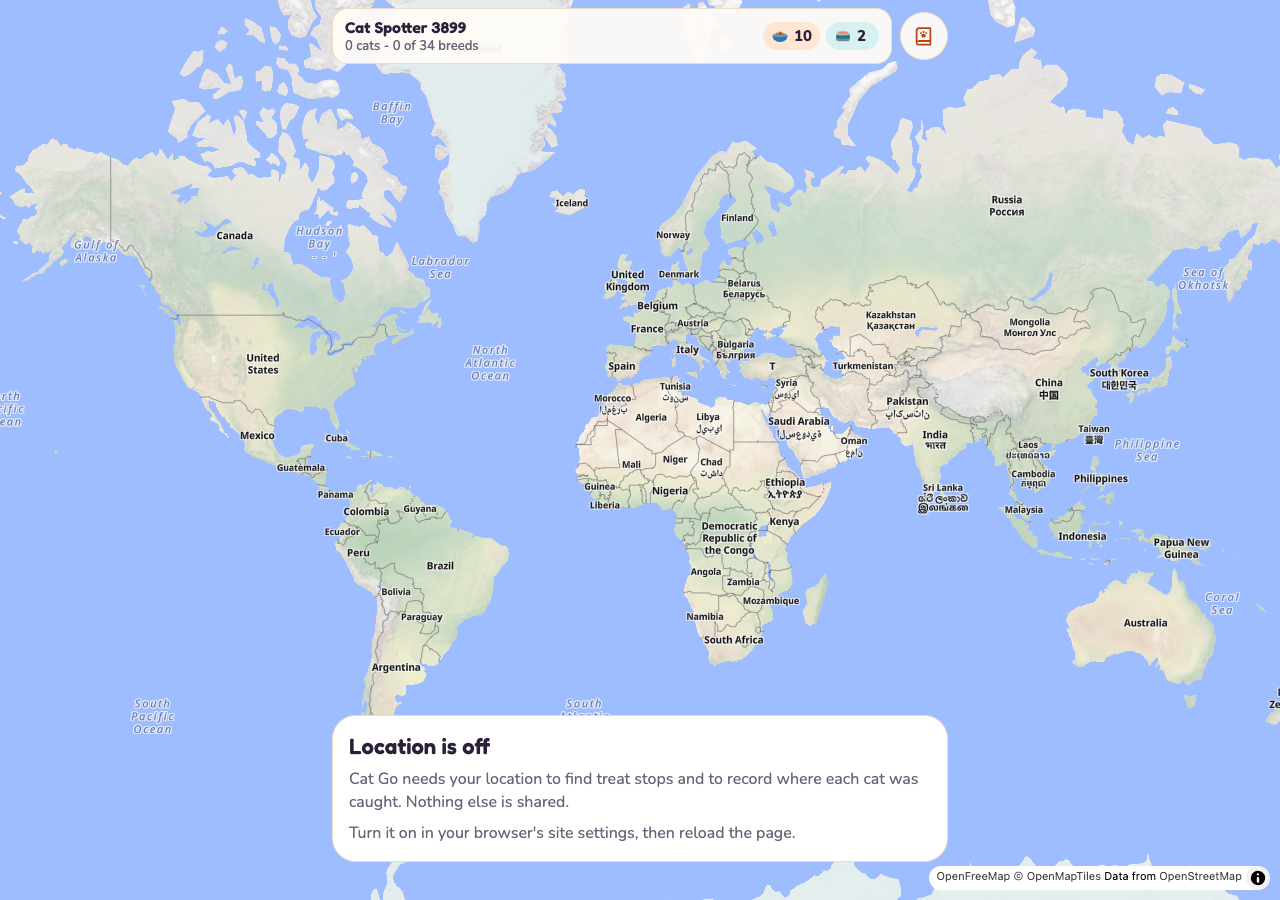
Cat Go's map, where each catch is recorded with the place you found the cat.
Frequently asked questions
Why does my cat bite me gently?
A gentle bite during play or stroking is usually overexcitement, with hunting behaviour aimed at you. Cats Protection says it can still hurt and leave a wound.
Why does my cat bite me out of nowhere?
The charity says there are often signs you may have missed, such as flat ears, a tense tail or whiskers pointing forwards.
Should I see a doctor after a cat bite?
Clean a bite that broke the skin with soap and warm water and cover it. Cats Protection says to seek medical help if the wound becomes infected or does not heal.
Can a cat bite because it is in pain?
Yes. If biting is new or unusual for your cat, the charity says to speak to your vet, as it may be a sign of pain.
Get started
Next time you meet a cat on a walk, read its signs first, then take a calm photo. Open Cat Go in your browser, allow location and the camera, and start your Catdex with the cats you meet.
Comments
No comments yet.
Sign in or make an account to comment.