Why does my cat lick me? Bonding, scent and when to step back
Why does my cat lick me? According to the UK charity Cats Protection, probably not because you taste good or look like you need a wash. Its guide to why cats lick their owners says the most likely reason is that your cat wants to form a close bond, and that most of the possible reasons are signs of affection.
This guide sets out the three reasons the charity gives, the two times a lick means something else, and how to redirect it kindly if that rough tongue is too much.
Why does my cat lick me? Three likely reasons
Cats Protection gives three. None needs a verdict; they can all be true at once.
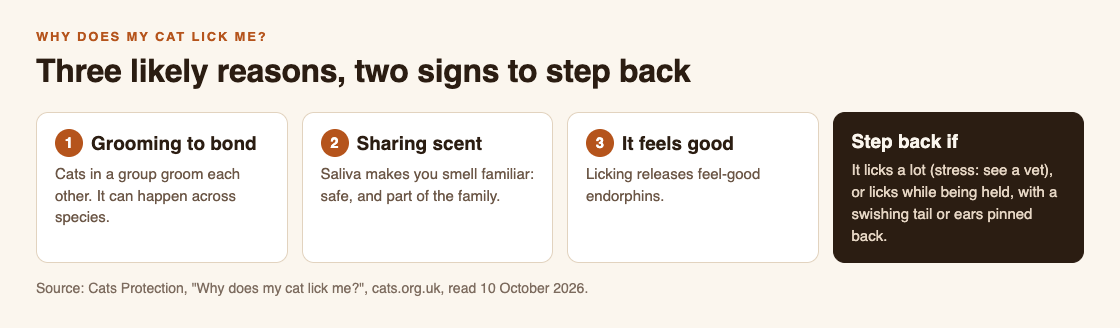
Three likely reasons, and two signs to step back. Source: Cats Protection.
1. Grooming you, to bond
Cats usually groom themselves, using their rough tongue to clear dirt and loose fur. But cats in the same social group may groom each other, which is known as allogrooming, and it helps them form a close bond.
The charity says this can happen across species too. If your cat licks you while you are curled up together, it may be showing affection and making friends with you.
2. Sharing scent, to mark you as family
Cats also lick cats they are bonded with to share their scent. The saliva makes the other cat smell familiar, so a quick sniff tells them it belongs to their group and can be trusted.
By licking you, Cats Protection says, your cat could be marking you as safe and part of the family.
3. It feels good
Licking also releases feel-good hormones called endorphins in a cat's brain. The charity says that gives a natural high, so it is understandable that a cat wants to do it often, even if that means licking you instead of itself.
No, you should not lick back
Cats Protection is clear on this one. A lick from your cat does not mean it wants to be licked in return. It says your cat would much prefer you use a brush to groom its fur.
That makes a brush the best reply to a lick: it carries on the bonding in a way your cat actually enjoys.
It also explains the feel of the lick itself. The same rough, sandpaper-like tongue a cat uses to clear dirt and loose fur from its own coat is what you feel on your skin, which is why even a friendly lick can be a little uncomfortable.
When a lick means something else
Most of the time, the charity says, a casual lick is nothing to worry about. Two cases are different.
- Too much licking. If your cat is licking you excessively, it could be feeling stressed or anxious. Cats Protection suggests a vet visit to help find the cause.
- Licking while being handled. Cats sometimes lick people when they are being held or handled and do not want to be. The charity says this is often quickly followed by biting or scratching if the handling goes on.
The body tells you which is which. Cats Protection says that if a cat is swishing or flicking its tail, or its ears are pinned back, you should leave it alone. The PDSA's body language guide agrees on the ears: an unhappy cat's ears sit lower than normal or flat, and it needs space. Our guides to cat ear positions and tail positions go further.
How to stop a cat licking you, kindly
If the sandpaper tongue is too much, Cats Protection has two rules.
First, do not push your cat away or punish it. It will not understand what it has done wrong, it will likely become stressed, and the charity says that can lead to more problem behaviours.
Second, redirect. When your cat starts licking, distract it with something else it enjoys. Here is a simple routine built from the charity's tips:
- Keep a brush within reach of where you sit together.
- When the licking starts, gently switch to brushing its fur instead.
- If it wants action, not grooming, pick up a toy. Cats Protection's guide to play says very short games of one to two minutes are fine, and that toys which keep play away from your body, such as fishing rod toys, are best.
- Watch the tail and ears. If they show the warning signs above, stop and give your cat space.
Your cat keeps bonding with you, and your skin gets a rest. Play also gives your cat the same feel-good endorphins: the play guide says hunting activity releases them.
Cats you meet outside are for watching
Everything above is about your own cat. A cat you meet on a walk is different: it does not know you, and International Cat Care's guide on how to greet a cat says a cat should always be free to decline by walking away. Our guide to approaching a cat you don't know covers the calm way.
Cat Go is a game for those walks that keeps it hands-off. It plays in your web browser: "Walk anywhere, photograph a real cat, lure it with food and catch it. Every catch keeps its breed and where you found it."
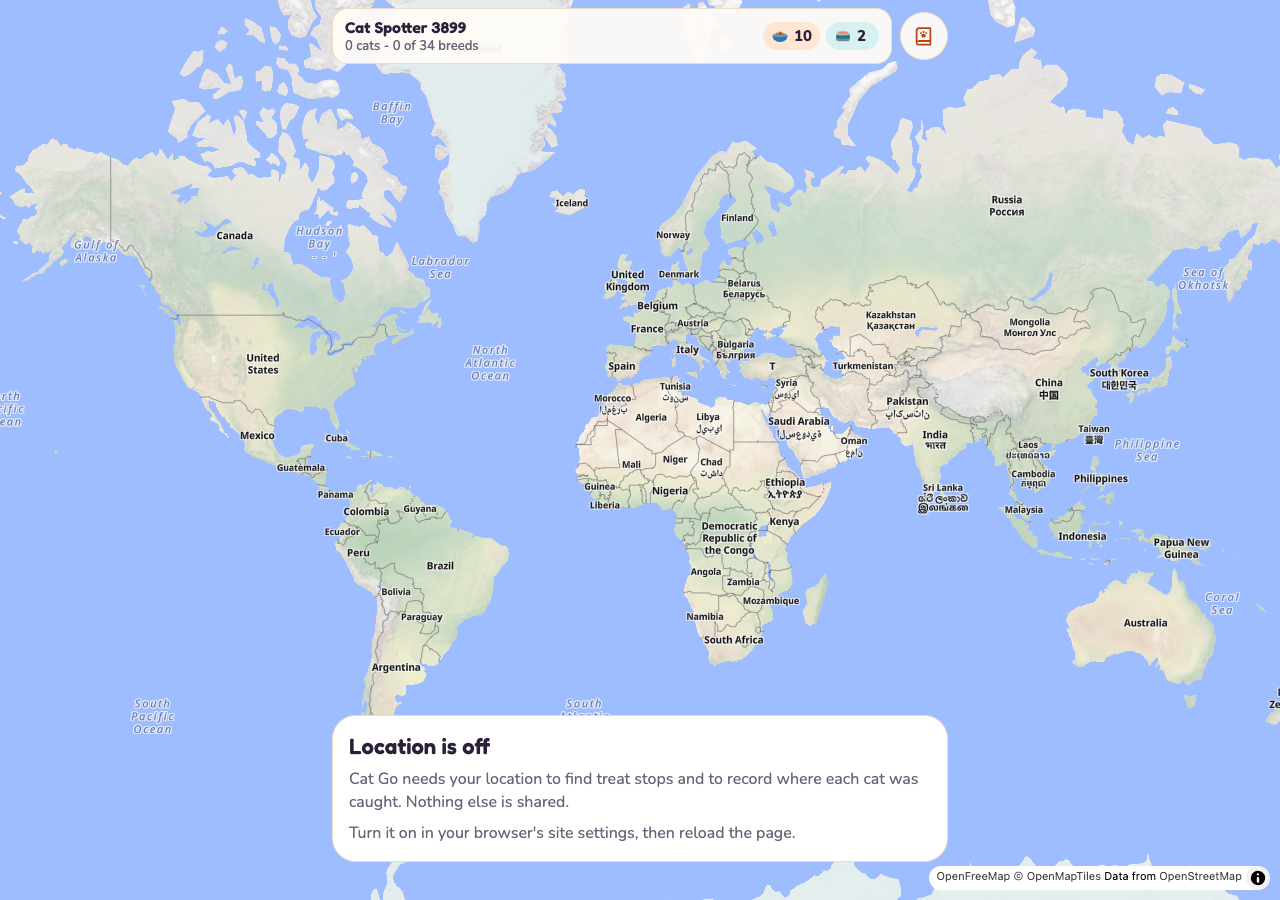
Cat Go starts on a map. You tap the camera when you spot a cat.
When you spot a relaxed cat, stay where you are and tap the camera; the screen says "Fit the whole cat in the frame". The food is kibble and tuna inside the game, and its advice is "Stay calm with your tosses", since "Cats you've startled leave quickly." The real cat gets space, and you get a catch for your Catdex.
Frequently asked questions
Is my cat licking me a sign of love?
Most likely. Cats Protection says most of the reasons cats lick their owners are signs of affection, such as grooming to bond and sharing scent.
Why does my cat lick me and then bite me?
Cats Protection says cats sometimes lick when they are being handled and do not want to be, often followed by a bite or scratch. Stop handling and give your cat space.
Should I worry if my cat licks me a lot?
Excessive licking could mean your cat is stressed or anxious, the charity says, so a vet visit can help find the cause.
How do I get my cat to stop licking me?
Do not push it away or punish it. Cats Protection suggests distracting it with a brush or a favourite toy instead.
Get started
Put a brush by the sofa tonight, and next time the licking starts, brush back. Then take a walk and see which cats you meet.
Play Cat Go in your browser: walk anywhere, photograph a real cat, lure it with food and catch it.
Comments
No comments yet.
Sign in or make an account to comment.