How to find a walking partner and keep walking together
How to find a walking partner? Start with people you already see, then look further. The NHS suggests a stroll with family or friends after dinner as an easy way to make walking a habit, and says walking in a group is a great way to start walking, make new friends and stay motivated. This guide covers who to ask, how to agree a pace, and a four-week plan to keep the two of you walking.
The walking advice here comes from the NHS page "Walking for health", and the points on friendship from its "5 steps to mental wellbeing", both opened for this article.
Why walk with someone?
The NHS's mental wellbeing guide says good relationships are important for your wellbeing, and can help you build a sense of belonging and self-worth. It also says being active can improve your mental wellbeing, partly by helping you connect with others. A shared walk does both at once.
There is a practical reason too. The NHS says the easiest way to walk more is to make walking a habit, and a walk you have agreed with someone else is harder to skip than one you planned alone.
How to find a walking partner: start close to home
The people you already see are the easiest to ask. The NHS gives a few ideas that fit a walk well:
- Family: it suggests taking time each day to be with your family, and names a stroll with family or friends after dinner as one way to build walking into your routine.
- Old friends: it suggests arranging a day out with friends you have not seen for a while. A walk is an easy day out to suggest.
- Someone who needs company: it suggests visiting a friend or family member who needs support or company. Asking them to walk with you is one way to do that.
- Colleagues: it suggests asking friends, family or colleagues how they are and really listening to the answer. A short walk at lunch gives you time for that.
The guide also says not to rely on technology or social media alone to build relationships. A message is a good way to set a time, but the walk itself is the point.
Join a group walk
If nobody close to you wants to walk, a group is the next step. The NHS says walking in a group is a great way to start walking, make new friends and stay motivated. It names Ramblers, which organises group walks for health and leisure, for people of all ages, backgrounds and levels of fitness, in towns and cities as well as the countryside. A regular group walk is also a good place to meet one person who wants to walk more often than the group does.
Agree a pace you can both talk at
Walking partners often differ in speed. The NHS gives a simple test: you are walking briskly if you can still talk but cannot sing the words to a song. It says a brisk walk is about 3 miles an hour, faster than a stroll.
That test suits two people well. If you can chat but not sing, you are both working. If one of you cannot talk, slow down. And if you are not very active yet, the NHS says to increase your walking distance gradually, so agree on short walks first.
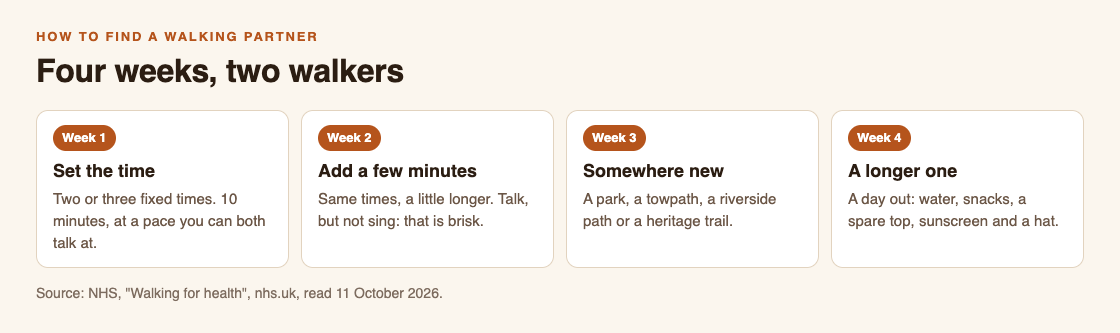
A four-week plan for two, built on the NHS's walking advice.
A four-week plan for two
The NHS says a brisk 10-minute daily walk has lots of health benefits and counts towards the 150 minutes of weekly exercise it recommends for adults aged 19 to 64. Here is a simple plan that builds on that, for you and one partner.
- Week 1, set the time: agree two or three fixed times, such as after dinner. Walk 10 minutes together, at a pace where you can both talk.
- Week 2, add a few minutes: keep the same times and add a few minutes to each walk. Use the talk test to check you are both walking briskly.
- Week 3, try somewhere new: swap one walk for a new place. The NHS lists parks, heritage trails, canal towpaths, riverside paths, commons, woodlands, heaths and nature reserves, all found in towns and cities too.
- Week 4, plan a longer one: make one walk a day out. For long walks the NHS suggests taking water, healthy snacks, a spare top, sunscreen and a sun hat in a small backpack.
Shoes do not need to be special: the NHS says any comfortable shoes or trainers that support your feet and do not cause blisters will do.
Keep walking: add variety
The NHS says to add variety to your walks, and that you do not need to travel to the countryside for a rewarding one. Taking turns to choose the route works well with a partner. Our guides to finding new walking routes near you and things to look for on a neighbourhood walk have ideas. If after dinner is your time, see our plan for making an evening walk a habit.
Something to share on the way: Cat Go
A shared goal can make a walk feel less like exercise. Cat Go is a game that plays in your web browser: "Walk anywhere, photograph a real cat, lure it with food and catch it." You collect kibble and tuna at treat stops on a map, and when you meet a cat you photograph it, pick its breed and keep it in your Catdex, with its breed and the place you found it.
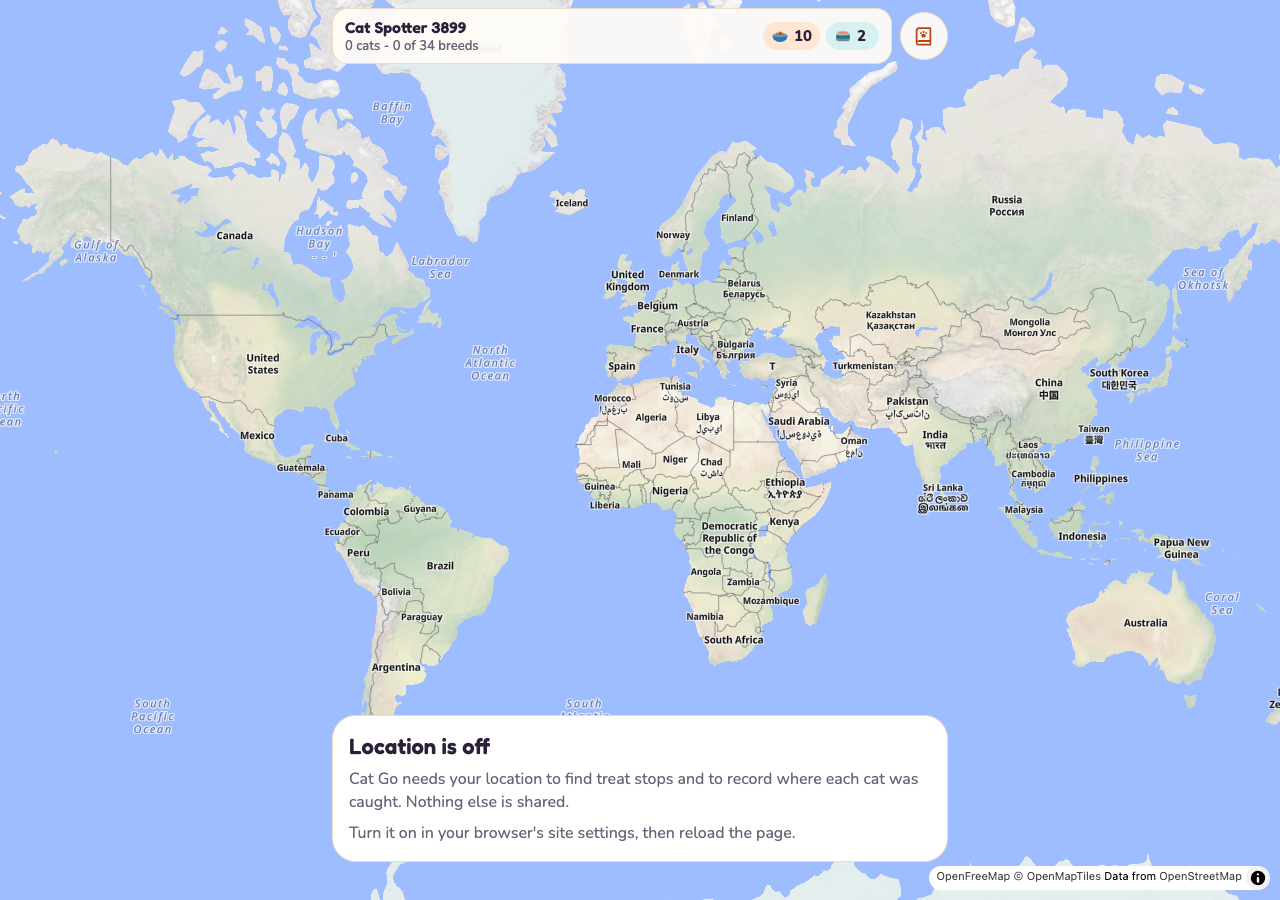
Cat Go's map: treat stops to walk to, and a count of cats and breeds.
Two people can each play on their own phone and compare Catdexes at the end of the walk: who found more cats, and who found more breeds. The food and the catch are all in the game, so the cats you meet are left as they are.
Frequently asked questions
Where can I find a walking partner?
Start with family, friends and colleagues; the NHS suggests a stroll with family or friends after dinner. If that does not work, it says walking groups such as those run by Ramblers are a great way to start walking and make new friends.
How fast should we walk together?
The NHS says a brisk walk is about 3 miles an hour, and you are walking briskly if you can still talk but cannot sing the words to a song.
How long should our walks be?
The NHS says even a brisk 10-minute daily walk has lots of health benefits and counts towards the 150 minutes of weekly activity it recommends for adults.
What if my partner is slower or less fit?
Walk at a pace where you can both talk. The NHS says people who are not very active should increase their walking distance gradually.
Get started
Ask one person today: "Ten minutes after dinner, twice this week?" Then follow the four-week plan above.
Play Cat Go in your browser on your next walk together: walk anywhere, photograph a real cat, lure it with food and catch it.
Comments
No comments yet.
Sign in or make an account to comment.