How to make an evening walk a habit: a plain after-dinner plan
How to make an evening walk a habit? Tie it to something you already do every evening. The NHS, in its walking for health guide, says the easiest way to walk more is to make walking a habit, and lists "going for a stroll with family or friends after dinner" as one way to fit it into your day. This guide turns that one line into a plain four-week plan.
Everything here comes from two NHS pages and the Highway Code's rules for people on foot, all opened for this article. Nothing needs special kit: the NHS says any comfortable shoes that support your feet and do not cause blisters will do.
Why the evening is a good time to build a walking habit
The NHS advice on habits is simple: think of ways to include walking in your daily routine. Its examples are walking part of the way to work, walking to the shops, walking the kids to school, a regular walk with a friend, and a stroll after dinner.
Dinner works as a hook because it happens every day. You do not need to find a new slot in your diary. The walk simply follows the meal, the same way every night, until it feels odd to skip it.
It also helps with a second piece of NHS advice. The adult activity guidelines say to reduce time spent sitting or lying down, and to break up long periods of not moving. For many people, the evening is exactly that kind of long sit.
How much walking counts?
Less than you might think. The NHS says you do not have to walk for hours: a brisk 10-minute daily walk has lots of health benefits and counts toward the 150 minutes of weekly exercise its guidelines recommend.
Those physical activity guidelines for adults say to aim for at least 150 minutes of moderate activity a week, spread evenly over 4 to 5 days, or every day. They also say adults should do some kind of physical activity every day.
What does brisk mean? The NHS says a brisk walk is about 3 miles an hour, faster than a stroll. Its test is easy to use on the move: you are walking briskly if you can still talk but cannot sing the words to a song.
One caution from the same page: if you have not exercised for some time, or you have medical conditions or concerns, speak to your GP first.
How to make an evening walk a habit: a four-week plan
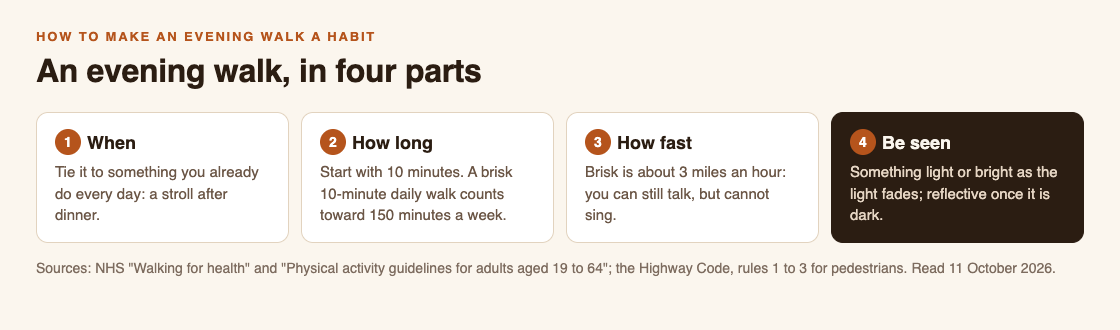
The four parts of the plan, from the NHS and the Highway Code.
The NHS says that if you are not very active, you should increase your walking distance gradually. This plan does that, one small step each week.
- Week 1, just go: after dinner, walk for 10 minutes at whatever pace feels easy. The only goal is to go out on most evenings. Pick one short loop from your door so there is nothing to decide.
- Week 2, find brisk: keep the 10 minutes, but spend part of it at a brisk pace. Use the talk-not-sing test.
- Week 3, add minutes: stretch the walk to 15 or 20 minutes on some evenings. Five evenings of 20 brisk minutes is 100 minutes toward the weekly 150.
- Week 4, mix it up: the NHS suggests adding variety. You do not have to travel; it says towns and cities offer parks, canal towpaths and riverside paths. Try a new loop once a week, or ask someone to join you.
Two more NHS ideas help on the nights you do not feel like it. Walking with music or a podcast can take your mind off the effort and help you walk faster. And walking with other people, it says, is a great way to stay motivated, which is why a stroll "with family or friends" is on its list.
Walking as the evenings get darker
An after-dinner walk will often mean poor light for part of the year. The Highway Code's first three rules for pedestrians cover it.
- Use the pavement: where there is one, use it, and avoid walking next to the kerb with your back to the traffic. Stay aware of what is around you and avoid unnecessary distractions, which is worth remembering if you walk with headphones.
- No pavement: keep to the right-hand side of the road so you can see oncoming traffic, take extra care in poor light, and keep close to the side of the road.
- Be seen: wear or carry something light-coloured, bright or fluorescent in poor daylight. When it is dark, use reflective materials, which drivers with headlights can see up to three times as far away as non-reflective ones.
The Highway Code is the UK's guide, so check your own country's rules too. Our guide on how to walk safely after dark goes further, and our plan for walking when it rains covers the wet evenings.
Give the evening walk a reason: cats at dusk
A walk with a purpose is easier to start. Cats Protection notes that cats are usually most active at dawn or dusk, so an early-evening walk is a good time to see the cats in your street.
Cat Go is a game that plays in your web browser and turns that walk into a hunt: "Walk anywhere, photograph a real cat, lure it with food and catch it." The food is in the game. Treat stops on the map hold kibble, and sometimes tuna; the card tells you how far away the nearest one is and says "Walk within ... m to collect kibble". After you collect, the stop shows "Refilling" with the minutes until it is ready again.
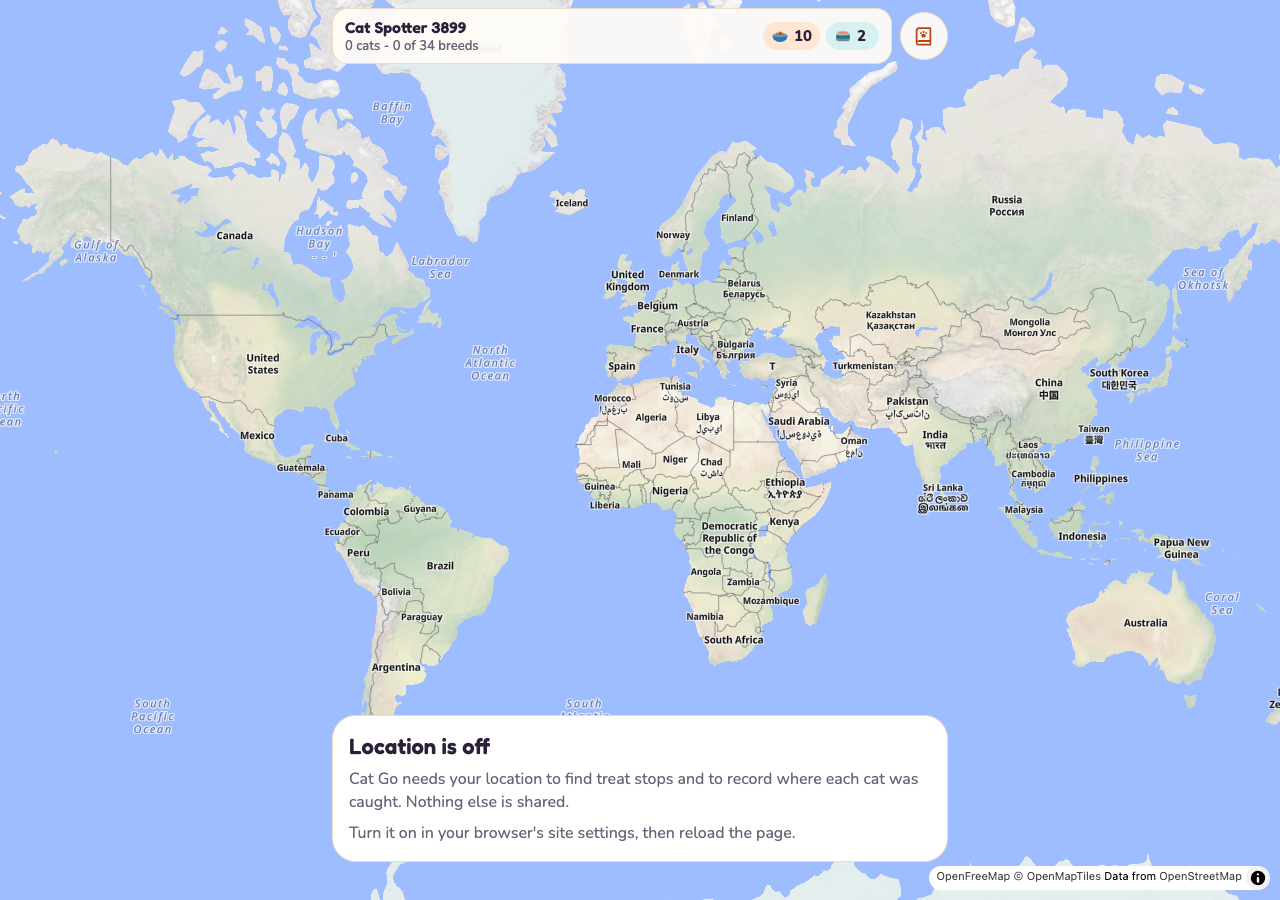
Cat Go needs your location to find treat stops and record where each cat was caught.
Here is an evening loop with the game:
- Allow location in your browser. The game says it uses it "to find treat stops and to record where each cat was caught. Nothing else is shared."
- Pick a loop that passes a treat stop, and walk to it at a brisk pace.
- If you meet a cat, stay where you are and take its photo. The camera screen says "Fit the whole cat in the frame".
- Head home. Every catch keeps its breed and where you found it, so your evening walks build a record.
Our guides on making walking to work a habit and a lunch-break walk use the same idea at other times of day.
Frequently asked questions
Is a walk after dinner good for you?
The NHS lists a stroll after dinner as one way to make walking a habit, and says a brisk 10-minute daily walk has lots of health benefits.
How long should an evening walk be?
Start with 10 minutes. The NHS says a brisk 10-minute daily walk counts toward the 150 minutes of moderate activity adults should aim for each week.
How do I know if I am walking fast enough?
The NHS says brisk walking is about 3 miles an hour. You can still talk, but you cannot sing the words to a song.
What should I wear for a walk in the evening?
The Highway Code says to wear or carry something light-coloured, bright or fluorescent in poor daylight, and reflective materials when it is dark.
Get started
Tonight, after dinner, put your shoes on and walk for 10 minutes. Do the same tomorrow. Keep an eye out for the cats in your street while you go.
Play Cat Go in your browser: walk anywhere, photograph a real cat, lure it with food and catch it.
Comments
No comments yet.
Sign in or make an account to comment.