Is walking good for your mental health? What the NHS says
Is walking good for your mental health? The NHS says being physically active is one of five steps that evidence suggests can improve your mental health and wellbeing, and it calls walking one of the easiest ways to get more active. It says being active can raise your self-esteem, help you set and reach goals, and cause chemical changes in your brain that can help lift your mood. This guide sets out what the NHS says, and how one walk can touch all five of its steps.
The advice here comes from the NHS pages "5 steps to mental wellbeing" and "Walking for health", both opened for this article. It is general wellbeing advice, not treatment for a mental health condition.
Is walking good for your mental health? The short answer
The NHS lists five steps that evidence suggests can improve your mental health and wellbeing, and says trying them could help you feel more positive and get the most out of life:
- Connect with other people
- Be physically active
- Learn new skills
- Give to others
- Pay attention to the present moment
A walk is physical activity, so it covers step 2 on its own. With a little planning, it can cover the other four as well.
How being active helps your mood
The NHS says being active is great for your physical health and fitness, and that evidence shows it can also improve your mental wellbeing by:
- raising your self-esteem
- helping you set goals or challenges and achieve them
- causing chemical changes in your brain which can help to positively change your mood
It also says you do not have to spend hours in a gym. Its advice is to find activities you enjoy and make them part of your life. For many people, a walk is the easiest place to start.
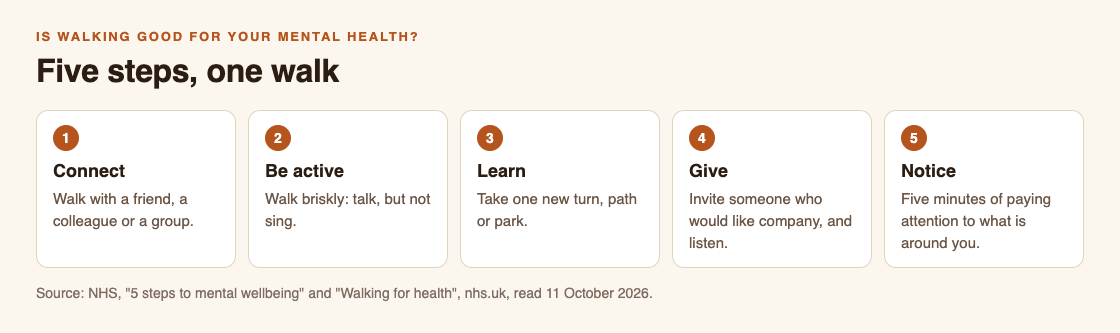
The NHS's five steps, and how one walk can touch each of them.
How one walk can cover all five steps
- Connect: the NHS says good relationships can build a sense of belonging and self-worth, and give you a chance to share positive experiences. It suggests having lunch with a colleague; a lunchtime walk together works the same way. It also says walking in a group is a great way to start walking, make new friends and stay motivated.
- Be active: the NHS says a brisk 10-minute daily walk has lots of health benefits and counts towards the 150 minutes of weekly activity it recommends for adults.
- Learn: the NHS says learning new skills can boost self-confidence and build a sense of purpose. A new route, or learning the names of the parks and paths near you, is a small way in.
- Give: the NHS suggests spending time with friends or relatives who need support or company, and asking people how they are and really listening to the answer. Asking someone who would like company to join your walk does both.
- Notice: the NHS says paying attention to the present moment, including your thoughts and feelings, your body and the world around you, can improve your mental wellbeing.
A five-step walk: a plan you can follow
Here is one way to put the five steps into a single 20-minute walk.
- Before you go, ask someone: invite a friend, neighbour or colleague. If nobody is free, go alone; you still cover the other four steps.
- Minutes 1 to 10, walk briskly: the NHS says a brisk walk is about 3 miles an hour, and you are walking briskly if you can still talk but cannot sing.
- Take one new turn: pick a street, park or path you have not walked before. The NHS lists parks, heritage trails, canal towpaths, riverside paths and nature reserves as walks you can find in towns and cities.
- Minutes 10 to 15, notice: slow down and pay attention to the world around you: sounds, trees, buildings, any cats on walls or windowsills. Notice how your body feels too.
- Minutes 15 to 20, check in: if you are walking with someone, ask how they are and really listen. If you are alone, note one thing you saw that you had never noticed before.
If finding a partner is the hard part, our guide on how to find a walking partner can help.
How much walking, and how fast?
The NHS recommends at least 150 minutes of moderate activity a week for adults, and says even 10 brisk minutes a day counts. Our guide "What counts as a brisk walk?" explains the NHS talk test in more detail. The NHS also says walking while listening to music or a podcast can take your mind off the effort, though on the "notice" part of your walk you may want to leave the headphones off.
Paying attention to the world around you
The NHS says some people call this awareness "mindfulness", and that it can help you enjoy life more and understand yourself better. A walk gives you plenty to pay attention to. Our list of things to look for on a neighbourhood walk has ideas.
A reason to look around: Cat Go
Cats are one of the things you notice when you start paying attention on a walk. Cat Go is a game that plays in your web browser: "Walk anywhere, photograph a real cat, lure it with food and catch it." You collect kibble and tuna at treat stops on a map, and when you spot a cat you photograph it and keep it in your Catdex, with its breed and the place you found it.

Cat Go's map: treat stops to walk to, and a count of cats and breeds.
The food and the catch are all in the game, so the cats you meet are left as they are.
Frequently asked questions
How does walking help mental health?
The NHS says being active can raise your self-esteem, help you set and reach goals, and cause chemical changes in your brain that can help lift your mood.
How long should I walk for my mental health?
The NHS does not give a separate figure for mental health. For adults it recommends at least 150 minutes of moderate activity a week, and says a brisk 10-minute daily walk has lots of health benefits.
Is walking with other people better?
The NHS lists connecting with other people as a step of its own, and says walking in a group is a great way to start walking, make new friends and stay motivated.
What are the 5 steps to mental wellbeing?
The NHS lists connecting with other people, being physically active, learning new skills, giving to others, and paying attention to the present moment.
Get started
Today, take a 20-minute walk with one new turn in it, and spend five minutes of it just noticing what is around you.
Play Cat Go in your browser: walk anywhere, photograph a real cat, lure it with food and catch it.
Comments
No comments yet.
Sign in or make an account to comment.