What is armor in video games? Why some enemies take several hits
What is armor in video games? Why some enemies take several hits while others fall to one shot? Armor is anything that makes an enemy harder to destroy without making it faster or smarter. The most common form is simple: the enemy takes more hits before it dies. This post explains the idea, how designers tune it, and how to beat it.
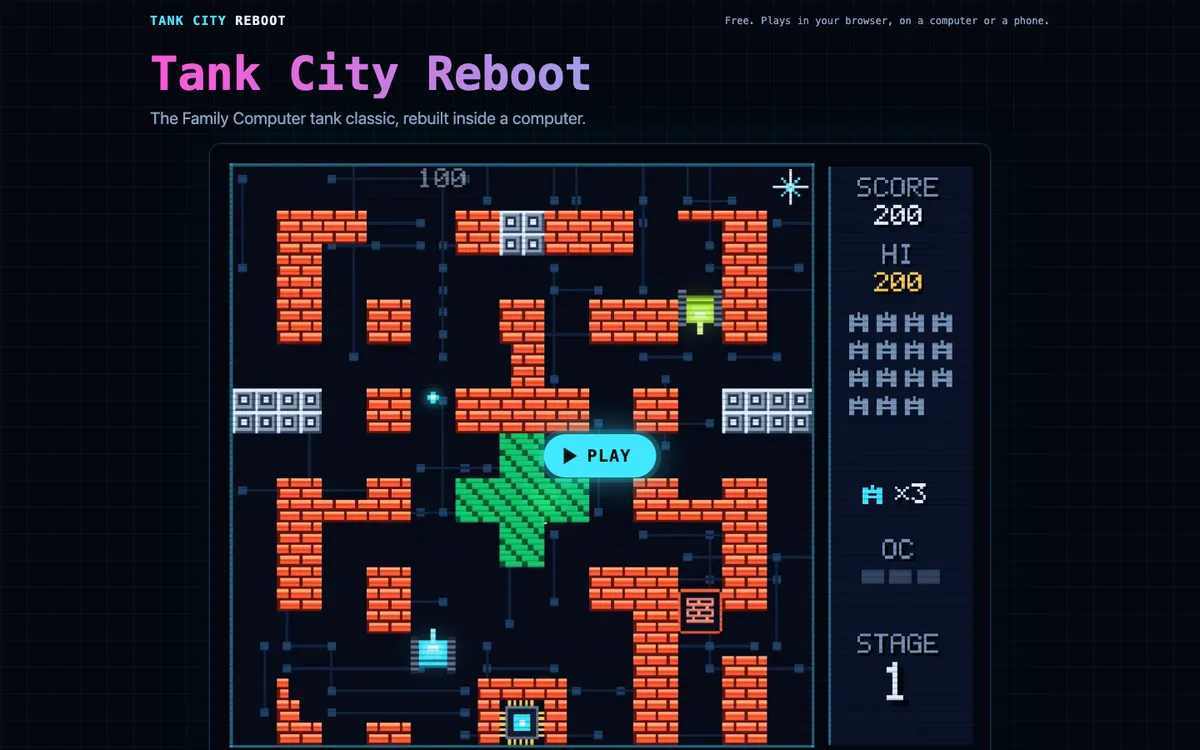
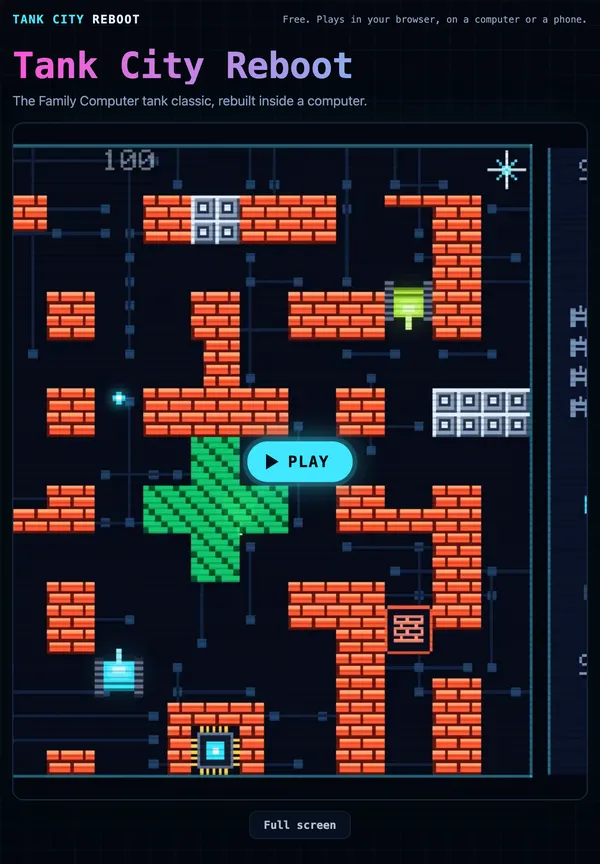
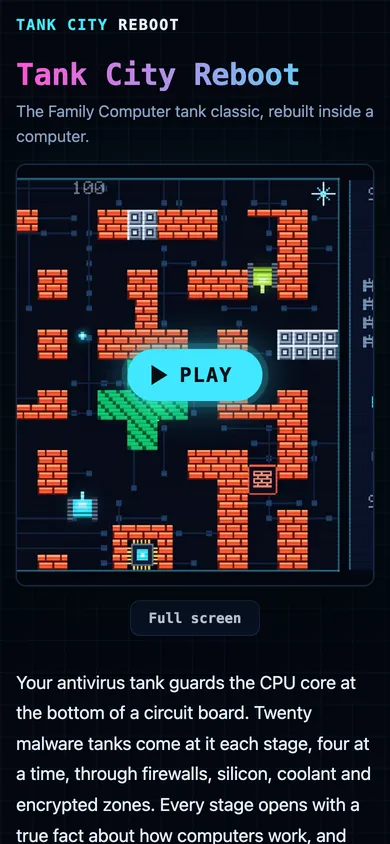
Tank City Reboot, a free browser game you can play on a computer or a phone with no account, makes armor easy to see because its armored tanks are labeled, and you can try one yourself in a few seconds.
What is armor in video games?
Armor is a defensive layer. It sits between an attack and the thing the attack is trying to hurt. In a role-playing game, it might be a number on a character sheet. In an arcade shooter, it might be a plain rule: this enemy needs four hits.
The purpose is the same in both cases. Armor changes how you play. A weak enemy asks you to aim. An armored enemy asks you to plan, because you have to keep hitting it while it, and everything else on the screen, keeps moving.
How armor reduces damage: flat, percentage, and hit-based
Designers use three common models.
- Flat reduction. Armor subtracts a fixed amount from every hit. If armor is 5 and your attack does 8, the enemy takes 3. Weak attacks can drop to zero, which feels harsh.
- Percentage reduction. Armor cuts every hit by a share, such as 30 percent. Strong and weak attacks both shrink in proportion, so nothing is ever fully blocked.
- Hit-based. Every hit counts the same, and the enemy simply has more hit points. No math is needed. You count hits.
Hit-based armor is the easiest to read. You see a shot land, and you know one more is gone. That clarity is why arcade games like it.
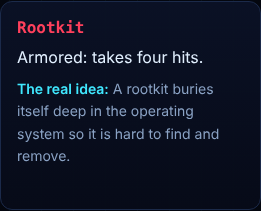
Tank City Reboot uses this model. In the first game, a worm is the basic tank and dies in one hit. A rootkit is the armored one and takes four. In Tank City Zero Day, every shot that hits an enemy takes exactly 1 hit point, and the enemies differ only in how many points they have.
Armor vs health: what is the difference?
The two overlap, and the line is blurry. Health is how much damage a thing can take in total. Armor is a rule that changes how damage is applied, or a visible layer that has to be dealt with first.
In a hit-based game the two collapse into one number. Calling a rootkit "armored" instead of "an enemy with four hit points" is mostly about presentation. It tells you to expect a longer fight before the fight starts.
The same split shows up with your own survival. Lives are a separate pool from armor. If you want the background on that, read what an extra life is and how lives and score work.
What is armor in video games? Why some enemies take several hits
There are four reasons, and good games use all of them on purpose.
- Pacing. If every enemy died in one hit, the game would have one speed. An armored enemy slows a fight down and gives the screen a different rhythm.
- Threat ranking. A tougher enemy tells you what to worry about. You learn quickly that the slow, sturdy one is a problem to solve, and the quick, fragile one is a problem to dodge.
- Resource pressure. Time spent shooting one tough target is time the other enemies spend closing in.
- Progression. Later levels need a way to get harder without changing the rules. Adding hit points does that.
Tank City Reboot shows this progression clearly. Each stage sends 20 malware tanks, four at a time. Stage 1, FIREWALL, is 18 worms and 2 trojans, with no armored tanks. Stage 2, CACHE, adds 2 rootkits. By stage 6, KERNEL, the lineup is 4 trojans, 6 spyware and 10 rootkits. Ten rootkits at four hits each is 40 hits for the armored tanks alone. Same rules, very different stage.
How armor shapes tank combat and positioning
In a tank game, a shot flies in a line and you aim by facing. That makes armor a positioning problem. To land four hits on a rootkit, you need to stay lined up with it for long enough to land them. While you do, you are a target too.
Here is a worked example from the first game. A rootkit is coming down a lane toward the CPU core. Its speed is 34, slower than a trojan at 58 but not stopped. You face it and fire. Your first shot lands. Meanwhile a spyware tank, which fires fast shots, lines up from the side.
You now have to decide. Do you finish the rootkit with three more hits, or step out of the spyware lane? A useful rule from the game: your shots cancel enemy shots. So firing back along the lane both damages the target and protects you from anything coming straight at you.
Armor also interacts with terrain. In the first game, only firewall, silicon, the CPU core and the map edge stop a shot. Silicon stops every shot until your cannon is fully overclocked. An armored tank sitting behind silicon is very hard to deal with early on, and a lot easier once your cannon breaks silicon.
Zero Day pushes the idea further. There, the hit counts are:
- Botnet drone: 1
- Worm: 2, and each half is 1 after it splits
- Ransomware: 3
- Cryptominer: 5
- Zero-day boss: 40 on wave 5, then 15 more for each later boss, so 55 on wave 10
The boss is the clearest case. At the base fire rate, a wait of 0.3 seconds between shots, 40 perfect hits would take 12 seconds of constant aim while it fires back. It is built to be a long fight. See Tank City Zero Day for how that plays out.
How to beat armored enemies
Raw patience helps, but the real answer is to change your tools. Here is what works in these two games.
Take damage output upgrades
In the first game, Overclock has three levels. Level 1 makes your shots faster. Level 2 lets two of your shots be on the field at once. Level 3 makes your shots break silicon. The level carries between stages, and goes back to 0 if you lose a life, so staying alive matters.
In Zero Day, you pick from three upgrades after each wave. Three of them matter most against armor:
- Multithreading: more shots per volley, in a spread. At its top level you fire five at once.
- Cache: shorter waits between shots. At level 3 the wait drops from 0.3 seconds to about 0.13.
- Encryption: each shot passes through one more enemy per level, so a line of tanks takes damage from one shot.
Use the power-ups that skip the problem
Some first-game power-ups do not fight armor. They avoid it.
- Breakpoint stops every enemy from moving or firing for eight seconds. That is a long, safe window to land four hits on a rootkit.
- Garbage collection destroys every enemy on the field. They still count toward the stage's 20, but score no points.
- Patch gives you a shield for ten seconds, so you can stand and trade shots.
The 4th, 11th and 18th tank of each stage carry a power-up and blink. The first hit on a carrier drops it, even if the tank survives. That means you can get a power-up out of an armored carrier on the very first shot.
Do not stand still
In Zero Day you can dash, and you cannot be hit mid-dash. Dash through a shot, then come back and keep firing. Hold Fire so your cannon shoots again the moment the wait ends.
Chain your kills
Armored enemies are worth more. In the first game, a rootkit scores 400, against 100 for a worm. In Zero Day, ransomware is worth 200, a cryptominer 250 and the boss 2500, each multiplied by your chain. Every kill within 2.5 seconds of the last adds to the chain, up to x8. Plan so that the slow kill of an armored tank does not break the chain of the fast ones around it.
Design tips: making armor feel fair
If you are building a game, or just judging one, here is what separates good armor from annoying armor.
- Make it visible. A different shape, color or name tells the player what they are up against. Tank City Reboot names its tough tank a rootkit and explains the idea on the glossary card: a rootkit buries itself deep in the operating system so it is hard to find and remove. The name matches the behavior.
- Keep the count honest. Four hits should always mean four hits. Hidden rules make armor feel like cheating.
- Give the player a counter. Faster fire, spread shots, a freeze, a shield. There should always be a way to get better at this fight.
- Introduce it slowly. A first-time player should meet one armored enemy, not ten. Stage 2 has two rootkits. Stage 6 has ten.
Frequently asked questions
What is armor in video games?
Armor is a defensive layer that makes an enemy harder to destroy. It can cut damage by a flat amount, by a percentage, or simply by giving the enemy more hits to survive.
Why do some enemies take several hits?
Designers use extra hits to change pacing, mark a tougher threat and make later levels harder without new rules. In Tank City Reboot, a worm takes one hit and a rootkit takes four.
Is armor the same as health?
Not always. Health is the total damage something can take. Armor changes how damage lands, or signals that a fight will last longer. In a hit-based game the two come to the same number.
How do I beat armored enemies in Tank City Reboot?
Overclock your cannon, use Breakpoint to freeze the field for eight seconds, and watch your lanes so you do not get shot while lining up. In Zero Day, take Multithreading and Cache, and dash through incoming shots.
Does Tank City Reboot cost anything?
No. It is free, plays in your browser on a computer or a phone, and playing never needs an account.
Get started with Tank City Reboot
The fastest way to understand armor is to shoot a rootkit four times while something else is shooting at you. Start with the first game, reach stage 2, and watch how the fight changes. Then try Zero Day to see armor, bosses and upgrades work together.
Play Tank City Reboot: it is free, plays in your browser on a computer or a phone, and needs no account.
Comments
No comments yet.
Sign in or make an account to comment.