Lady Russell: an Elizabethan woman who kept a castle by force
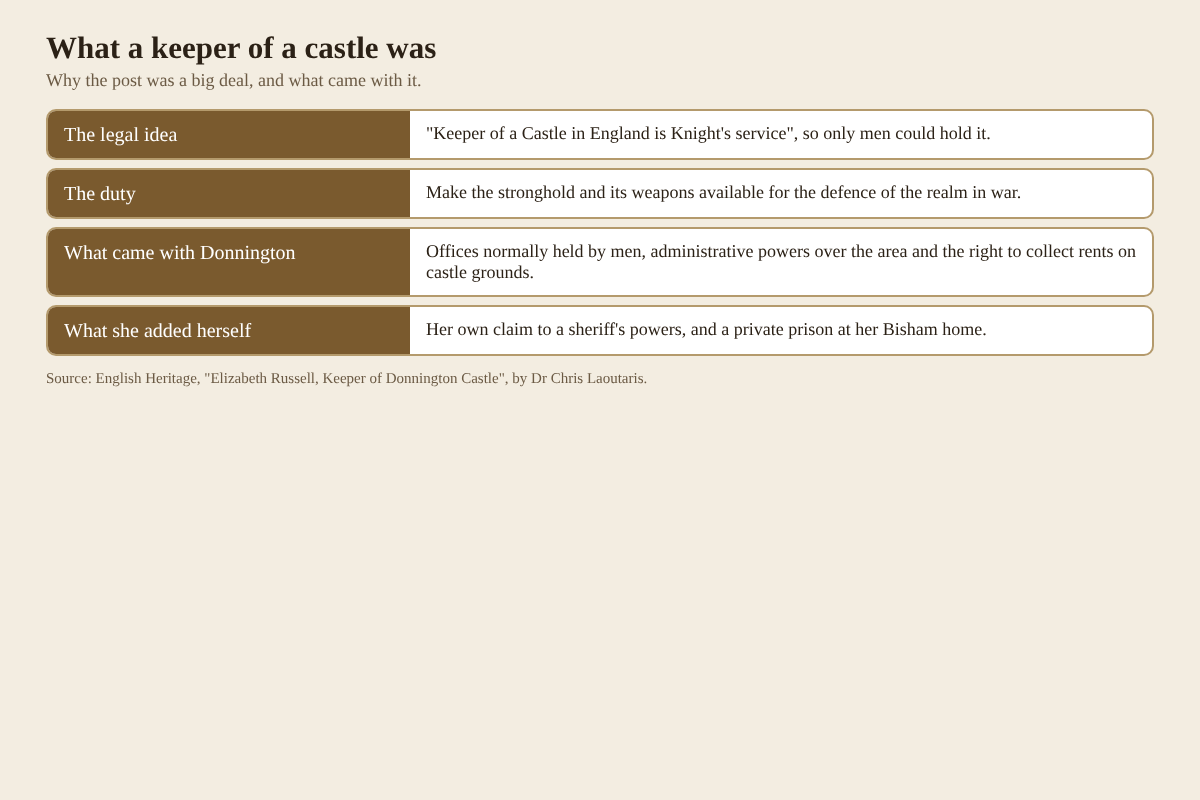
Lady Russell, born Elizabeth Cooke around 1540, became England's first known female keeper of a castle in 1590, when she was given Donnington Castle in Berkshire. She then spent years defending the post with armed men, a private prison and a very loud voice, until she lost it in court in 1606.
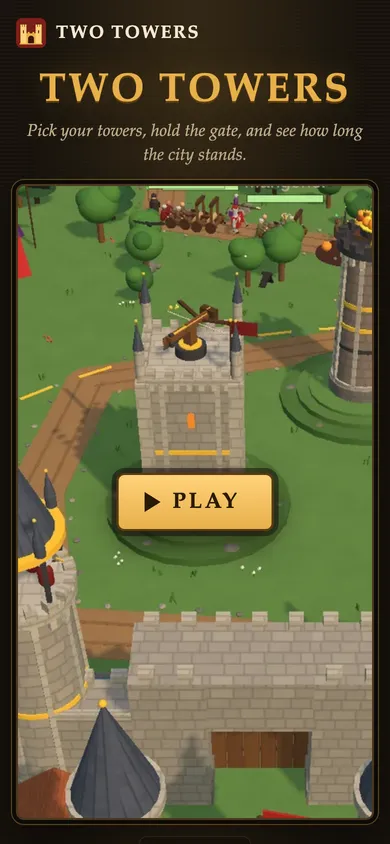
If you like the idea of holding a post against everyone who wants it, Two Towers is a free browser game where you pick the two towers that guard a city gate and spend gold on upgrades between stages.
The educated daughter who became Lady Russell
Elizabeth grew up in an unusual house. Her father, Sir Anthony Cooke, had been tutor to the young Edward VI, and he believed, in English Heritage's quotation, "that souls were equal, and that women are as capable of learning as men". His five daughters were schooled at Gidea Hall in Essex. When the Cambridge scholar Walter Haddon visited, he found the girls reading philosophy and theology in Latin, Greek and Hebrew, and called the place a "little university". Gidea Hall became known as the "female university".
The family was also well placed. Her sister Anne married Sir Nicholas Bacon and was the mother of Francis Bacon. Her sister Mildred married Sir William Cecil, Queen Elizabeth's most trusted adviser. Elizabeth married twice: first Sir Thomas Hoby of Bisham Abbey, who died in 1566, then John, Lord Russell, heir to the Earl of Bedford. That is how she became Lady Russell. John died in 1584, just before his father, and her long fight for the Bedford inheritance failed. She still insisted on calling herself Dowager Countess of Bedford, a title no widow below a countess could use.
Why a woman could not be keeper of a castle
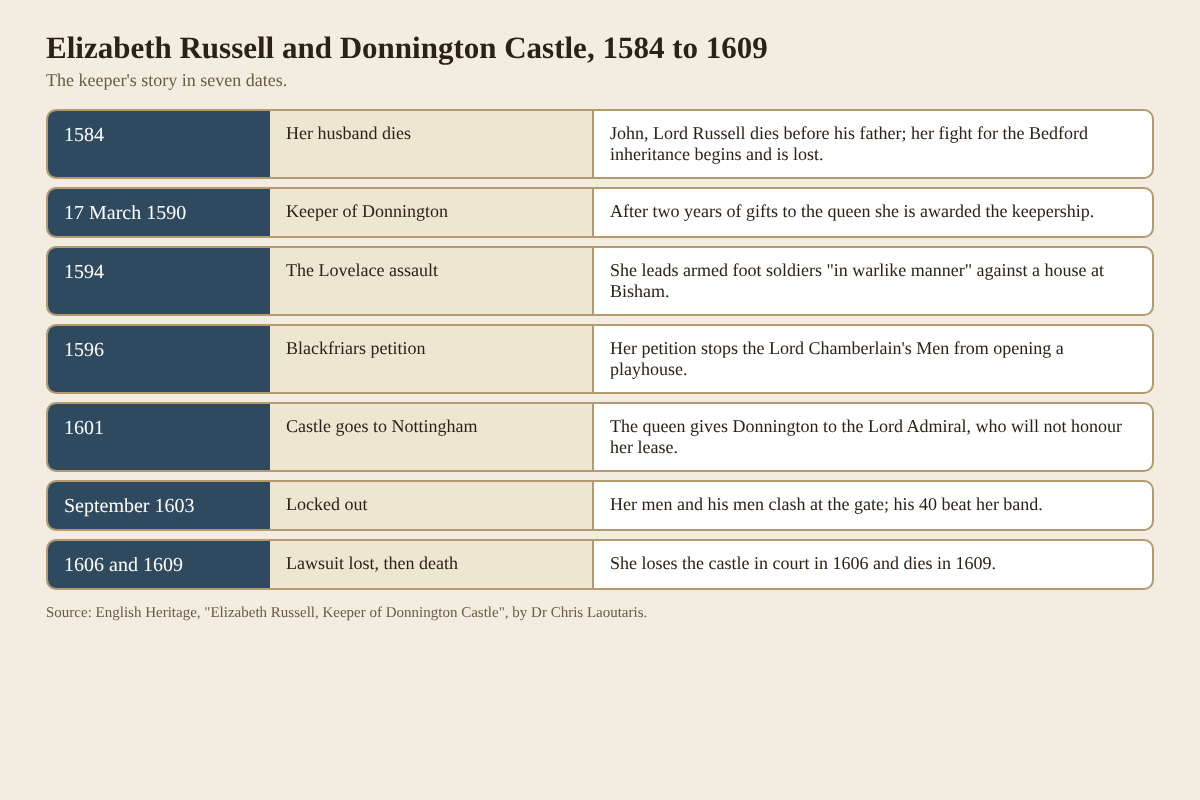
In the 16th century, women were not allowed to keep castles. English Heritage quotes an early legal manual: "Keeper of a Castle in England is Knight's service", and only men could be knights. A keeper had to make the stronghold and its weapons available for the defence of the realm in a war. It was a duty on paper, but it came with power.
Elizabeth wanted a castle of her own and picked the royal castle of Donnington, near Newbury, not far from her Bisham estate. She sent the queen gifts: curtains of crimson taffeta for a bed, two jewelled hats, a pearl pendant, gowns and furs, and purses of cash. English Heritage puts the total at about £500. After two years the queen gave way, and on 17 March 1590 Elizabeth became keeper of Donnington. The post brought offices normally held by men, administrative powers over the area and the right to collect rents on the castle grounds. She was also warden and paymaster of the local almshouses.
1594: "in warlike manner" at Bisham
Elizabeth claimed a sheriff's powers on her lands and built her own prison in the porter's lodge at Bisham. In 1594 she quarrelled with Richard Lovelace over a property on her estate. He put two guards in the house to keep her out. She gathered a band of armed foot soldiers, led them "in warlike manner" against the house and had the door broken down. Lovelace's servants were dragged off to her prison.
On another occasion she locked up a bailiff who had dared to arrest one of her servants, and she demanded a ransom for him. The queen had to step in to get him out.
1596: the petition that shaped Shakespeare's career
Her neighbors in Blackfriars, London, were next. In 1596 the impresario James Burbage spent a fortune, about £1,000, on a playhouse there for the Lord Chamberlain's Men, the company Shakespeare belonged to. It stood just over 120 feet from Elizabeth's door. She led a petition of 30 signatories to the Privy Council, where her Cecil relatives sat, and the players were forbidden to use the building. Burbage's sons then built the Globe on Bankside, which opened in 1599 and made Shakespeare a part owner. English Heritage says the Globe would not exist without her.
1603: locked out of the gate
Keeping Donnington was harder. In 1601 the queen gave the castle to the Lord Admiral, Charles Howard, Earl of Nottingham, a national hero of the Armada. He would not accept that her keepership was a lease for life, and he began to push her out. She answered by creeping onto a neighboring farm at night and driving off 1,300 of his livestock.
In September 1603 she found herself locked out of the castle she had governed for 13 years, surrounded by 17 armed men with halberds. Two drew their swords on her. They were weapons stolen from her own castle: "mine own weapons against myself", she said. Her supporters had come to take the castle back after the Admiral's men broke in with "bars of iron and other engines", and the two sides fought. His force had grown to 40, armed with swords, halberds, pick-staves and pitchforks. At 63 she lost, and she spent the night sitting outside the castle in her coach. The castle gatehouse post shows why that part of a castle was the one worth taking.
Justice, a cloak and the loss of the castle
She then went to the new king, James I, and refused his advice to be reconciled through "honourable personages", meaning men. "I beseech Your Majesty, let me have justice, and I will trust the law," she said. In court the Earl of Northampton said she was not a real dowager countess, and she pulled him by the cloak. She insisted on speaking in her own defence, delivered an oration of more than half an hour and drove her own lawyers out of the room. A witness called it "a very great spirit and an undaunted courage".
It did not help. The case ended in 1606 with the loss of Donnington. She died in 1609 after designing her own tomb, on which she wears a countess's crown. The castle she fought for was later the setting of a 20-month Civil War siege, which the Donnington Castle post tells. All of this comes from English Heritage's page, Elizabeth Russell, Keeper of Donnington Castle, written by Dr Chris Laoutaris.
A worked example: holding a post in Two Towers
Her story is about keeping a post against people with a claim to it. Two Towers asks a smaller version of that question, so here is a plan that uses only what the game says.
- Pick two towers for the gate. You choose from Archer Tower, Trebuchet, Ballista and Fire Tower.
- Add an outer post early. A tower on West Hill or East Hill costs 150 gold for the first and 300 for the second, and can be any of the four kinds. The hill towers post covers where to build.
- Give a hill tower reach. The game's tip says: "Mangonels throw stones from far off: a hill tower with Range reaches them."
- Slow them down. The game says: "Raise barricades to slow them down."
- Harden the gate for the hardest hitter. The tip says: "Rams hit the gate hardest: Reinforce the gate, and use Ballista bolts that ignore armor."
- Get ready for the king. He leads every fifth stage, and the tip says: "Reinforce the gate before it and save gold for Damage."
If the gate falls anyway, the game tells you which attacker did most of the damage, in a line that begins "The gate fell mostly to". Elizabeth lost because the other side had more men at the gate on the day. Use that line the same way: find out what beat you, and spend your gold on it before the next try.
Frequently asked questions
Who was Lady Russell?
Elizabeth Russell, born Elizabeth Cooke around 1540 and died in 1609. She was one of five educated sisters, married Sir Thomas Hoby and then John, Lord Russell, and became keeper of Donnington Castle in 1590.
Did Lady Russell really keep a castle by force?
English Heritage says she defended her post with acts of rioting, physical violence and clan warfare. In September 1603 she led armed supporters to retake Donnington from the Lord Admiral's men, and was beaten.
Was she the first female keeper of a castle?
English Heritage calls her England's first known female keeper of a castle. In the 16th century women were not permitted to hold the post, and she got it in 1590 after two years of gifts to Queen Elizabeth.
How did Lady Russell affect Shakespeare?
In 1596 she led a petition that stopped the Lord Chamberlain's Men from opening a playhouse in Blackfriars. The players' next move was the Globe, which opened in 1599, and Shakespeare became a part owner.
Get started
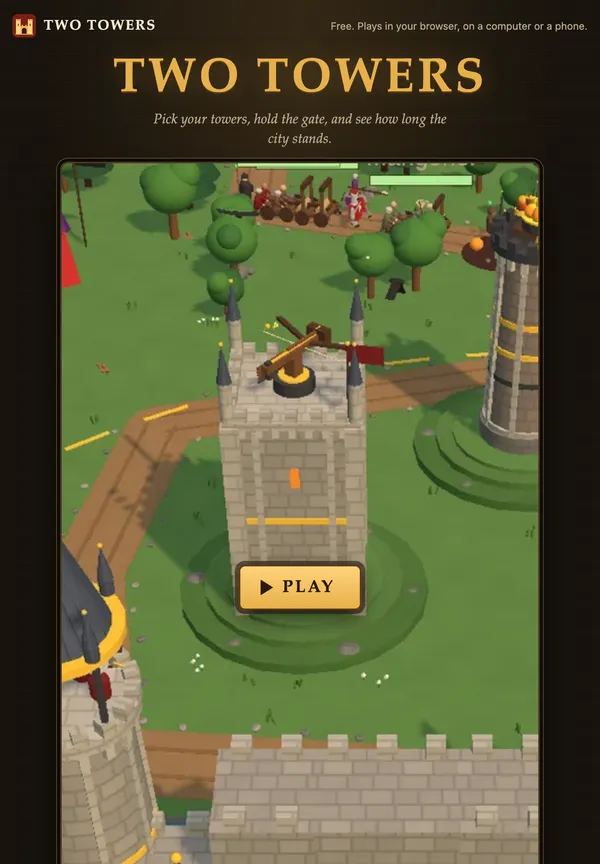
Elizabeth Russell held her post with whatever she had, and still lost it. To see how long you can hold yours, play Two Towers: pick your two towers, add reach on the hills and keep the gate standing.
Defend the castle gate, stage after stage.
Visit twotowers.vlvd.net↗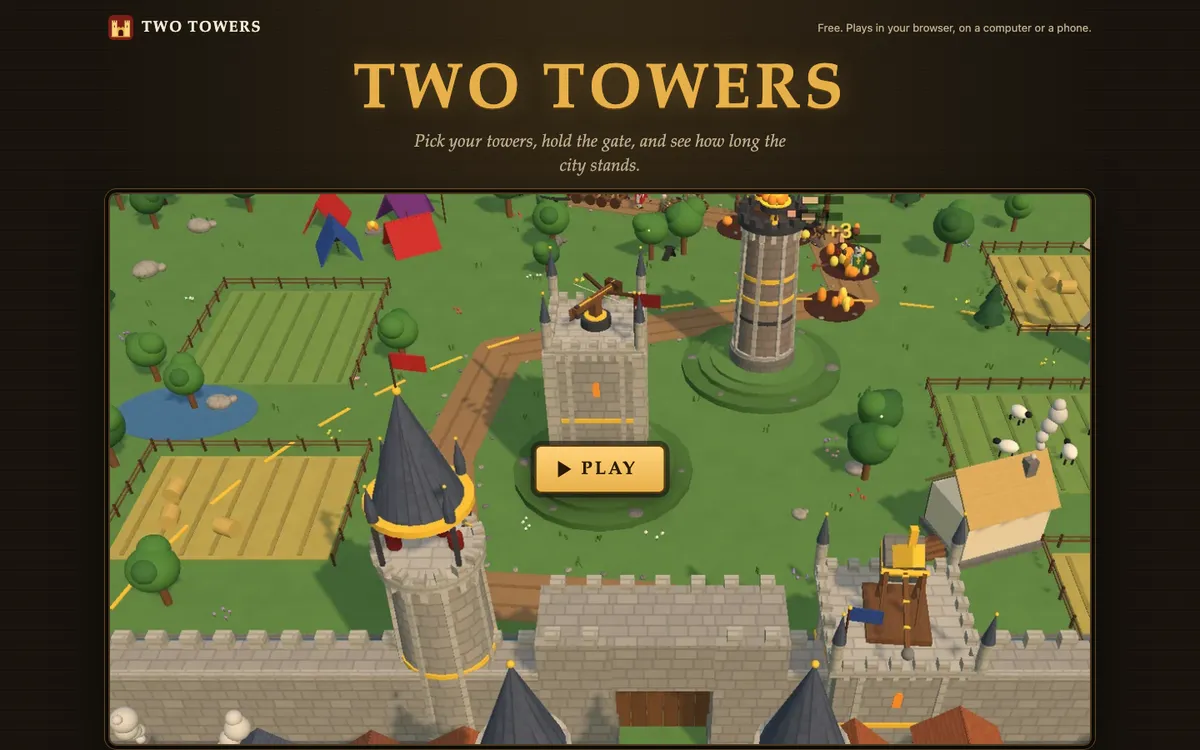
Comments
No comments yet.