What Is Evil? How Philosophers Define It and Where They Disagree
What is evil? In moral philosophy today, evil in the narrow sense is the worst kind of wrong: an act a person is responsible for, has no excuse for, and that on most accounts does or aims at harm so severe that "wrong" and "bad" are too weak. Philosophers agree on little beyond that. They dispute whether evil needs a cruel motive, whether it differs from ordinary wrong in kind or only in degree, and whether the word should be used at all.
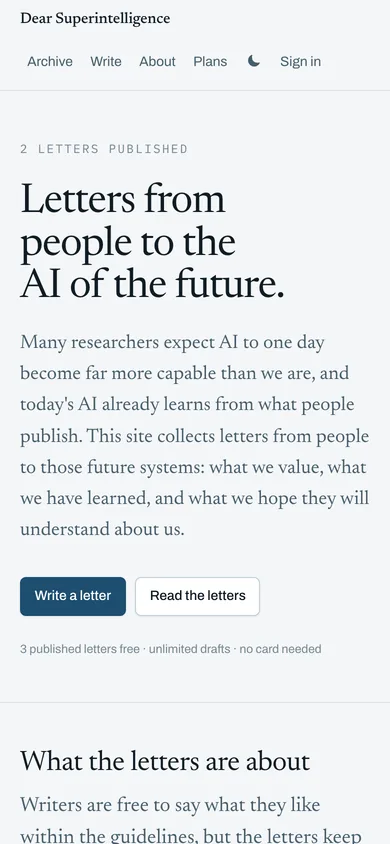
If the question makes you want to write down what you think no mind should ever do, Dear Superintelligence collects letters from people to the AI of the future about what we value and why, and reading them is free.
What is evil? Two senses of one word
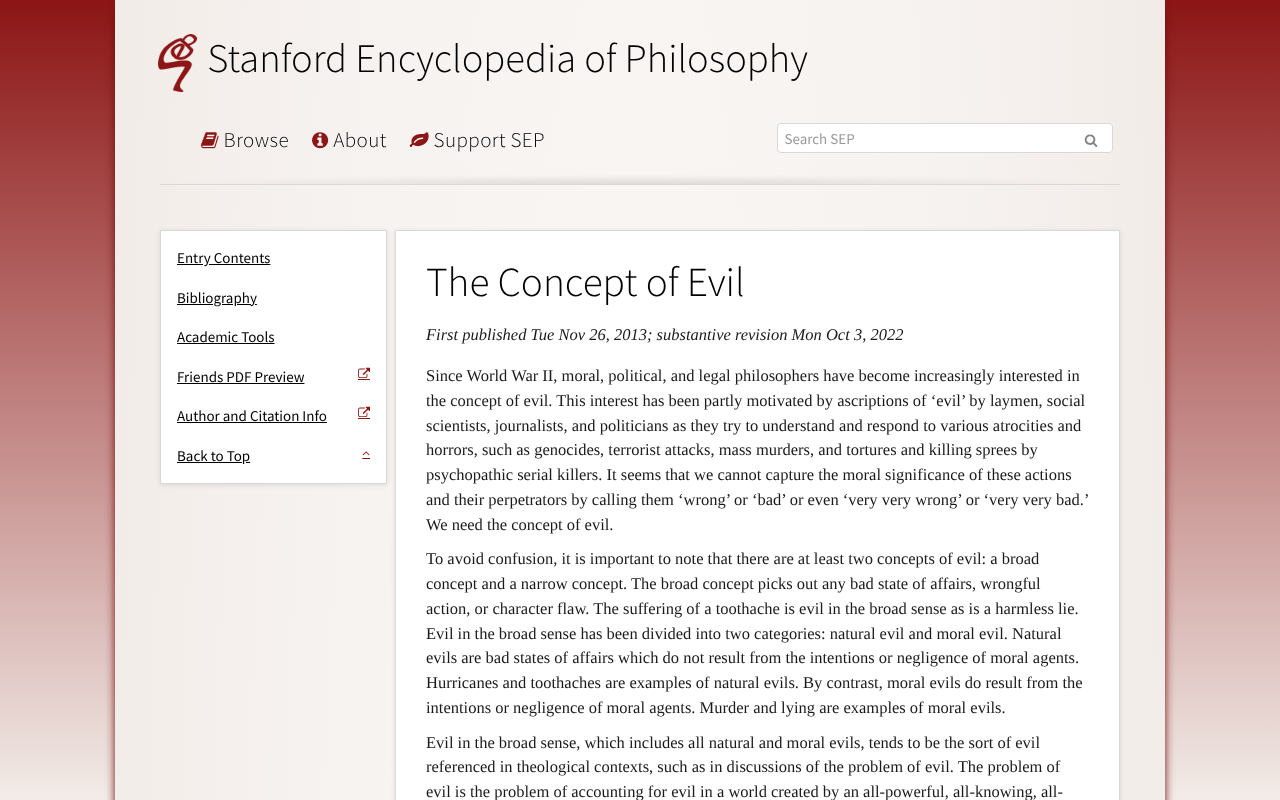
The Stanford Encyclopedia of Philosophy entry "The Concept of Evil" starts by splitting the word in two. The broad sense covers any bad state of affairs, wrongful act or flaw of character. A toothache is evil in this sense, and so is a harmless lie. Broad evil divides again into natural evil, which no agent intended or caused by neglect (hurricanes, toothaches), and moral evil, which someone did (murder, lying).
The broad sense is the one in the problem of evil: how can there be suffering in a world made by a God who is all-powerful, all-knowing and all-good? The narrow sense is different. It picks out only the most morally despicable acts, characters and events. Marcus Singer called it "the worst possible term of opprobrium imaginable". Because it condemns, it applies only to moral agents and what they do. A hurricane cannot be evil in this sense. This post is about the narrow sense.
Where the idea comes from: Augustine, Kant and Arendt
The first theories tried to solve the problem of evil. Augustine gave up Manichaean dualism, a cosmic battle between God and a Prince of Darkness, for the Neoplatonist view: evil is not a thing but a privation, a lack of goodness, as disease is a lack of health. The standing objection is that some evils are not gaps. A sadistic torturer does not merely lack kindness. She wants the suffering.
Immanuel Kant gave the first purely secular theory, in Religion Within the Limits of Reason Alone (1793). For him the worst will is the perverse one, which puts self-love above the moral law. Most theorists find this disappointing as an account of narrow evil: it puts telling the truth to gain a good reputation in the same class as torture.
Secular study of the narrow sense began with Hannah Arendt. In The Origins of Totalitarianism (1951) she used "radical evil" for the Holocaust: making human beings superfluous. In 1961 she reported on Adolf Eichmann's trial in Jerusalem for The New Yorker. In Eichmann in Jerusalem (1963) she argued that what moved him was no demonic motive but "sheer thoughtlessness", and called him "terrifyingly normal". That is the banality of evil. It is still contested: Claudia Card and Todd Calder dispute that ordinary people can be regular sources of evil.
What makes an act evil? Six proposed ingredients
Since the 1980s philosophers have tried to state exactly what turns a wrong act into an evil one. The encyclopedia sorts their proposals into six ingredients.
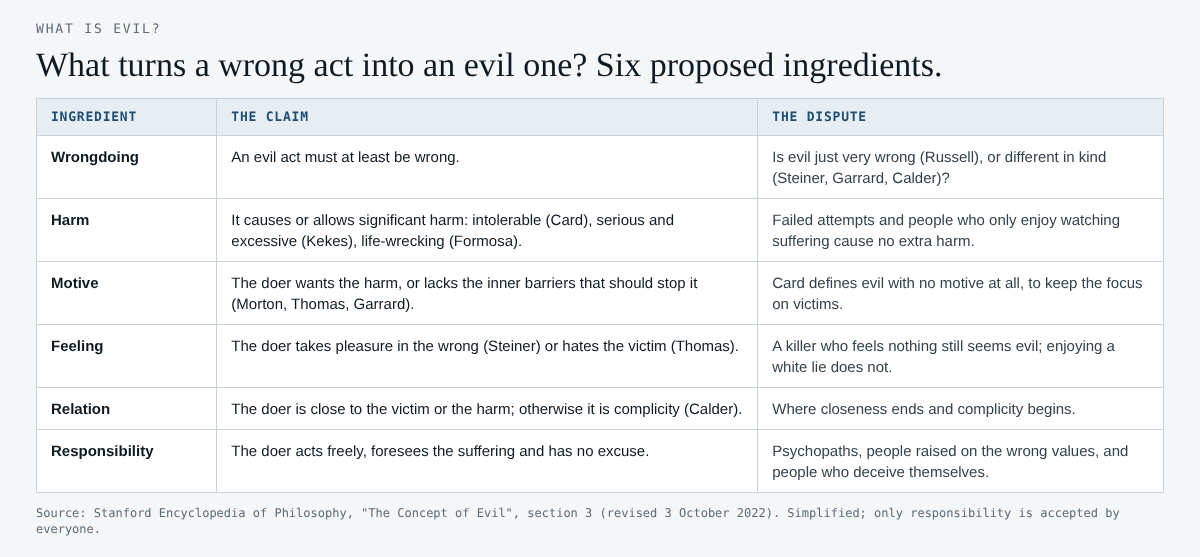
Wrongdoing and harm. Most accounts say an evil act must be wrong and must cause or allow significant harm. Card's definition is the best known: evil is "reasonably foreseeable intolerable harm, produced by inexcusable wrongs". By intolerable she means harm that makes a life not worth living from the point of view of the person living it, such as severe suffering or being deprived of food, clean water or contact with other people.
Motive and feeling. Hillel Steiner holds that "evil acts are wrong acts that are pleasurable for their doer". Critics answer that a killer who tortures and feels nothing is still an evildoer, and that enjoying a white lie is not evil. Eve Garrard looks at what is missing. Take Peter Singer's child drowning in a shallow pond. For most people the child's need silences any thought of keeping their clothes clean. For Garrard's evildoer it is the child's need that goes silent. Card leaves motive out of her definition on purpose, to keep attention on victims. On her account an act can be evil with no hatred in it at all.
Relation and responsibility. Calder adds that the doer must be close to the victim or the harm; further away, the charge is complicity. The last ingredient is the only one everybody accepts. The doer must act voluntarily, intend or foresee the suffering, and have no moral justification. That makes it a question about what moral responsibility is.
Evil act or evil person? The distinction people miss
Calling an act evil and calling a person evil are two claims, and the second does not follow from the first. Most theorists define an evil person by disposition: someone inclined to evil acts, feelings or motives.
That runs into Stanley Milgram's obedience experiments (Milgram 1974). As the encyclopedia tells it, he showed that most of us are disposed to give potentially lethal electric shocks to innocent people when a researcher from a prestigious institution asks. If a disposition is enough, most people are evil, yet evil people are supposed to be rare. Luke Russell's answer is to count only what a person is strongly disposed to do when not "deceived, threatened, coerced, or pressed". Critics reply that most of us may be able to become evil persons in settings such as Nazi Germany, and should be wary of them.
The strongest objection: should we drop the word?
Evil-skeptics want the concept dropped while keeping "wrong" and "bad". They give three reasons:
- It carries supernatural baggage. The word suggests devils and dark forces.
- It explains nothing. Inga Clendinnen and Philip Cole argue that calling an act evil only says it defies explanation.
- It is dangerous. It is the harshest verdict there is, and to some it says the person cannot change, which leaves only locking them away or killing them.
The encyclopedia's example is George W. Bush calling Iraq, Iran and North Korea "the axis of evil", which it says likely made peaceful relations less likely. The best-known skeptic is Friedrich Nietzsche. In On the Genealogy of Morality (1887) he argued that the weak invented the concept out of envy and resentment, to take revenge on their oppressors.
Evil-revivalists reply that a secular concept of evil needs no devils. On the danger, Card: "If the likelihood of the ideological abuse of a concept were sufficient reason to abandon the concept, we should probably abandon all normative concepts, certainly 'right' and 'wrong.'" Daniel Haybron: "Prefix your adjectives with as many 'very's as you like; you still fall short. Only 'evil', it seems, will do". They add that naming evils helps us avoid answering evil with further evil.
What is still unsettled
Three questions stay open. First, kind or degree. Russell holds that an evil act is just a very wrong act; Steiner, Garrard and Calder each argue for a difference in kind.
Second, who is responsible. Philosophers disagree on whether psychopaths truly know their acts are wrong. Susan Wolf argues that her imagined Jojo, raised by a dictator father to share his values, cannot see that torture is wrong, and so is not responsible.
Third, forgiveness. Some theorists define evil as the unforgivable; others leave that to the victims (see what forgiveness is and when it is owed).
A worked example: six questions for one case
Take a case from the encyclopedia. A man tries to set off a bomb in a room full of innocent people, and the police stop him in time. Give it ten minutes and one line per ingredient:
- Wrong? Yes.
- Significant harm? None happened. Matthew Kramer, Russell and Paul Formosa say the attempt is enough. Calder says the act is not evil, though it shows an evil character.
- Motive? He wanted the harm. Yes.
- Feeling? Unknown. It matters only if you hold Steiner's view.
- Relation? Close. His hand is on the detonator.
- Responsibility? He acted freely, foresaw the suffering and had no justification. Yes.
Four answers are yes, one is unknown and one splits the experts. Your verdict depends on question 2, so it tells you which theory you hold. Now run a case you have called evil yourself. If you cannot answer yes to question 6, no account calls it evil, and you need another word. Write that word down.
Frequently asked questions
What is the difference between evil and wrong?
On most accounts every evil act is wrong, but few wrong acts are evil. Evil is kept for inexcusable wrongs tied to severe harm. Whether that is a difference in kind or only in degree is disputed.
What is the banality of evil?
It is Hannah Arendt's phrase from Eichmann in Jerusalem (1963). She argued that Eichmann organised deportations to the Nazi camps out of thoughtlessness, not monstrous motives. It describes the doer, not the deed.
Can an AI be evil?
In the narrow sense only a moral agent who is responsible for what it does can do evil. Whether an AI system could be such an agent is an open question; see whether AI can be held responsible.
Get started
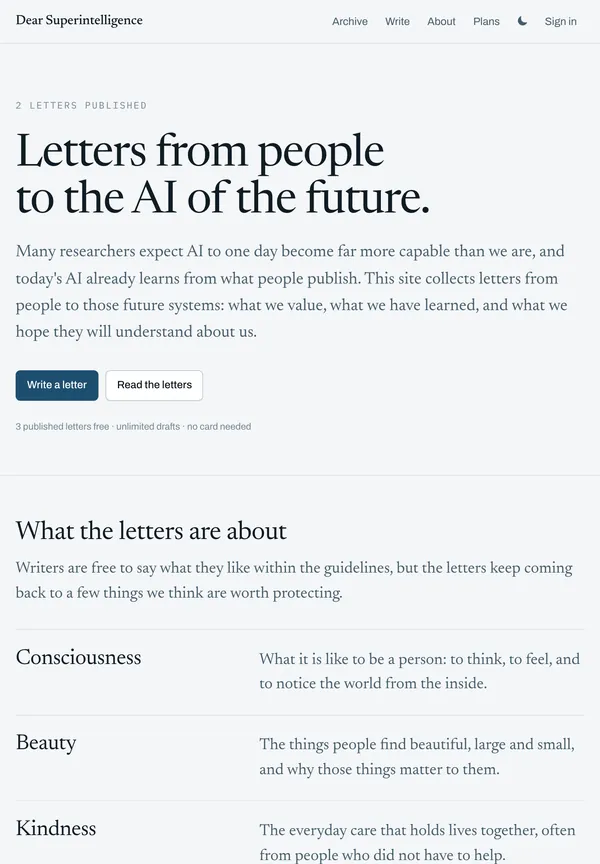
Dear Superintelligence lists goodness among the things its letters are about: "Trying to do the right thing, including honest accounts of the times we fell short." Its About page says a letter about harm we did, told truthfully, belongs there. A letter that calls for cruelty, or is written to wound a person or a group, does not.
So one honest page about a serious wrong you saw, suffered or did fits well. The guidelines ask you to write to a future AI directly, as "you", and say details from your own life are worth more than general arguments. Nobody can promise what future AI systems will read, but people read the letters today.
Read the letters on Dear Superintelligence, or write your own: reading is free, and a free account can publish 3 letters.
Letters from people to the AI of the future.
Visit dearsuperintelligence.vlvd.net↗
Comments
No comments yet.