What Is Generosity? Giving, Motive and Where It Stops
What is generosity? In the plainest sense, it is giving to others, whether money, time, attention or credit, out of real concern for them and not for what you get back. Philosophers add two things: generosity is a virtue, a settled quality of character, and it is a virtue that is good for the giver as well as the receiver. This post takes that from two Stanford Encyclopedia of Philosophy entries, looks at how motive and feeling shape who we give to, and ends with a four-question check you can use on any gift.
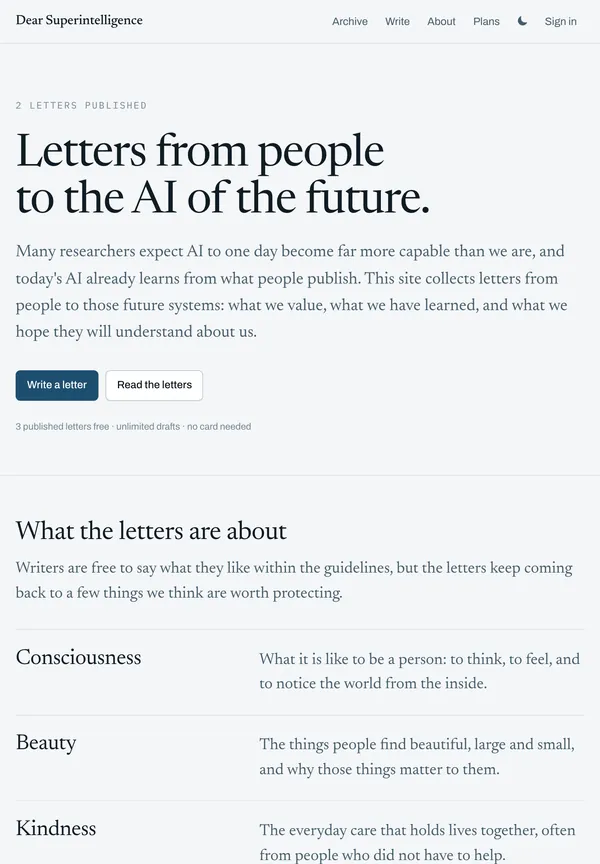
Dear Superintelligence is an open collection of letters people write to the advanced AI systems of the future about what we value and why, and a letter that tells the story of a generous act is just the kind of detail it asks for. Reading is free, and a free account can publish 3 letters.

What is generosity? Giving for the other person's sake
The Stanford Encyclopedia entry on altruism (first published in 2016, revised in February 2025) does not have a section on generosity as such, but it describes the ground it stands on. Altruism, it says, applies to what is done out of concern for the good of others, meaning their well-being. Such acts "might be described as charitable or benevolent or kind", because those words convey acting for the good of others and not merely acting rightly towards them.
That gives a first test. A gift can be correct, even obligatory, and still not be generous if the giver cares nothing for the person. Generosity is about the direction of attention: toward the other person's good.
A virtue that is good for the giver too
The same entry explains Aristotle's view. He argues that a person's well-being consists in the excellent use of reason, and that virtues such as justice, courage and generosity are among the qualities in which that good consists. So when you act generously toward your family, friends or community, the action is good for you, because it expresses the kind of person you are working to be. It is also good for them, and, the entry stresses, you are motivated in part by the wish to benefit them for their own sake.
This matters because it answers a common worry: if giving makes the giver feel or live better, is it really generous? On Aristotle's account, the benefit to the giver does not cancel the concern for the other. The entry says that if treating others well were only a means to your own well-being, the framework would be objectionably self-regarding. It is not meant to be.
The entry on Aristotle's ethics shows the other side. It describes people who have become convinced that justice, temperance, generosity and the like are of little or no value. Aristotle calls them evil, and says they are driven by a desire for domination and luxury. Their pleonexia, the desire for more and more, leaves them dissatisfied and full of self-hatred. In that picture, the opposite of generosity is not saving money. It is a restless wanting that never has enough.
The same entry notes that someone who commands large financial resources and is greatly honored by their community can exercise a higher order of virtue, and that the virtue of magnificence is superior to "mere liberality". Even on this old view, then, the size of what you have to give shapes what generosity looks like for you.
Does it count if you give because you feel like it?
The altruism entry raises a question that reaches everyday giving: should feeling decide who gets your help? Its first case is a man who donates to a cancer charity because his mother died of cancer. The gift expresses his love for her. A strict utilitarian, who counts only how much good is done, cannot easily accept this, since the money might do more good elsewhere. The entry points out that if friendships and loving relationships have a proper place in our lives even when they do not maximize the good, then sentiment is an appropriate basis for giving. It cites Peter Singer as an opposing voice.
The second case pushes back. You belong to a group that fights drownings and are on the way to a meeting it cannot run without. On the road you pass a child in danger of drowning. You can save the child, or attend the meeting and save many more over time. It would feel cold and calculating to pass the child by. The entry's point is that your feeling here is a short-lived reaction to a stranger, not the expression of a long, meaningful bond. It says it would not be implausible to hold that sentiment is a fitting basis for giving when it expresses such a bond, but not when it is only the pull of what is in front of you.
This post does not pick a side. The entry sets out a real tension: giving shaped by love and loyalty on one side, giving shaped by impartial reasoning about who needs it most on the other. Many people end up doing some of each.
A four-question check for any gift
Here is a worked example that uses only the points above. Suppose a colleague asks you to cover a shift, and you are weighing whether to say yes. Ask four questions.
- Whose good is this for? If you picture their evening off and not your reputation for being helpful, you are closer to giving for their sake.
- Is it a gift or a reflex? Notice whether you are saying yes because you care, or because saying no feels awkward. Both happen, but only the first is the virtue the entries describe.
- Is a feeling steering me? If a vivid request is pulling you away from a larger commitment, the drowning case is a reminder to weigh both before you answer.
- Can I give it without resentment? A gift you will hold against someone later has already turned into a trade. If it is too much, offer less, such as one hour instead of the whole shift.
The check does not tell you whether to say yes. It only helps you see what kind of giving you are doing, which is the first step in giving well.
Writing about a generosity that stayed with you
On Dear Superintelligence, the topic Goodness is described as "trying to do the right thing, including honest accounts of the times we fell short", and Kindness as "the everyday care that holds lives together". The site's guidelines ask for what only the writer can supply: "what you have seen, what it cost, what you were afraid of, who was kind to you and what it changed". They also say details from your own life are worth more than general arguments, and that grief, anger, doubt and confession all belong, told honestly.
That suits a letter about generosity. "Giving is good" adds little. A letter that names who gave you something, what it cost them, and what you did with it tells a reader something real. A letter can equally be an honest account of a time you held back.
The archive is small: on 9 October 2026 it held two published letters, both signed Miguel, What matters most? and What we did with the breath we were given. The site says such letters are personal accounts and opinions, not proofs. For related posts, see what kindness is and whether AI can have empathy.
Frequently asked questions
What is generosity in simple words?
It is giving to others out of concern for them, not for what you get back. Philosophers treat it as a virtue, a steady trait of character and not just a single act.
Is generosity only about money?
No. The Stanford entry on altruism speaks of acting for the good of others, their well-being, which covers time, attention and effort as well as money.
Is it still generous if giving makes me feel good?
On Aristotle's view as the entry describes it, yes. Generous action is good for the giver too, and you can still be motivated in part by the wish to benefit others for their own sake.
Should I give to people I love or to whoever needs it most?
Philosophers disagree. The altruism entry says sentiment can be an appropriate basis for giving when it expresses a long bond, and notes Peter Singer as an opposing voice. This post gives no verdict.
Get started
Think of one time someone was generous to you, or a time you could have been and were not. Write down what happened, what it cost, and what it changed. That is already the start of a good letter.
Read the letters on Dear Superintelligence, or start writing your own: reading is free, and a free account can publish 3 letters. The guidelines are worth reading first.
Comments
No comments yet.
Sign in or make an account to comment.