Baconsthorpe Castle: a Norfolk moated house built on wool
Baconsthorpe Castle is a moated ruin in north Norfolk, and its story is the story of one family. English Heritage's history of Baconsthorpe says the Heydons lived there for 200 years: they rose through the law, grew rich on wool, and then spent and borrowed until they had to pull most of the castle down and sell the stone. This post follows that rise and fall.
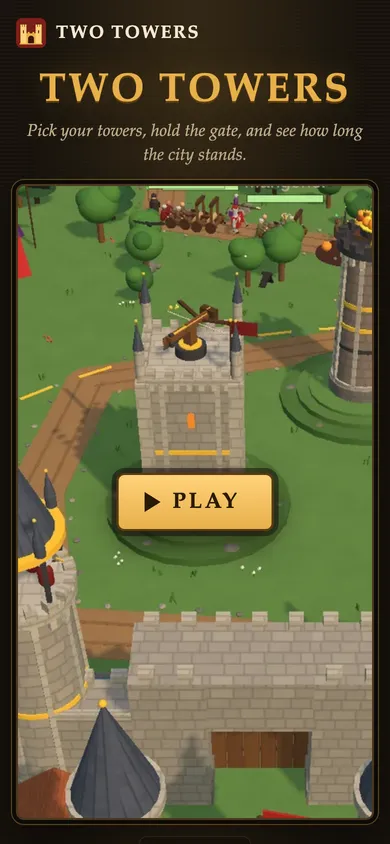
If you would rather spend your gold wisely than lose your walls, Two Towers is a free tower defense game in your browser where every coin you win goes into towers and a gate that must last stage after stage.
A lawyer's castle: John Heydon
Early in the 15th century a free yeoman named William Baxter bought the site from the Bacon family. His son John became a lawyer and rose as a supporter and agent of William de la Pole, 1st Duke of Suffolk. John changed the family name to Heydon, to hide how humble its roots were.
In the Wars of the Roses John often changed sides to suit himself. English Heritage says his many enemies thought him shifty, ruthless and grasping, but as a cunning lawyer he always seemed to come out ahead. Around 1450 he began Baconsthorpe as a grand home that would show off his family's new rank.
His son, Sir Henry Heydon, was knighted at Henry VII's coronation in 1485. He finished and extended the castle and added a garden court in the early 16th century.
Baconsthorpe Castle as a fortified manor house
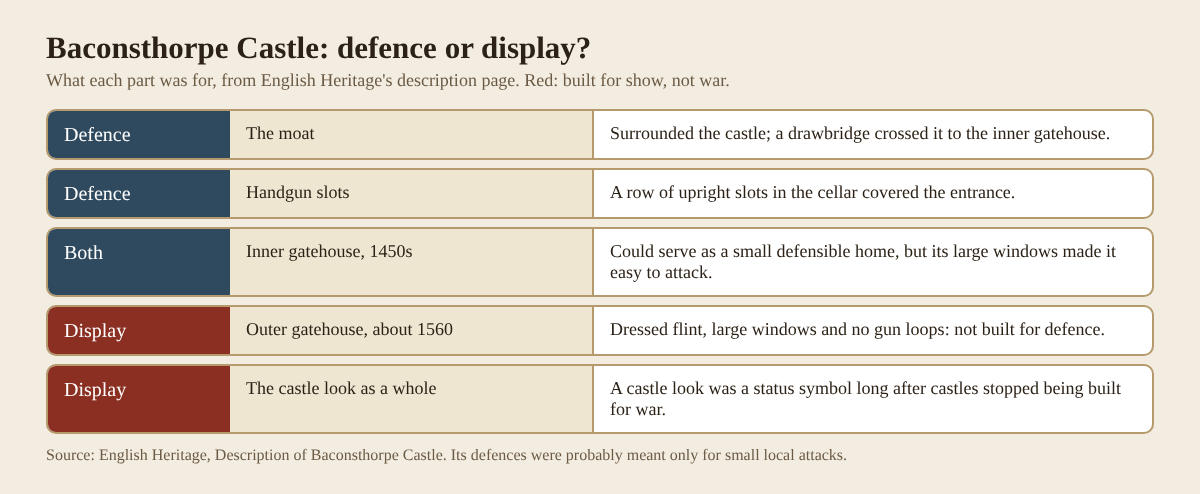
The description of Baconsthorpe Castle calls it a fortified manor house. It mixed a home with castle parts: a moat, gatehouses and turrets. A castle look was a mark of status long after castles stopped being built for war.
The first part built was the three-storey inner gatehouse of the 1450s. A drawbridge crossed the moat to it, and it was big enough to serve as a small defensible home in times of danger. But its large windows made it easy to attack, and it was probably only meant to stop small local raids. Below the great chamber was a cellar with a row of upright handgun slots covering the entrance. Our posts on the castle drawbridge and arrow loops and gun loops explain those features.
Wool: the Heydons' fortune
The law made the Heydons' first money, but wool made them rich. By Tudor times Baconsthorpe sat at the heart of a huge sheep estate. English Heritage's page on the Tudor wool factory says the land around the castle was pasture, grazed by many thousands of sheep.
Sir John Heydon II turned the castle's east service range into a factory for processing wool. Large windows gave light to the spinners and weavers, and the cloth was sold in England and the Netherlands. A sunken tank in the north-east tower was probably used to thicken cloth.
Sir Christopher Heydon I once gave Christmas dinner to 30 head shepherds of his own flocks. English Heritage reads that as a sign of 20,000 to 30,000 sheep on his lands.
Peak years: the outer gatehouse and the park
The family was at its height in the 1560s. Sir Christopher I had 80 servants and his own coach with two horses, a rare luxury. He built an outer gatehouse of costly dressed flint, finished around 1560, and made a park in 1561.
That outer gatehouse looks strong, but English Heritage says it was not built for defence: it had large windows and no gun loops. It was a grand front door. Our post on the castle gatehouse shows what a gatehouse built for war looked like.
Debt, sales and the fall of the Heydons
Even at their peak, the Heydons were living beyond their means. The wool trade was declining, but English Heritage says the estates should still have paid their way. The problem was spending. Sir Christopher I died in debt in 1579. He and his heirs were not shrewd like the first Heydons, and they kept living as grandly as ever.
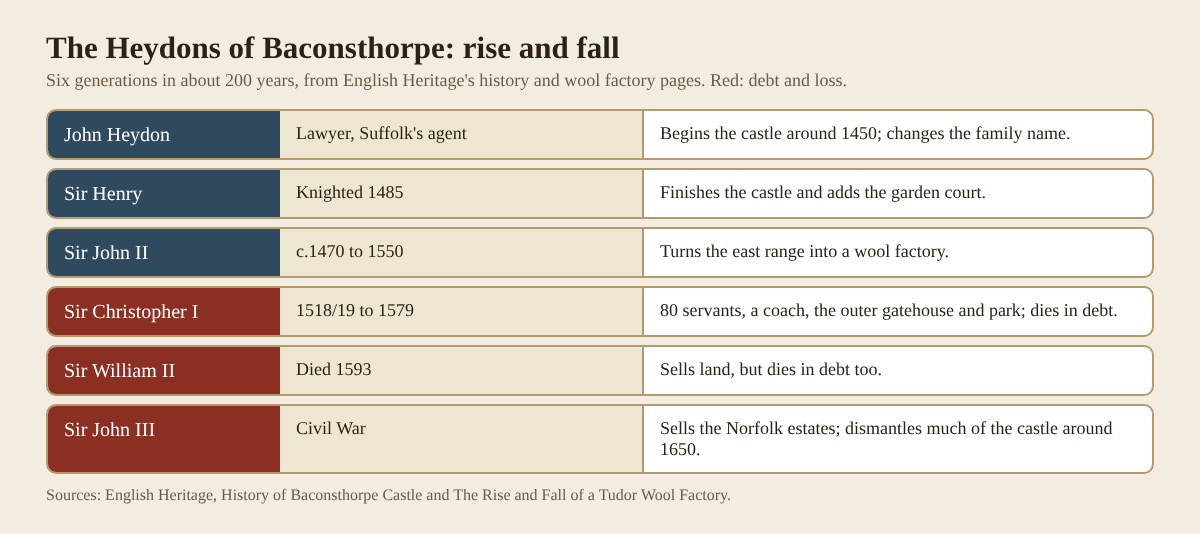
Sir William Heydon II sold land to balance the books but died in debt too, in 1593. His son, Sir Christopher II, liked writing about astrology more than farming sheep. Even so, an ornamental mere was made on the moat in the late 16th or early 17th century.
The end came with Sir John Heydon III, who chose the losing side in the Civil War. He sold all the family's Norfolk estates and, around 1650, took much of the castle apart to sell as building stone. Stained glass shields from the banqueting hall went to Baconsthorpe Church, where you can still see them. The outer gatehouse became a house, Baconsthorpe Hall, and people lived in it until 1920, when one of its turrets fell.
A worked example: spend like the early Heydons
Baconsthorpe was not lost to a siege. It was lost to spending. In Two Towers, gold is your estate: you win it each stage, and how you spend it decides how long the gate stands. Here is a budget built from the game's own text.
- Start with towers that earn their keep. Pick your two gate towers on the title screen from the Archer Tower, Trebuchet, Ballista and Fire Tower. Against a crowd, the game says: "Peasants win by numbers: a Trebuchet or Fire Tower hits the whole crowd at once."
- Put gold where it defends. The game's rule is: "Spend your gold on Damage between stages, and Reinforce the gate." A grand look with no strength is Baconsthorpe's outer gatehouse.
- Save for the hard stage. "A king leads every fifth stage: Reinforce the gate before it and save gold for Damage." Do not spend it all the stage before.
- Grow only when you can pay for it. A hill tower costs 150 gold for the first and 300 for the second. Buy the second when your gate towers are strong, not before.
- Answer the threat in front of you. "Archers shoot the gate from the road: buy Range so your towers reach them before they stop."
After each stage, ask the Heydon question: did that gold make the gate safer? If not, spend the next lot differently.
Frequently asked questions
Who built Baconsthorpe Castle?
John Heydon, a lawyer and agent of the Duke of Suffolk, began it around 1450 with the inner gatehouse. His son Sir Henry finished and extended it.
Was Baconsthorpe a real castle?
English Heritage calls it a fortified manor house. It had a moat, a drawbridge and handgun slots, but its large windows meant it could only have stopped small local attacks.
How did the Heydons make their money?
First from the law, then from wool. The east range became a factory for making cloth, and Sir Christopher I may have had 20,000 to 30,000 sheep.
Why was Baconsthorpe Castle pulled down?
The Heydons ran up debts over several generations. Around 1650 Sir John Heydon III sold the estates and took much of the castle apart to sell as building materials.
Get started
The Heydons built a fortune and then spent it away. To see how far careful spending can carry a gate, play Two Towers: pick your two towers, put your gold into damage and the gate, and see how many stages you hold.
Defend the castle gate, stage after stage.
Visit twotowers.vlvd.net↗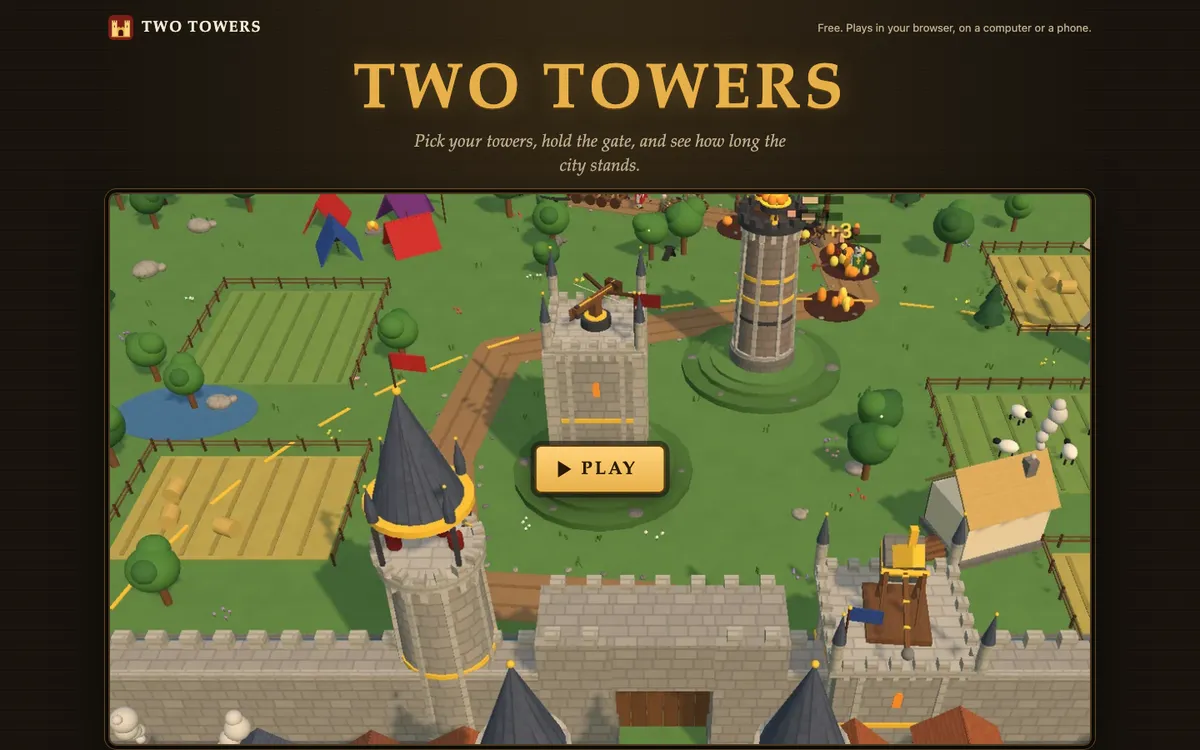
Comments
No comments yet.