Christchurch Castle: the Norman House and two civil wars
Christchurch Castle is two ruins in the Dorset town of Christchurch: a stone keep on an earth mound, and a riverside building called the Norman House. English Heritage's history of Christchurch Castle and Norman House says they are what is left of a fortified home of the de Redvers earls of Devon, attacked in two civil wars. This post follows the castle from a Saxon town to the order that pulled it down.
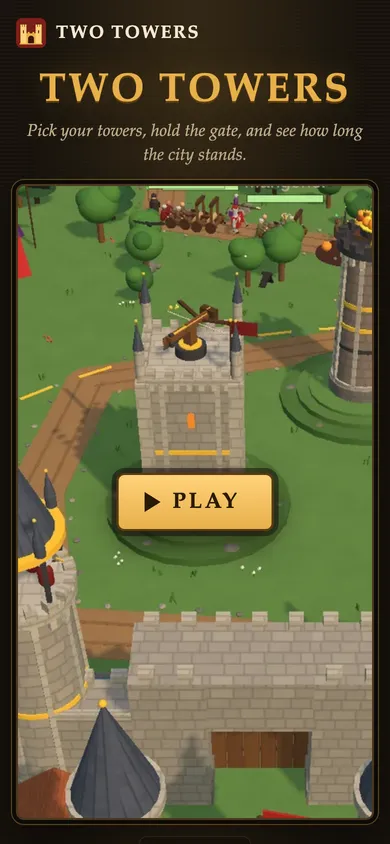
If you would like to hold a gate of your own, Two Towers is a free tower defense game in your browser where you pick two towers for the gate and keep it standing stage after stage.
Before the castle: a town between the rivers
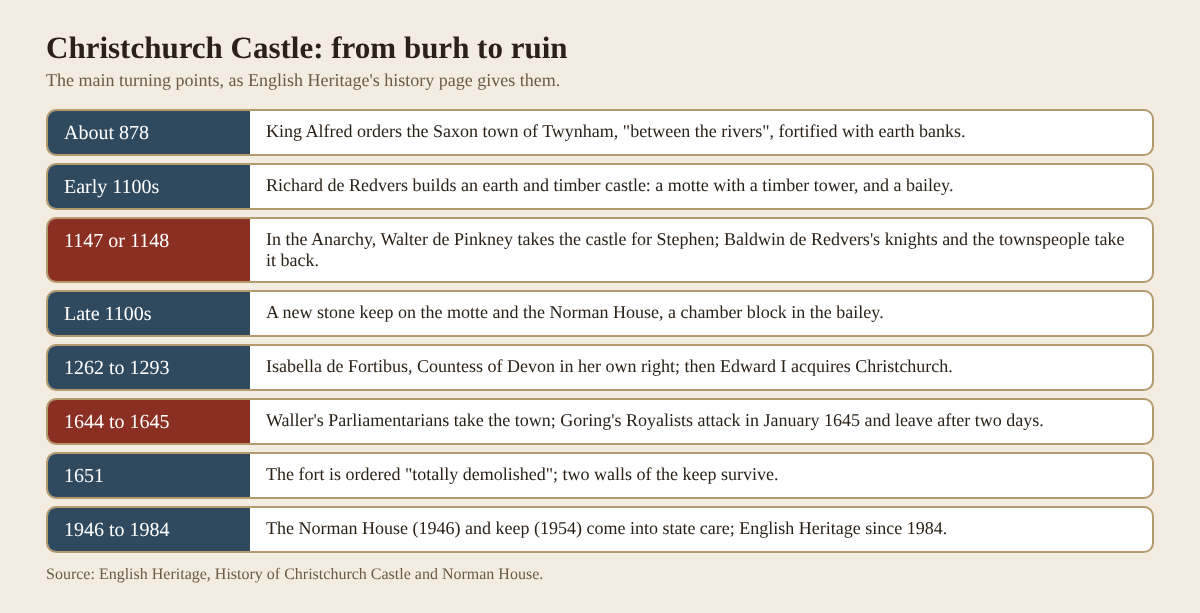
The Saxon town here was called Twynham, which means "between the rivers". It sat on raised ground between the Stour and the Avon, just north of where they meet and run into the sea. In about 878 King Alfred ordered it fortified with earth banks.
By the 11th century this burh, or fortified town, had a large church and a royal mint. The church later became a large Augustinian priory, and the town slowly took its name: Christchurch.
Who built Christchurch Castle?
A Norman knight, Richard de Redvers, built it on the east side of the Saxon town, probably in the early 1100s. He was a loyal supporter of Henry I, and Henry rewarded him with the estates of Christchurch, Plympton in Devon and Carisbrooke on the Isle of Wight.
At Christchurch he made an earth and timber castle with deep ditches. He piled the soil from the ditches into a high mound, a motte, with a timber tower on top. The rest was a larger enclosure, the bailey, behind a ditch, bank and wooden fence. Our post on motte and bailey castles explains this design. Richard died in 1107 and his son Baldwin took over.
Captured and taken back in the Anarchy
Henry I died in 1135 and named his daughter Matilda as his heir. His nephew Stephen took the throne instead, and a civil war followed, known as the Anarchy.
Baldwin de Redvers backed Matilda, who made him Earl of Devon in 1141. That made his castles targets. In 1147 or 1148 one of Stephen's supporters, Walter de Pinkney, captured Christchurch Castle. He killed some of the defenders, imprisoned others and plundered the town.
Baldwin sent a troop of knights. Helped by the townspeople, they killed Walter in the church with an axe, then besieged the castle and took it back. Baldwin had backed the eventual winner: in 1154 Stephen died and Matilda's eldest son became Henry II.
A stone keep built after a capture
Some decades later, one of Baldwin's successors rebuilt the castle in stone. The keep and the Norman House use a similar mix of local stone, so English Heritage thinks they were one building programme in the late 12th century.
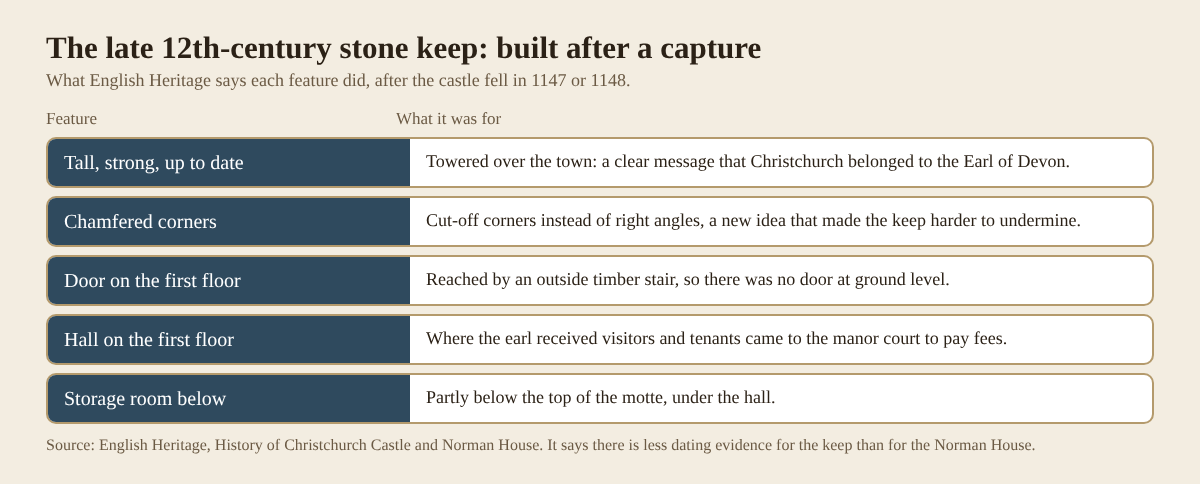
Whoever built it may have remembered the capture of 1147 or 1148. The new keep was tall, strong and up to date. Its corners were chamfered, cut off at an angle instead of square, a new idea that made it harder for attackers to undermine. Our post on how siege mines worked shows how attackers dug under castle walls.
The door was on the first floor, reached by an outside timber stair. It opened into a hall where the earl received visitors and tenants came to the manor court to pay fees. Below was a storeroom, partly sunk into the top of the motte. Only two of the keep's walls stand today, but it once towered over the town as a sign of who owned it.
The Norman House
The Norman House is a chamber block, built for comfort rather than defence. Its main rooms were on the upper floor. The larger room was probably a great chamber, a grand private room for the lord. It was painted white with red lines to look like fine stonework, warmed by a huge fireplace and lit by five windows.
English Heritage says it has one of England's earliest surviving chimneys. The most likely builders are Baldwin, 3rd Earl of Devon, in the 1180s, or William, the 5th Earl, in the 1190s. In the 13th century a two-storey toilet block was added, draining straight into the mill stream and moat.
The earls visited only now and then, on the way between Carisbrooke and their lands in Devon. Isabella de Fortibus, Countess of Devon in her own right from 1262, held Christchurch until she died in 1293, and then Edward I acquired it. Day to day, a steward or constable ran the castle, and the Norman House became known as the Constable's House.
Christchurch Castle in the Civil War
When civil war came in the 1640s, Christchurch was first held by Royalists. In April 1644 a Parliamentarian force under Sir William Waller took the town by surprise. His soldiers seem to have redug part of the moat and lengthened the motte, perhaps to make platforms for guns.
In January 1645 the Royalist Colonel Goring attacked with about a thousand men. The heavily outnumbered defenders fell back into the old castle. Then the Royalists saw a signal beacon at Poole. They took it to mean Parliamentarian help was coming, and retreated under fire. The siege was over in two days.
After the war, in 1651, the local Justices of the Peace were ordered to see that the fort was "totally demolished" and its guns sent to Poole. They did, and local people took the stone for building. For other castles' fates, see our post on what happened to castles in the Civil War.
A worked example: hold the gate when you are outnumbered
In 1645 Christchurch's small garrison held its strongest point and waited. In Two Towers each stage comes stronger, faster or in greater numbers, with no final stage. Here is a plan built only from what the game says.
- Pick the gate pair. On the title screen choose a tower for each side of the gate from the Archer Tower, Trebuchet, Ballista and Fire Tower.
- Cover the road. "Archers shoot the gate from the road: buy Range so your towers reach them before they stop."
- Raise your own mound. Waller's men built up the motte for their guns. You can buy a tower for West Hill or East Hill: the first costs 150 gold and the second 300. "Mangonels throw stones from far off: a hill tower with Range reaches them."
- Repair between attacks. "Spend your gold on Damage between stages, and Reinforce the gate."
- Be ready for the big push. "A king leads every fifth stage: Reinforce the gate before it and save gold for Damage."
Play five stages, note which attackers reached the gate, and change one step at a time. Our gate post explains when to repair and when to reinforce.
Frequently asked questions
Who built Christchurch Castle?
Richard de Redvers, a Norman knight, built the first earth and timber castle, probably in the early 1100s. The stone keep and the Norman House came in the late 12th century.
What is the Norman House at Christchurch?
It is a 12th-century chamber block that held the lord's private rooms. English Heritage says it is a rare survival of Norman domestic building, with one of England's earliest surviving chimneys.
Was Christchurch Castle ever besieged?
Yes. It was captured and retaken in 1147 or 1148 during the Anarchy, and in January 1645 Royalists besieged it for two days before retreating.
Why is Christchurch Castle a ruin?
In 1651, after the Civil War, the local Justices of the Peace were ordered to have it totally demolished. Only two walls of the keep survive.
Get started
Christchurch held out in 1645 because its defenders kept to their strongest ground. To try that at your own gate, play Two Towers: choose your two towers, add towers on the hills and see how many stages you can hold.
Defend the castle gate, stage after stage.
Visit twotowers.vlvd.net↗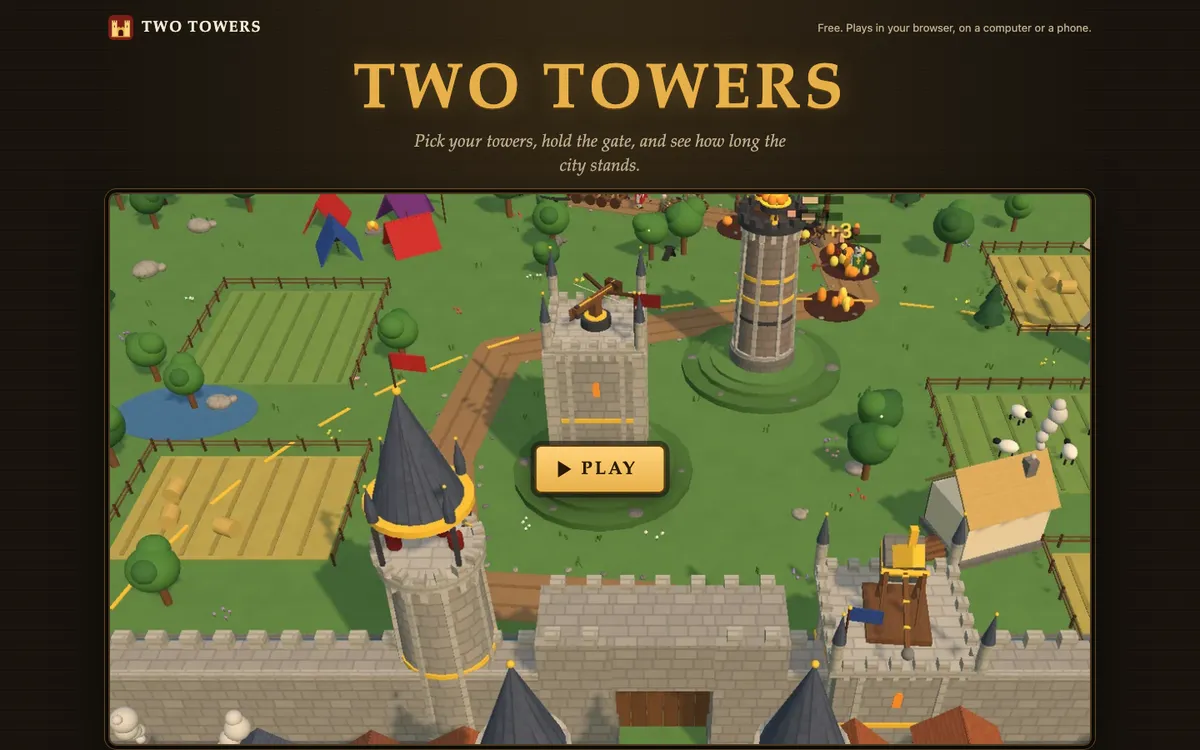
Comments
No comments yet.