How to go on a weather walk: catch rain, shadows and wind
To go on a weather walk, step out of your door with paper and a pencil, walk with no arrival point, and let the weather that is there set the task. In rain you catch drops in your palm and watch a puddle; in sun you catch a shadow on your paper; either way you end by writing one word. Below: how to go on a weather walk in rain, sun and wind, where the idea comes from, a 20-minute plan, and what research says about weather and mood.
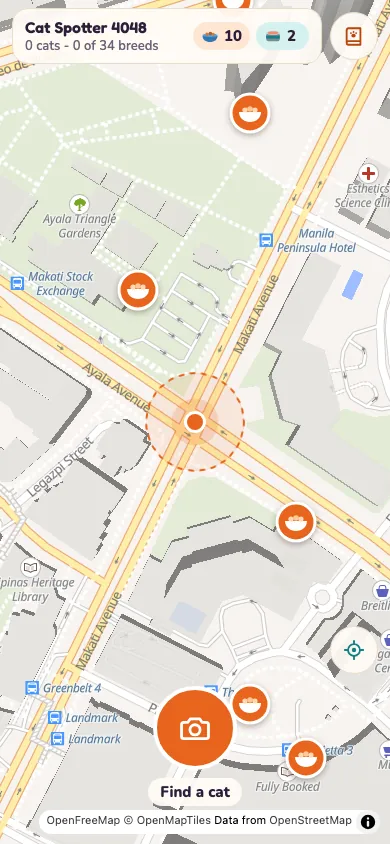
If your weather walk passes a cat, Cat Spot gives the same walk a second job: you collect treats at stops on a map as you walk, meet real cats outside, and keep each cat friend's photo with the place you met.
What a weather walk is, and where the idea comes from
The recipe is Stephanie Whitelaw's. She wrote "Weather Walks", subtitled "walk with the sun, walk with the rain", for The Walkbook (page 10), a collection of 30 walking recipes by artists from across the UK, supported by Living Streets. Her own definition: weather walks "seek to engage with weather conditions through walking as an act of spontaneity, offering a series of interactive, sensory prompts outdoors."
Two phrases carry the idea. The walks are "weather specific and responsive as they rely on rainfall or sunlight and are determined and governed by natural conditions". So you cannot book one for Thursday at six. And each is "a momentary witnessing", an "exploration of the ephemeral and fleeting, whether shadow from the sun, or water reflection from the rain".
This is the distinction people most often get wrong. A weather walk is not a walk you finish in spite of the weather, which is what our wet-day plan for walking when it rains is for. It is not forecasting either. Whitelaw calls it "leaning into the weather that is here for us". The weather is the subject.
The ingredients are paper, a pencil, and "Weather appropriate clothing and footwear". The walks can be taken "on foot or by wheelchair", in "both rural and urban environments".
How to go on a weather walk in rain
Whitelaw's rain version has six moves.
- Leave without a destination. "Walk out of your door and walk anywhere, allowing yourself to walk without a sense of an arrival point."
- Listen first. "As you walk, listen to the rain and observe the sound of the rain falling."
- Catch it. "Hold out your hand. Can you catch the rain?" Watch it fall into your palm for a few moments. "How does it feel?"
- Find a puddle. Ask "what can you see reflected?" Make ripples with a found object or your pencil, and watch "as the ripples alter what is reflected from above".
- Jump in. Then "splash with your feet. Make sounds and movement, warp the reflection."
- Write one word. "Take your pencil and write a word into the water that describes this moment."
Notice where the word goes: into the water. It is gone as you write it, so the record lasts no longer than the reflection did. If step two holds you longest, a sound walk is the same attention given to every sound on the street.
In sun: catch a shadow on your paper
The sun version starts the same way, with no arrival point. Then: "Spend a few moments tuning into the sun. How bright is it today? Can you feel warmth?" Look for where shadows are cast.
Now the catching. "Hold out your hand and try to catch the shadows from a form." Whitelaw suggests "a manmade structure like a lamp post or a bench", or "a plant or a tree branch". Turn your hand to bend the shadow. Then take the paper and "catch your shadow, holding your paper still". Her question: "Is the shadow still or is it moving?"
The last step differs from the rain walk in one way. You "write down one word on your piece of paper to describe this moment". The rain word washes away and the sun word comes home with you. Both versions share one shape: tune in, catch something, name it.
On a grey day: read the wind
Whitelaw's recipe relies on "rainfall or sunlight". On a dry, overcast day neither turns up. What follows is our addition, not hers: keep her shape and give the wind the middle step, using a tool from 1805.
That year Francis Beaufort, later an admiral, made a scale "to help sailors estimate the winds via visual observations", in the words of the US National Weather Service's Beaufort page. It runs from force 0 to force 12. The Met Office still uses it in marine forecasts and calls it "an empirical measure for describing wind intensity based on observed sea conditions". The land version swaps waves for things you pass on any street.
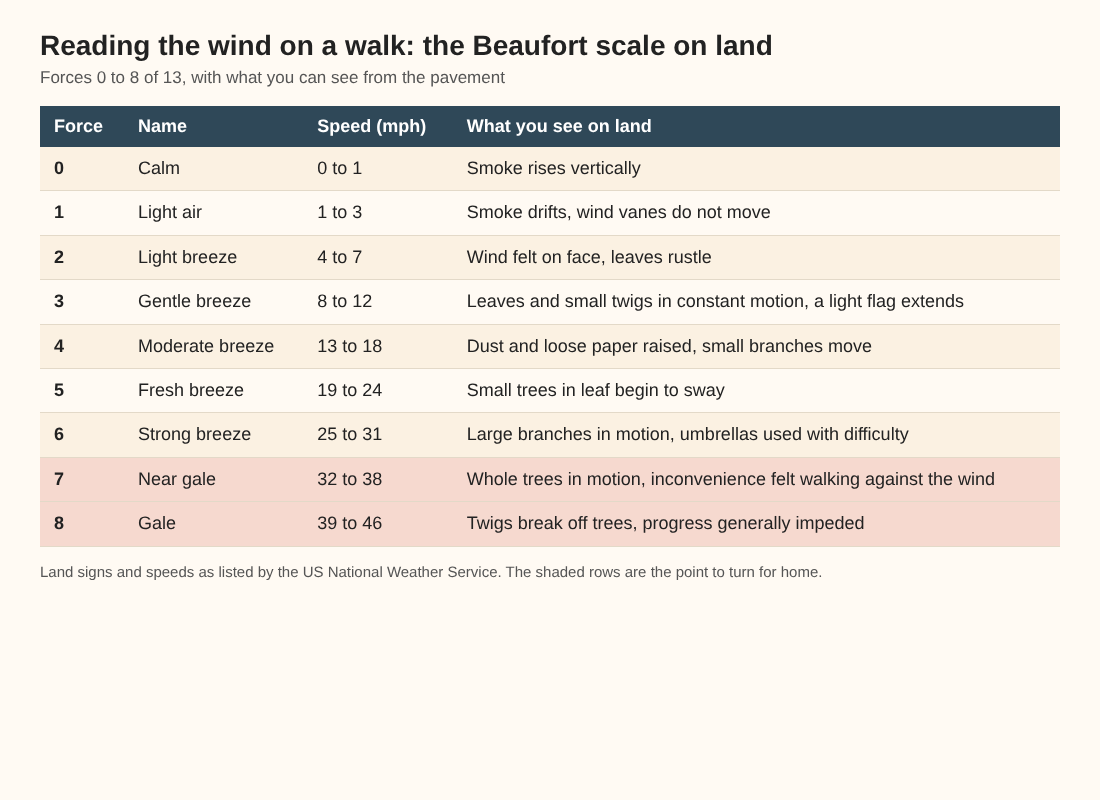
You read the wind from what it moves.
At force 2 the sign is "Wind felt on face; leaves rustle". At force 4 the wind "raises dust and loose paper" and small branches move. As with the shadow, you use no instrument, only what the weather does to the things around you. Stand still, find the sign that fits, and write the number.
A worked example: 20 minutes on a showery day
Showers with bright spells give you all three versions in one outing.
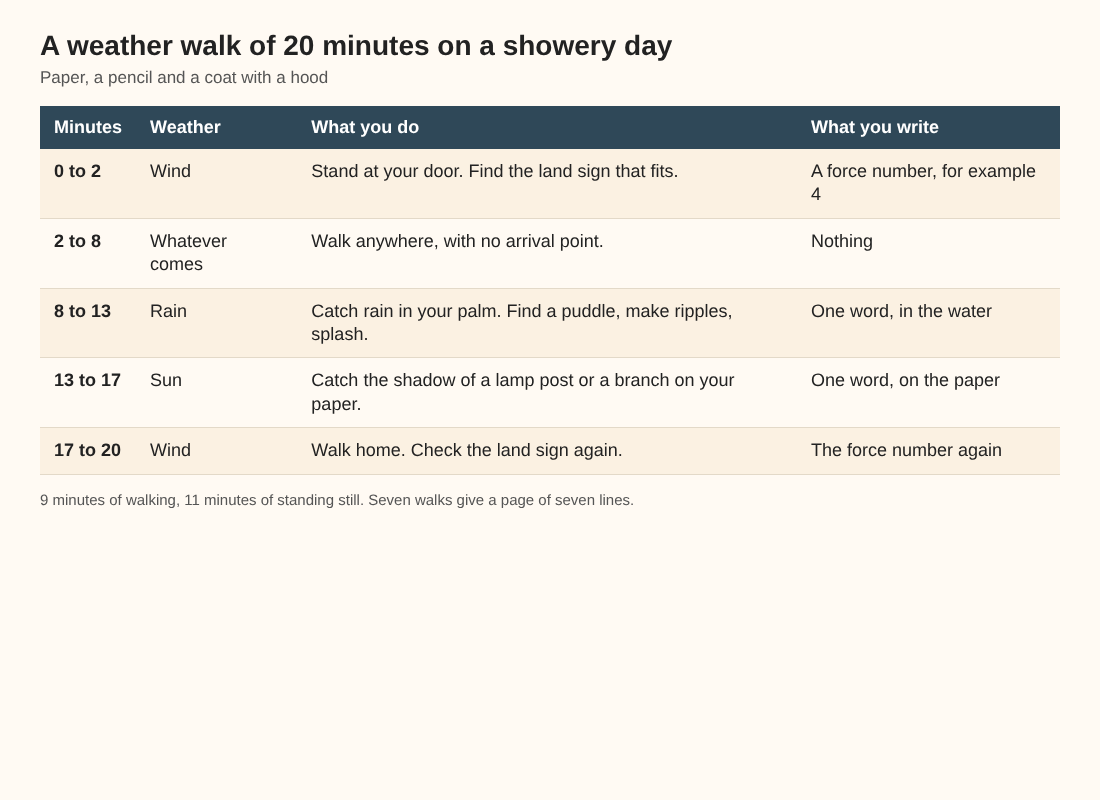
Five stages, two words and two numbers.
At your door, loose paper is lifting and small branches are moving: force 4, which the scale puts at 13 to 18 miles an hour. You walk for six minutes with no arrival point. A shower starts, so you spend five minutes on the rain steps and write "cold" into a puddle. The sun comes out; you spend four minutes catching a lamp post's shadow and write "sharp" on the paper. You walk three minutes home and check the wind again.
Follow the numbers through. The force tells you what to carry next time. Force 6 is where the scale says "umbrellas used with difficulty", and force 4 is two steps below it, so an umbrella still works today; once large branches are moving, use the hood. And of the 20 minutes, you stood still for 11 and walked for 9. The NHS walking for health page says "a brisk walk is about 3 miles an hour" and that "a brisk 10-minute daily walk" counts towards your 150 minutes of weekly exercise. This walk is not that. If you want both, add a brisk loop afterwards.
The strongest objection: some weather is not for leaning into
"Leaning into the weather that is here" has a limit, and the wind scale marks it. At force 7, 32 to 38 miles an hour, the land sign is "inconvenience felt when walking against the wind". At force 8 the wind "breaks twigs off trees" and "generally impedes progress". Those are the rows to turn home on.
In the UK, check the Met Office weather warnings before you go. They come in yellow, amber and red. Amber means "you should think about changing your plans". Red means "dangerous weather is expected" and "you should avoid travelling, where possible". A weather walk belongs to ordinary weather.
Sun has its own list: for long walks the NHS suggests water, "a spare top, sunscreen and a sun hat".
Does weather change your mood? What is still unsettled
It is tempting to promise that a walk in the sun lifts you and a wet one lowers you. One large diary study does not support a promise that simple. In 2008 Jaap Denissen and three colleagues published "The effects of weather on daily mood" in the journal Emotion. They linked the online diaries of 1,233 people to weather station data and tested six things: temperature, wind power, sunlight, precipitation, air pressure and length of day.
They did find effects. Temperature, wind and sunlight each affected negative mood, and sunlight affected tiredness. But the abstract's verdict is that "the average effect of weather on mood was only small". People also differed a good deal in how much weather moved them, and those differences "could not be explained by the Five Factor Model personality traits, gender, or age".
So two things are open. Nobody has shown why one person is weather-sensitive and the next is not. And the study measured the weather outside and the mood in a diary; it did not test a walk, or whether attending to rain the way Whitelaw asks changes what the rain does to you. After seven walks your page has seven lines, each with a date, a force number and a word: a start on your own answer.
Frequently asked questions
What is a weather walk?
A walk with no arrival point where the weather sets the task. In Stephanie Whitelaw's recipe you catch rain and watch a puddle, or catch a shadow on paper, then write one word. You need paper, a pencil and clothes for the weather.
Can I do a weather walk when it is neither raining nor sunny?
The original recipe relies on rainfall or sunlight. On a grey day you can read the wind instead, using the land signs of the Beaufort scale.
Does a weather walk count as exercise?
Not as brisk walking. The NHS puts a brisk walk at about 3 miles an hour, and this walk has you standing still for much of the time.
Is a weather walk safe in a storm?
No. At force 8 the wind already "generally impedes progress", and a red Met Office warning means dangerous weather is expected. Wait for an ordinary shower.
Get started
Look out of the window now. Rain, sun or only wind: take paper and a pencil, walk out with no arrival point, and bring back one word or one number.
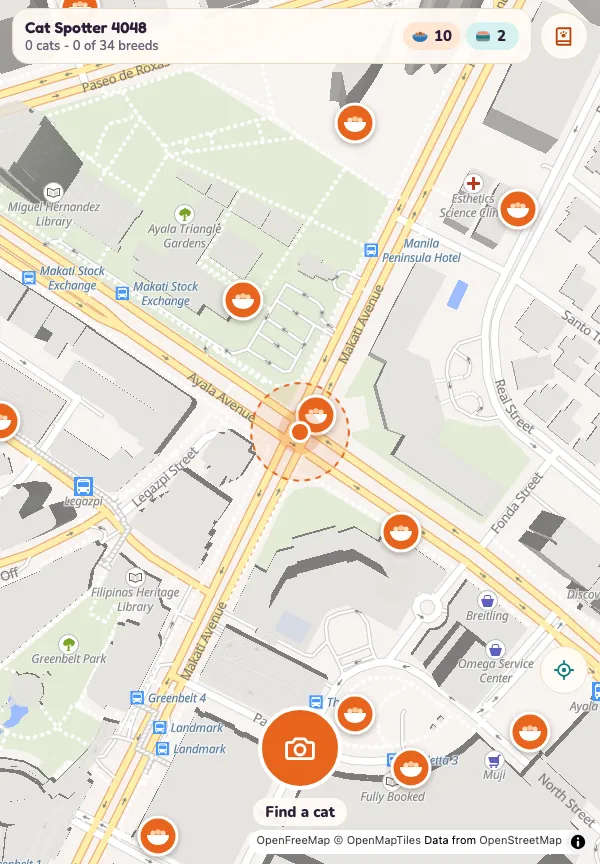
If you would like the walk to end with a cat as well as a word, play Cat Spot in your browser: walk your neighbourhood, collect treats at stops on the map, meet real cats and gently earn their trust to become friends. It needs the camera and location allowed in your browser.
Walk anywhere, find a real cat, and catch it.
Visit catgo.vlvd.net↗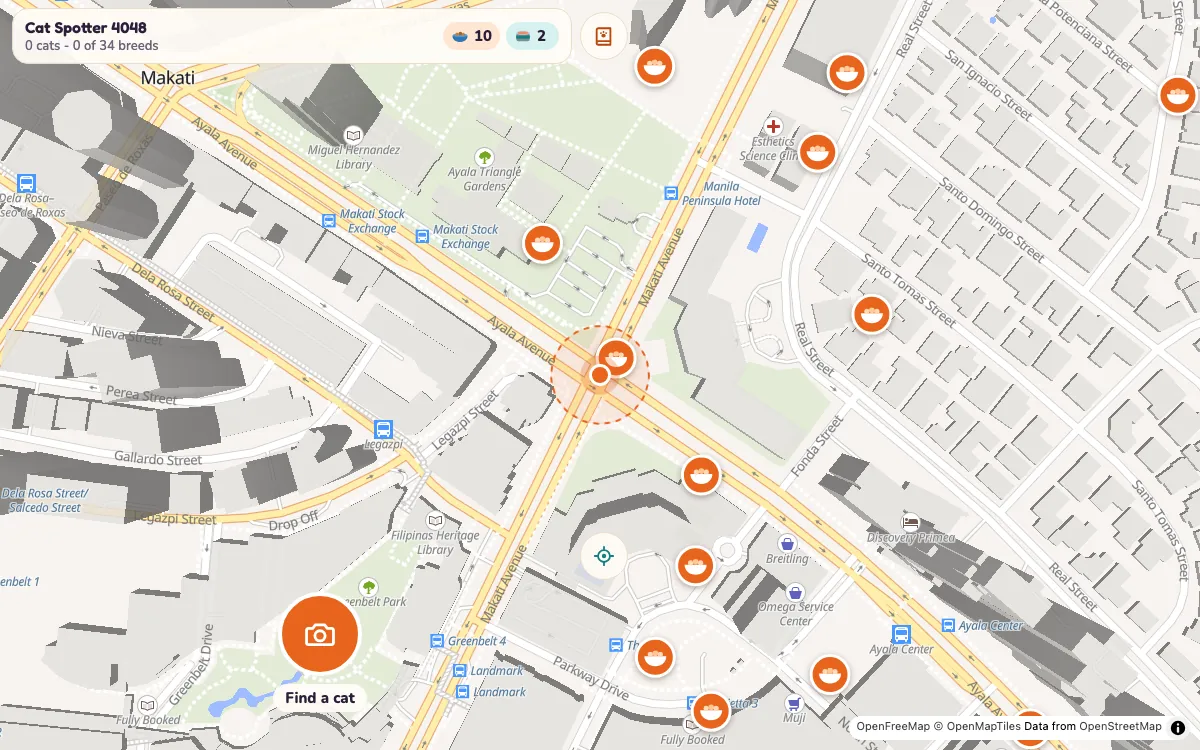
Comments
No comments yet.