How to tell if a cat is a stray or has a home: the signs
If you want to know how to tell if a cat is a stray or has a home, start with this: most cats you meet outside are owned cats out exploring. Cats Protection, the UK cat charity, says most cats are inclined to roam the area around their home, and that it can be hard to tell a lost stray from a feral cat or from "an owned cat with a sense of adventure". The answer comes from several signs read together, over more than one sighting, and the charity's own lists use the word "likely" for each one.
If you like noticing the cats on your street, Cat Go is a game in your browser where you photograph a real cat you meet and keep it in your Catdex with its breed and the place you found it, which makes a tidy note of where and when you saw each one.
Owned, stray or feral: three kinds of outdoor cat
Cats Protection sorts the cats you might come across into three groups. Knowing the three makes the signs easier to read.
- An owned cat has a home and an owner, but likes to wander the local area, "perhaps in search of extra food".
- A stray cat is a domestic cat who may have an owner but is lost, or who once had an owner and was abandoned.
- A feral cat is the same species as a pet cat, but was never socialised to people. The charity says ferals have little or no contact with humans, behave like wild animals and cannot be tamed.
The difference between a stray and a feral cat starts early in life. The charity says kittens can learn to enjoy human contact between two and six weeks of age, their socialisation period. Feral cats are usually the young of stray, feral or abandoned cats and missed that time, so they stay wary of people.
How to tell if a cat is a stray or has a home: the signs
Here are the signs Cats Protection lists for each kind of cat. Each one is what the cat is "likely" to be, not a test it passes or fails.
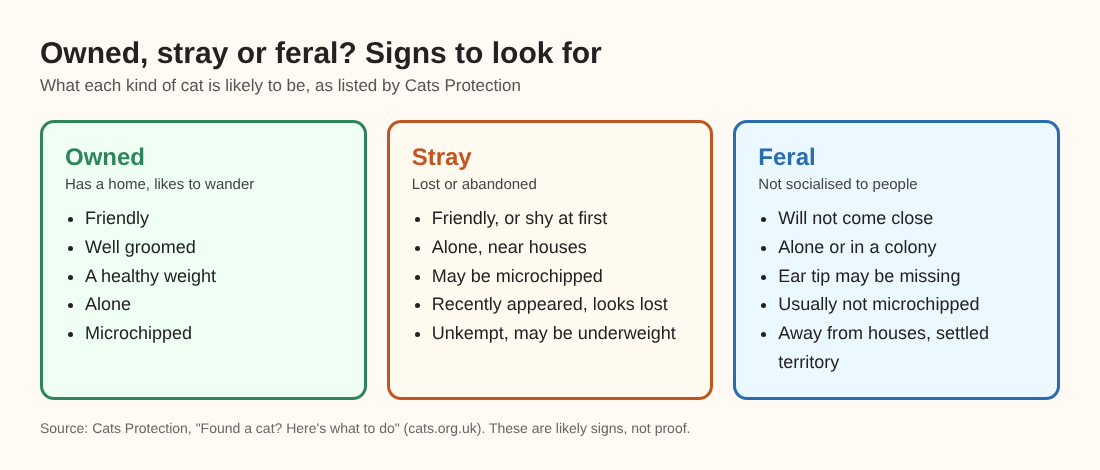
The likely signs of each kind of cat, from Cats Protection's found-a-cat page.
An owned cat is likely to be: friendly, well groomed, a healthy weight, alone, and microchipped.
A stray cat is likely to be: friendly (a shy one often comes closer slowly, given time), alone, near houses (in gardens or near homes), microchipped if it is a missing cat, a recent arrival that may look lost or disoriented, and unkempt. The charity adds that a stray may struggle with grooming on its own and may be underweight.
A feral cat is likely to be: unfriendly (it will not come close, even with encouragement), living alone or in a colony with other ferals, missing an ear tip, not microchipped, away from houses with a hiding spot, and settled on a long-term territory.
Look at what the owned and stray lists share: friendly, alone, maybe microchipped. That is why a friendly cat at your door tells you little by itself. The signs that point toward a stray are the ones about change and condition: a cat that has only recently appeared, looks lost, and has a scruffy coat or a thin frame. A glossy, well fed cat that has walked the same route for months is far more likely to be going home at night.
The missing ear tip, and what it tells you
One sign is easy to see from a distance. Cats Protection explains that when a feral cat is neutered, between half a centimetre and one centimetre of the tip of the left ear is removed while the cat is under anaesthetic. The mark is permanent and shows the cat does not need to be trapped and neutered again.
So a cat with a flat, missing tip on its left ear is most likely a feral cat that has already been through a neutering scheme. It is not a lost pet waiting for rescue, and it is not a cat that wants a home indoors. The charity says it is better for a feral cat's welfare to be neutered and returned to its home outdoors.
If you want to read the rest of a cat's ear and tail while you watch, see what a cat's ears tell you and what a cat's tail position means.
What to do next, and what not to do
Cats Protection's advice splits on one question: does the cat need urgent help?
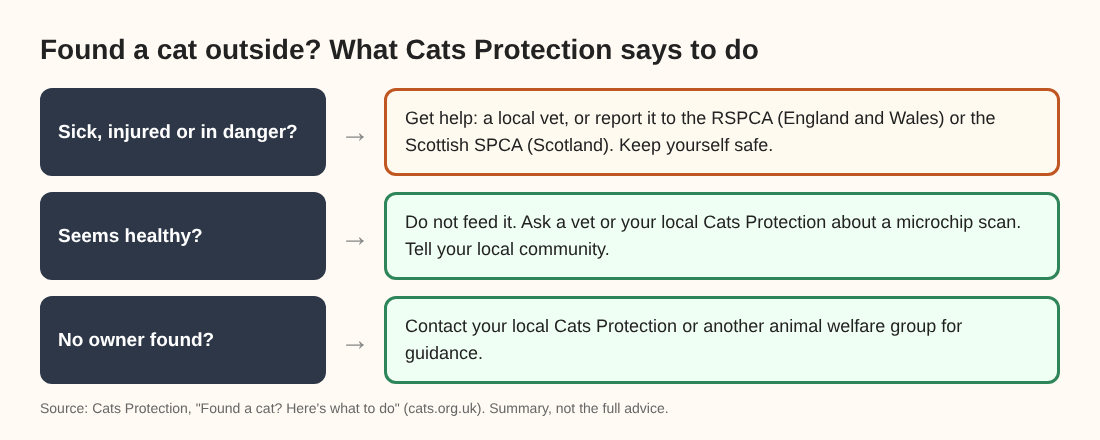
A summary of Cats Protection's steps; its page has the full advice.
If the cat is sick, injured or in danger, the charity says to get it to a local vet, phoning ahead first. It says vets give emergency treatment and care for sick or injured animals at no cost to the finder. You can also report an injured cat to the RSPCA in England and Wales, the Scottish SPCA in Scotland, or your local council's Animal Welfare Enforcement in Northern Ireland. The charity also warns you to keep yourself safe and to be careful near an unfamiliar cat, above all a scared or hurt one.
If the cat seems healthy, the charity's steps are:
- Get it scanned for a microchip. A vet can scan it, and if you cannot get the cat there, your local Cats Protection or another animal welfare group may be able to come and scan it.
- Avoid feeding it, unless it is clearly underweight.
- Let the local community know, with a post on a local community page or posters nearby that carry your contact details.
- If the cat turns out to have no owner, contact your local Cats Protection or another welfare group for guidance.
The point about food matters most, because it is the easiest mistake to make. The charity gives its reasons plainly. Some cats are on a special diet or have a medical condition, so a different food can upset their stomach or make them ill. Feeding also keeps a cat coming back to you, so an owned cat "won't be returning home in a hurry", which worries its owner. And if you have a cat of your own, a visitor eating at your door can stress it.
For the full steps, including what to do if you find a pregnant cat or kittens, read Cats Protection's found-a-cat guide. If the cat is calm and you are wondering how close is too close, how to approach a cat you don't know covers it from the cat's side.
A worked example: the cat by the garden wall
Say you walk the same route most mornings, and one day a grey cat is sitting on a garden wall halfway along. Here is how the signs play out over a week.
- Day one. You note what you can see from the pavement: grey, short coat, looks well groomed, a solid build, both ear tips whole. It watches you and stays put. Nothing here points to a stray.
- Day three. It is on the same wall, by the same house. A cat with a fixed spot near one home, in good condition, fits the owned list.
- Day seven. Still there, still glossy, still a healthy weight. You leave it alone. A cat like this is most likely an owned cat on its rounds.
Now change the story. A cat you have never seen before is crying at doors, its coat looks rough, and it seems thin. That is several stray signs together, and the charity's healthy-cat steps above are the next move: a microchip scan through a vet or the charity, a post for the local community, and no feeding unless it is clearly underweight.
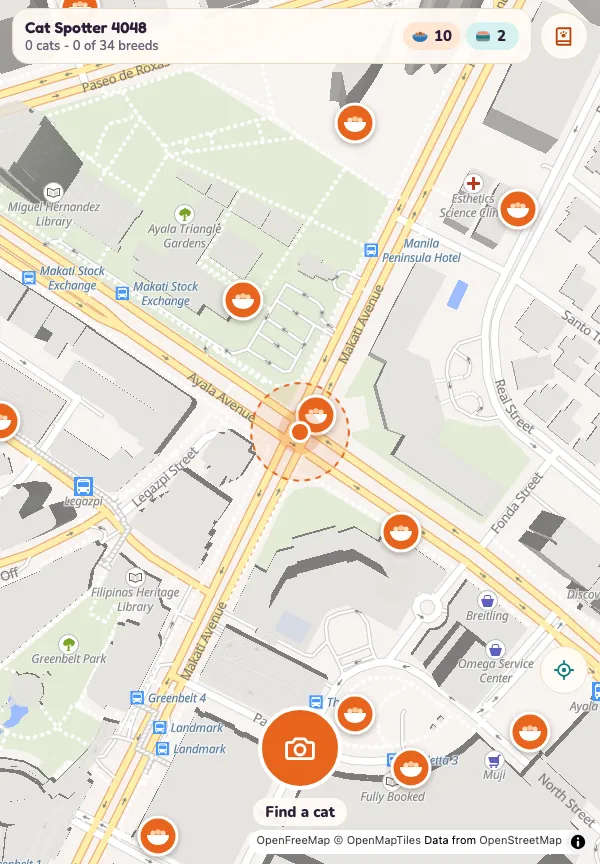
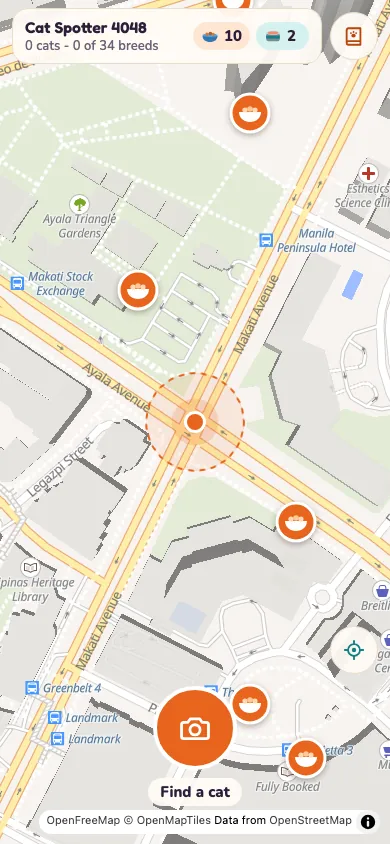
In Cat Go, the first day is also a catch. You tap the camera on the map, and the screen tells you to "Fit the whole cat in the frame". It asks "Which breed is it?" and notes that "Most cats you meet are mixed breed" and "Mixed breed is always a safe pick". You toss in-game kibble or tuna on the screen to win it over; nothing is given to the real cat. The catch is saved to your Catdex with its photo, the date and time and the place as map coordinates, and you can name it, say "Wall Grey". The game uses your location "to find treat stops and to record where each cat was caught. Nothing else is shared." That catch is your day one note, kept with a picture.
Frequently asked questions
Is a friendly cat with no collar a stray?
Not necessarily. Cats Protection lists friendly and alone as likely signs of both owned and stray cats, so look instead for a recent arrival, a lost look, a scruffy coat or a thin frame.
Should I feed a cat I think is lost?
Cats Protection says it is best not to, unless the cat is clearly underweight. Food can upset a cat on a special diet and keeps an owned cat from going home.
What does a missing ear tip on a cat mean?
Cats Protection says a feral cat often has the tip of its left ear removed under anaesthetic when it is neutered, so it is not trapped again. It marks a feral cat, not a lost pet.
How can I find out for sure if a cat has an owner?
A microchip scan is the step Cats Protection names first. A vet can scan the cat, and your local Cats Protection or another welfare group may be able to help if you cannot get it there.
Get started
Next time a cat sits on your route, read the signs from the pavement, give it space, and keep your note of where and when you saw it. In Cat Go, that note is a catch with its photo, its breed and the place you met it. It plays in your browser and needs your camera and location allowed.
Play Cat Go in your browser: walk anywhere, photograph a real cat, lure it with food and catch it.
Walk anywhere, find a real cat, and catch it.
Visit catgo.vlvd.net↗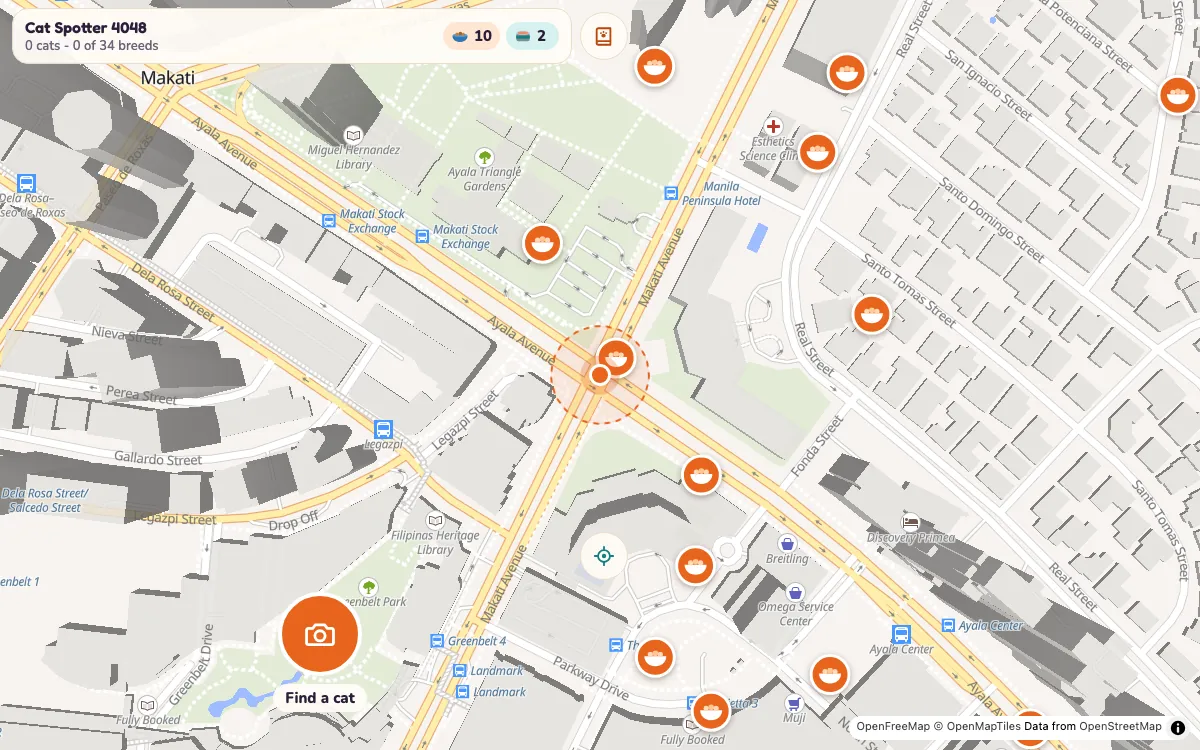
Comments
No comments yet.