Moreton Corbet Castle: from Shropshire fortress to Elizabethan ruin
Moreton Corbet Castle is a ruin in the Shropshire countryside where a medieval castle and a grand Elizabethan house stand side by side. English Heritage's history of Moreton Corbet Castle calls it the result of over 800 years of building. This post follows its three lives: a Norman stronghold, a showpiece mansion and a small Civil War base.
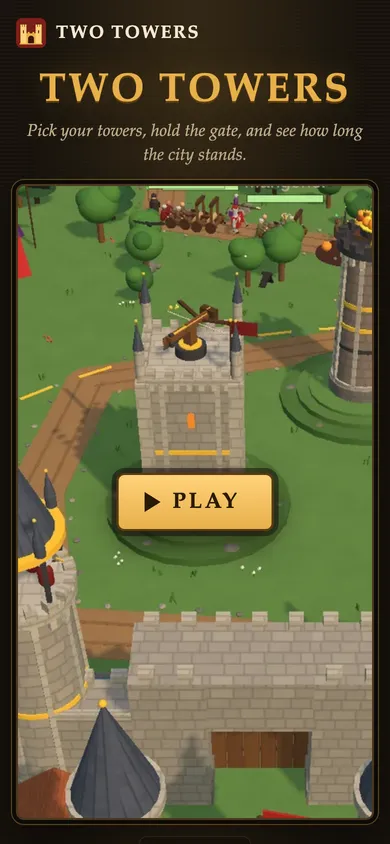
If you would like to hold a gate of your own, Two Towers is a free tower defense game in your browser where you pick two towers for the gate and keep it standing stage after stage.
Who built Moreton Corbet Castle?
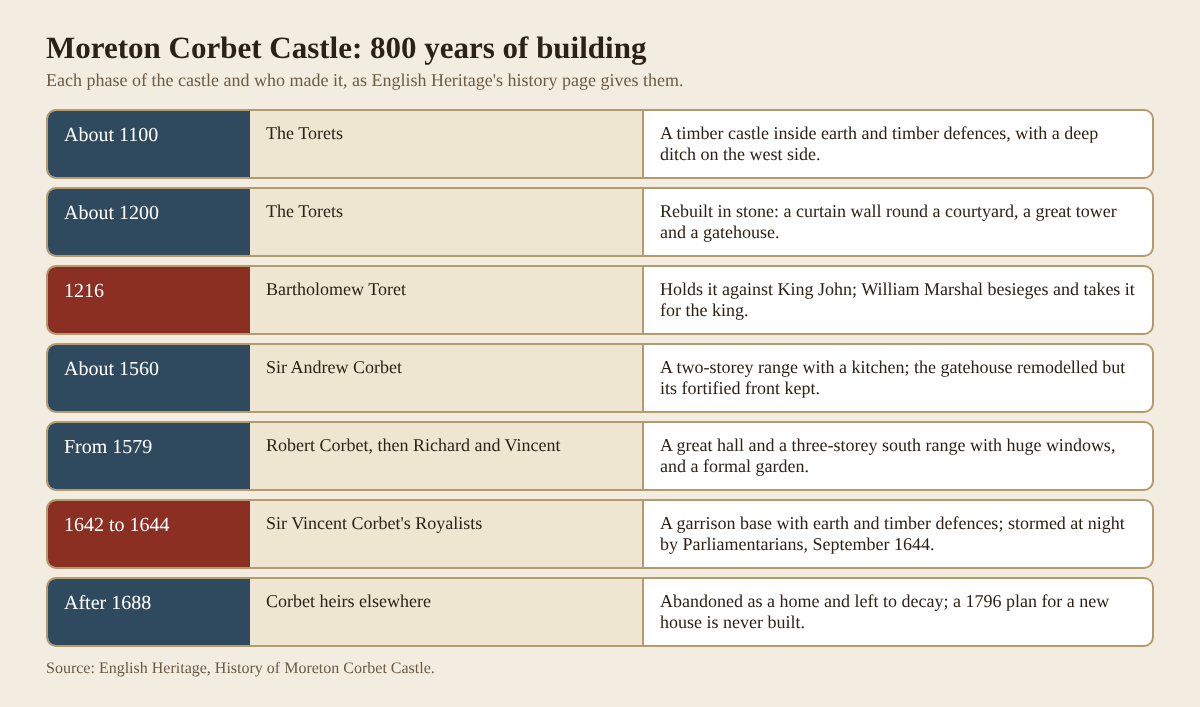
The first castle was built in about 1100 by the Torets, a family of Saxon descent. Its first buildings were timber. Earth and timber defences ran around them, including a ditch that was once a deep obstacle. You can still see it beside the west wall.
From about 1200 the Torets rebuilt the castle in stone. A wall now closed in a courtyard, with a gatehouse and a great tower. English Heritage puts it in the same tradition as other fortified homes of the Welsh Marches, the border lands between England and Wales.
The great tower was a strong place of refuge and defence. It was also a home. The remains of a large 13th-century fireplace on its first floor show that it held a comfortable private room for the lord. A hall and other buildings once stood in the courtyard, but nothing of them survives.
The siege of 1216 and how the castle got its name
Magna Carta was followed by war between King John and his barons, the First Barons' War of 1215 to 1217. In February 1216, during that war, Bartholomew Toret held his castle as part of the rebellion against the king.
The king sent William Marshal, who besieged and captured the castle for him. The Torets were not ruined by it: the castle was later given back to them. Our post on Rochester Castle's three sieges follows King John's much larger siege of 1215 in the same war.
The castle then passed to Richard Corbet, who married Bartholomew's daughter, Joanna. The family name stuck so firmly that the village changed its name. Moreton Toret became Moreton Corbet.
A castle front on purpose: Sir Andrew Corbet
In the 16th century the Corbets set out to modernise. Around 1560 Sir Andrew Corbet, a prominent royal servant who lived from 1522 to 1578, built a two-storey range between the great tower and the gatehouse. It held a kitchen with a massive brick chimneystack, a larder, and rooms on the floor above.
Sir Andrew also remodelled the gatehouse. Here is the interesting choice. He kept its plain, fortified medieval front, and so did the owners after him. English Heritage calls this remarkable, and says it suggests the family wanted the building to keep its old character as a castle. A strong gate said something about who lived behind it. Our post on why the gatehouse was a castle's strongest part explains what that front was built to do.
Above the gate arch is a carved panel with Sir Andrew's initials, SAC, and the Corbet emblem of an elephant and castle, a symbol of strength. Its date, 1579, is after his death. The panel was put up to remember his work on the castle.
"A most gorgeous and stately house"
Sir Andrew's eldest son, Robert, wanted far more. He began building a new great hall and a three-storey south range. Its huge grid windows, slate roof behind tall gables and classical carving were probably inspired by the Renaissance great houses of the day, with some French and Flemish touches.
The writer William Camden described it in 1607. Robert, he said, "carried away with the affectionate delight of Architecture, began to build in a barraine place a most gorgeous and stately house".
Robert died of the plague in 1583. His brothers Richard and Vincent, who inherited the castle in turn, finished the south range, and an inventory of 1623 lists it fully furnished. Its main rooms looked south over Robert's new garden, which in 1588 had walks, arbours, a sundial in the middle and orchards. Faint earthworks of it still show in the next field.
Moreton Corbet Castle in the Civil War
When the Civil Wars began in 1642, Sir Vincent Corbet, first baronet, fought for the king. His castle became a base for Royalist soldiers under his command.
Its place on the map mattered. Moreton Corbet sat between a Royalist force at Shrewsbury and a Parliamentarian garrison at Wem. It was one of several small bases meant to slow down Parliament's campaigns in Shropshire. The soldiers built earth and timber defences around the mansion to make a perimeter they could hold.
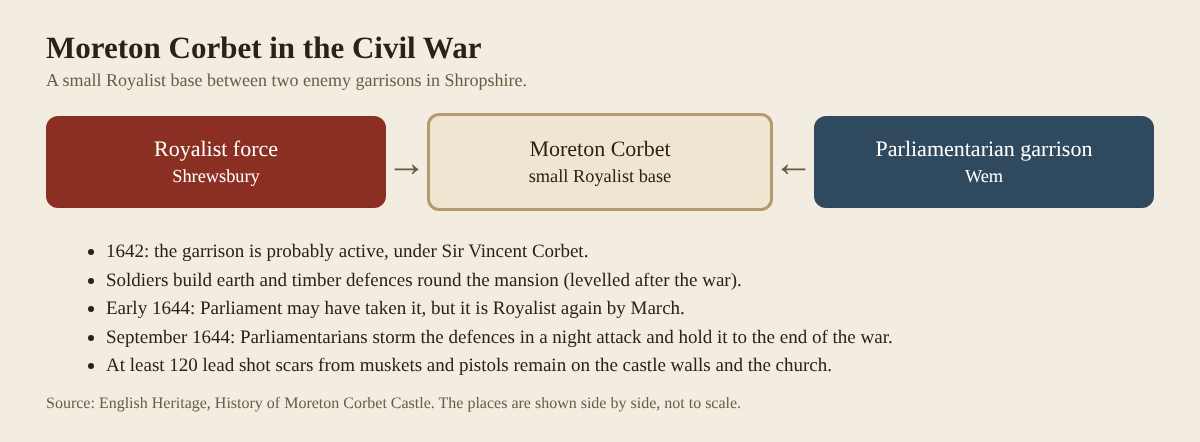
The garrison was probably active in 1642. Early in 1644 Parliament may have captured the castle, but it was back in Royalist hands by March. Then, in September 1644, Parliamentarian soldiers stormed the defences in a night attack. They held the castle for the rest of the war.
The fighting left marks you can still count. The castle walls and the south side of the church carry small round scars from lead shot fired from muskets and pistols. There are at least 120, with clusters on the mansion's east and south walls. For the wider story, see our post on what happened to castles in the Civil War.
How the castle became a ruin
Moreton Corbet was not destroyed in the war. The house was repaired afterwards. But Sir Vincent Corbet, second baronet, died in 1681, and his 19-year-old son, also Vincent, died in 1688. The heirs came from another branch of the family, and they preferred their homes at Acton Reynald and Shawbury Park.
So the house was simply left. Over the 18th century it decayed and fell into ruin. In 1796 plans were drawn up for a new house on the site using parts of the old one, but they were never carried out. The Corbet family still owns the castle, and English Heritage looks after the site.
A worked example: hold a small base between bigger forces
Moreton Corbet's soldiers held a small post between two larger armies, and lost it to an attack at night. In Two Towers your gate also faces stage after stage, with no final stage. Here is a plan built only from what the game says.
- Pick the gate pair. On the title screen choose a tower for each side of the gate from the Archer Tower, Trebuchet, Ballista and Fire Tower.
- Watch the road. The game warns: "Archers shoot the gate from the road: buy Range so your towers reach them before they stop."
- Build out your perimeter. The Royalists dug defences beyond the walls; you can add towers beyond the gate. Buy one for West Hill or East Hill: the first costs 150 gold and the second 300. "Mangonels throw stones from far off: a hill tower with Range reaches them."
- Repair between attacks. The house was mended after each fight, and your gate can be too: "Spend your gold on Damage between stages, and Reinforce the gate."
- Get ready for the big attack. "A king leads every fifth stage: Reinforce the gate before it and save gold for Damage."
Play five stages, note which attackers reached the gate, and change one step at a time. Our gate post explains when to repair and when to reinforce.
Frequently asked questions
Who built Moreton Corbet Castle?
The Torets, a family of Saxon descent, built the first timber castle in about 1100 and rebuilt it in stone from about 1200. The Corbets inherited it by marriage and added the Elizabethan mansion.
Was Moreton Corbet Castle ever besieged?
Yes. William Marshal besieged and captured it for King John in 1216, and in September 1644 Parliamentarian soldiers stormed its Royalist defences in a night attack.
What are the marks on the walls at Moreton Corbet?
They are small round scars from lead shot fired from muskets and pistols, possibly during the fighting of 1644. At least 120 can be seen on the castle and the church.
Why is Moreton Corbet Castle a ruin?
It was not destroyed in battle. After 1688 the Corbet heirs lived at other houses, so it was abandoned and slowly decayed through the 18th century.
Get started
Moreton Corbet was held by a small garrison between two larger forces. To try that at your own gate, play Two Towers: choose your two towers, add towers on the hills and see how many stages you can hold.
Defend the castle gate, stage after stage.
Visit twotowers.vlvd.net↗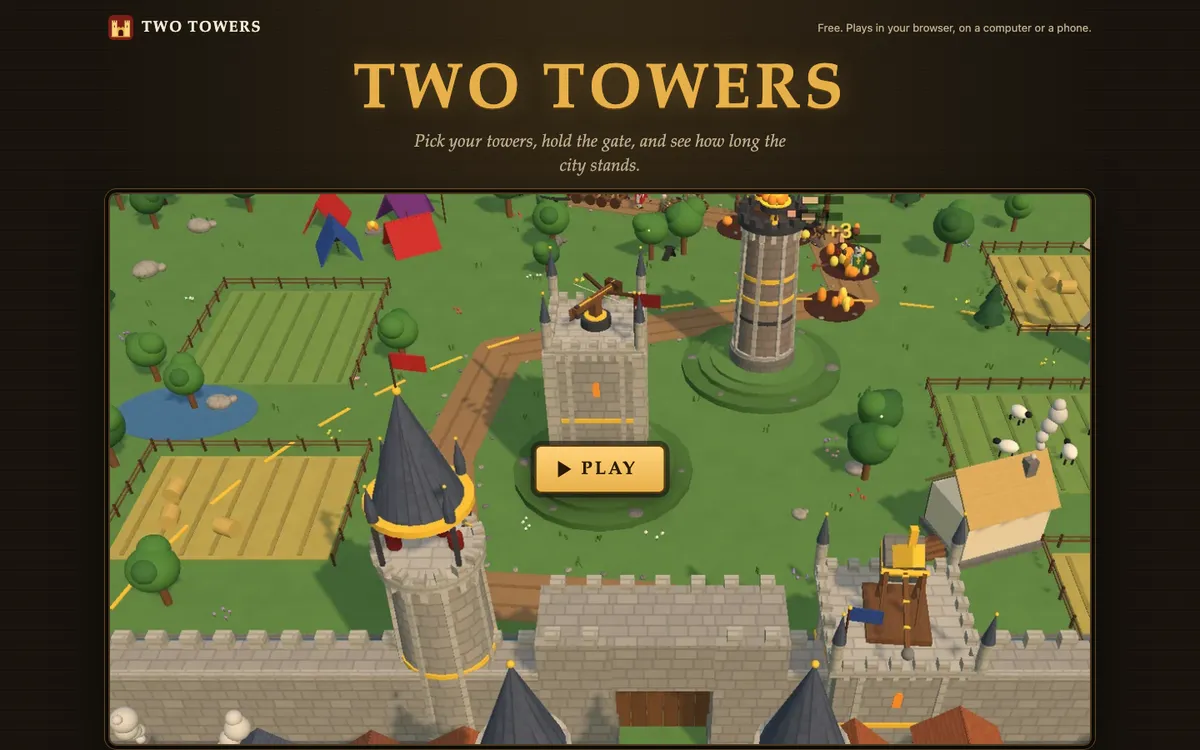
Comments
No comments yet.