Walking challenge ideas: 7 ways to keep moving daily
Walking challenge ideas work because they give a walk a job: find a colour, count something, take one photo. This guide gives seven, taken from Living Streets' #Try20 tips, which the charity says are 20 tips to help you fit 20 minutes of walking and wheeling into your day, and from the NHS Walking for health page. Both were opened for this post. It ends with a one-week plan.
Cat Go is a game you play in your browser: walk anywhere, photograph a real cat, lure it with food and catch it, so every walk has a challenge built in.
Walking challenge ideas: the short answer
A good walking challenge is small, takes no kit and can be done on a street you already know. Living Streets says walking is free, flexible and fun. The NHS says the easiest way to walk more is to make walking a habit. A challenge helps with the habit part, because you know what you are looking for before you leave.
Pick one idea for a week, not seven at once. If it feels like a chore by day three, swap it.
Why a challenge helps
The NHS page lists the usual advice for staying motivated: make walking part of your routine, for example by walking part of your journey to work, to the shops, or after dinner with family or friends. It also says to add variety, since you do not have to travel to the countryside to find a rewarding walk and towns and cities offer parks, heritage trails, canal towpaths and riverside paths.
A challenge adds that variety without a new route. The same street looks different when you are counting benches or hunting for red. Living Streets says walking with purpose can help you spot things you might not have noticed before.
Seven walking challenge ideas
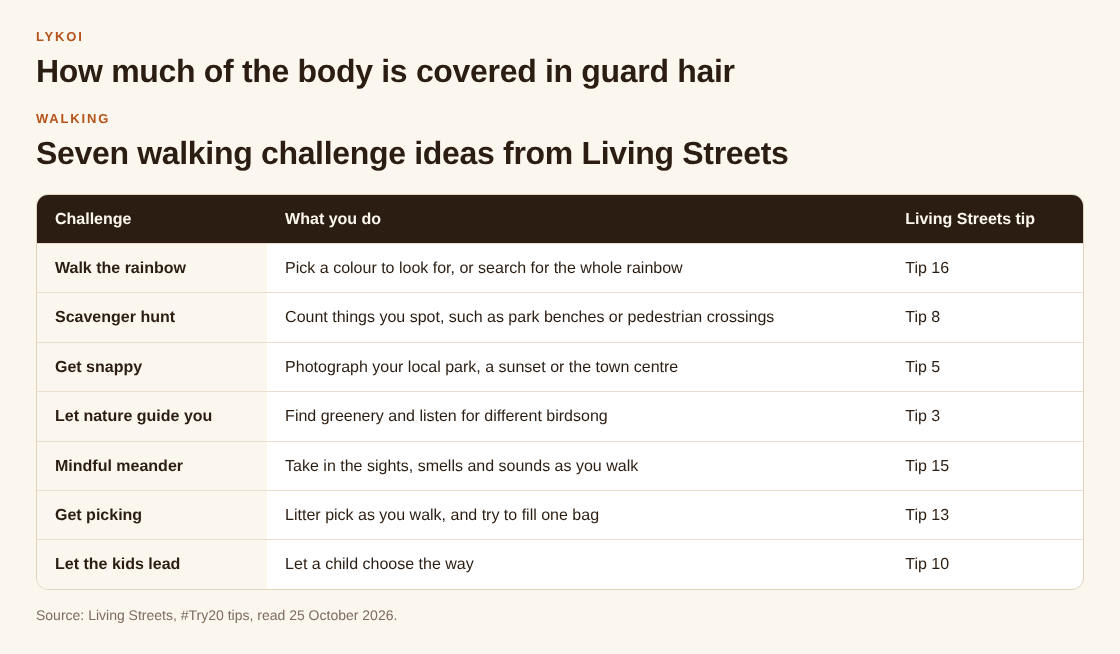
Seven challenges from the Living Streets #Try20 tips.
- Walk the rainbow. Before you head out, choose a colour to look for, or search for the whole rainbow. Living Streets suggests photographing the colourful things you find.
- Go on a scavenger hunt. See how many different things you can spot nearby. Living Streets suggests counting things like park benches, pedestrian crossings or people.
- Get snappy. Try capturing your local park, a sunset or the town centre on your phone, and share it with friends or family.
- Let nature guide you. Look for greenery at a park, on tree-lined streets or at a local nature spot, and listen for different types of bird song.
- Take a mindful meander. Take in the sights, smells and sounds you meet. Living Streets says walking is also a good way to unwind.
- Get picking. Do a spot of litter picking as you walk. Living Streets says filling just one bag could make a huge difference, and suggests asking a local group about organised litter picks.
- Let the kids lead the way. Children can help you see walking from a different perspective, so let them choose the route. With no kids, Living Streets says you can still have a good explore.
How long should the walk be?
Living Streets frames its tips around 20 minutes. The NHS says a brisk 10-minute daily walk has lots of health benefits and counts towards the 150 minutes of weekly exercise it recommends for adults. A brisk walk, it says, is about 3 miles an hour, and you can tell you are walking briskly if you can still talk but cannot sing the words to a song.
So a challenge walk can be 10 minutes or 20. If you are not very active, the NHS says to increase your walking distance gradually. Our post on whether 30 minutes a day is enough sets out the NHS weekly target, and our post on what counts as a brisk walk explains the talk test.
The NHS also points to the free Active 10 app, which it says tracks how much and how fast you have walked and gives you goals to work towards.
A worked example: a seven-day challenge
Here is a week with one idea a day. It uses 20 minutes on most days, from the Living Streets framing, and leaves one day open.
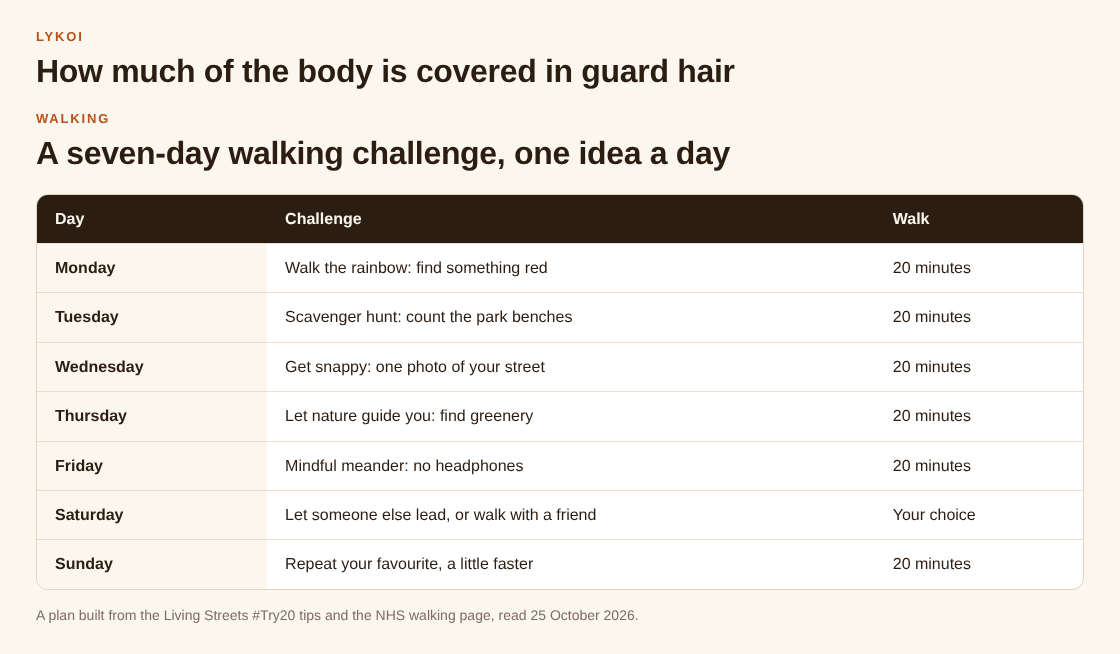
One challenge a day for a week.
- Monday: walk the rainbow and look for something red.
- Tuesday: count the park benches or pedestrian crossings on your route.
- Wednesday: take one photo of your street that you would like to keep.
- Thursday: look for greenery and listen for birds.
- Friday: take a mindful meander, and leave your headphones at home if you like. (One Living Streets staff member says she did that on her own colour-hunting walks.)
- Saturday: let a friend or a child choose the way. The NHS says walking in a group is a great way to start and stay motivated.
- Sunday: repeat your favourite walk, a little faster, with the talk test.
At the end of the week, write down which day you liked most and do that one again next week.
A challenge with a cat in it: Cat Go
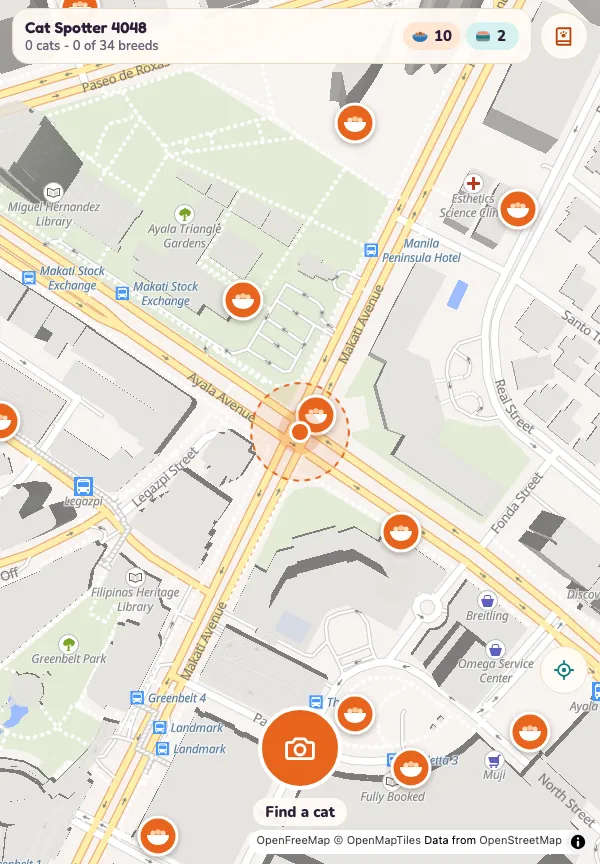
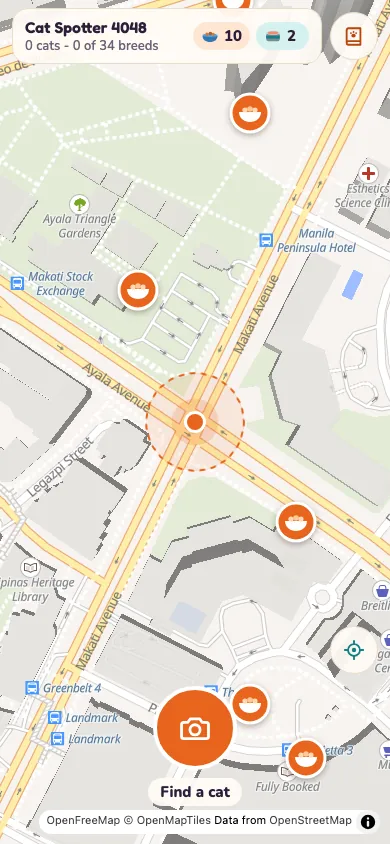
If you like a challenge that comes with its own goal, Cat Go has one. Its home screen is a map with treat stops. At a stop it says "You're here. Grab what's in the bowl." and shows a Collect treats button, and afterwards the stop shows "Refilling - ready in ... min." The food is in-game only.
So your challenge for the day can be: walk to the next treat stop, then look for a cat to photograph. When you meet one, the game asks "Which breed is it?" and saves the catch to your Catdex with the place you found it. The Catdex shows "Cats caught" and "Breeds found", which gives you a number to beat next week. Most cats you meet are mixed breed, and "Mixed breed is always a safe pick."
The game needs your camera and location allowed in the browser. Keep the walk brisk between stops, and keep a respectful distance from any real cat you meet.
Frequently asked questions
What is a good walking challenge for beginners?
A scavenger hunt or a colour hunt. Living Streets suggests counting things like park benches or looking for one colour, and neither needs fitness or kit.
How long should a walking challenge walk be?
Living Streets frames its tips around 20 minutes. The NHS says a brisk 10-minute daily walk counts towards your 150 minutes of weekly exercise.
How do I keep a walking challenge going?
The NHS says to make walking a habit, add variety and walk with a group or a friend. Swapping to a new challenge each week gives variety without a new route.
Can I do a walking challenge with children?
Yes. Living Streets suggests letting the kids lead the way and, for little ones, counting how many different things they see.
Should I check with a doctor first?
The NHS says to speak to your GP first if you have not exercised for some time, or if you have medical conditions or concerns.
Get started
Pick one challenge for this week, then add a reason to go out. Play Cat Go in your browser: walk anywhere, photograph a real cat, lure it with food and catch it. The game needs your camera and location allowed in the browser. Each catch is saved to your Catdex with its breed and the place you found it.
Walk anywhere, find a real cat, and catch it.
Visit catgo.vlvd.net↗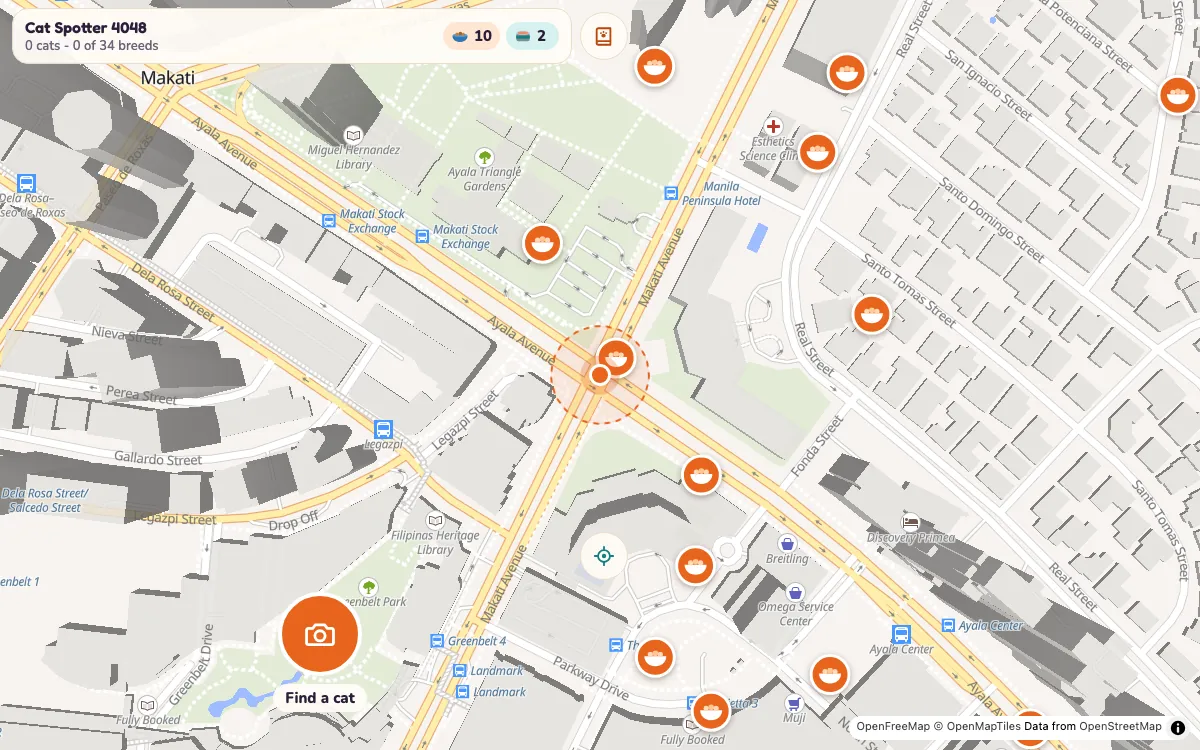
Comments
No comments yet.
Sign in or make an account to comment.