Is walking 30 minutes a day enough? What the NHS says
Is walking 30 minutes a day enough? For the aerobic part of the NHS adult guidelines, it can be: 30 minutes on 5 days adds up to 150 minutes, which is the weekly target for moderate activity, as long as the walk is brisk. It is not the whole guideline, though, and a gentle stroll does not count the same. This guide follows the NHS physical activity guidelines for adults aged 19 to 64 and its Walking for health page, both opened for this post.
Cat Go is a game you play in your browser: walk anywhere, photograph a real cat, lure it with food and catch it, with treat stops on a map that give a 30-minute walk somewhere to go.
Is walking 30 minutes a day enough? The short answer
The NHS says adults should aim for at least 150 minutes of moderate intensity activity a week, or 75 minutes of vigorous activity. It also says to spread exercise evenly over 4 to 5 days a week, or every day. Thirty minutes of brisk walking on five days is exactly 150 minutes, so for the aerobic target, the answer is yes.
The NHS also says adults should do some type of physical activity every day. That is why "enough" depends on what else you do in the week, and on how hard the walk is.
What the NHS asks for each week
The adult guidelines have four parts. The walk covers the first two, and the other two sit beside it:
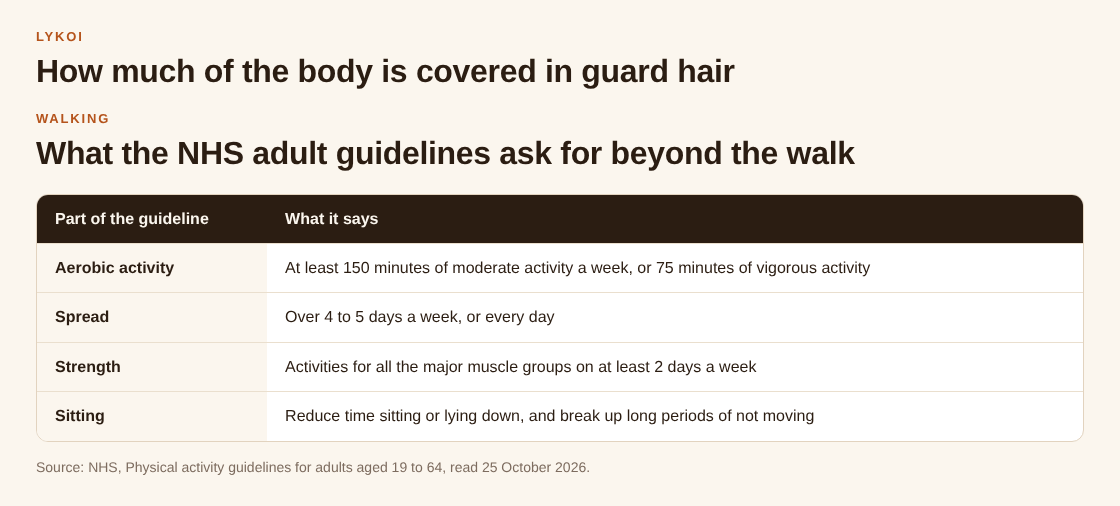
The four parts of the NHS adult guidelines, from the NHS page.
The NHS adds that if you have not exercised for some time, or you have medical conditions or concerns, you should speak to your GP first and make sure the activity and its intensity suit your fitness.
What counts: brisk, not a stroll
The 150 minutes are moderate intensity minutes. The NHS says moderate activity raises your heart rate, makes you breathe faster and feel warmer. It gives a simple test: you can still talk, but you cannot sing.
On its walking page, the NHS says a brisk walk is about 3 miles an hour, faster than a stroll. So 30 minutes of window shopping is not the same as 30 minutes at a pace where you can talk but not sing the words to a song. Our post on what counts as a brisk walk covers the talk test in more detail.
The NHS also points to the free Active 10 app, which it says tells you when you are walking fast enough and suggests ways to fit in more brisk walking.
Three ways to reach 150 minutes
The 30-minute walk is one way to the target, not the only one. The NHS says a brisk 10-minute daily walk has lots of health benefits and counts towards your 150 minutes. Here is the arithmetic:
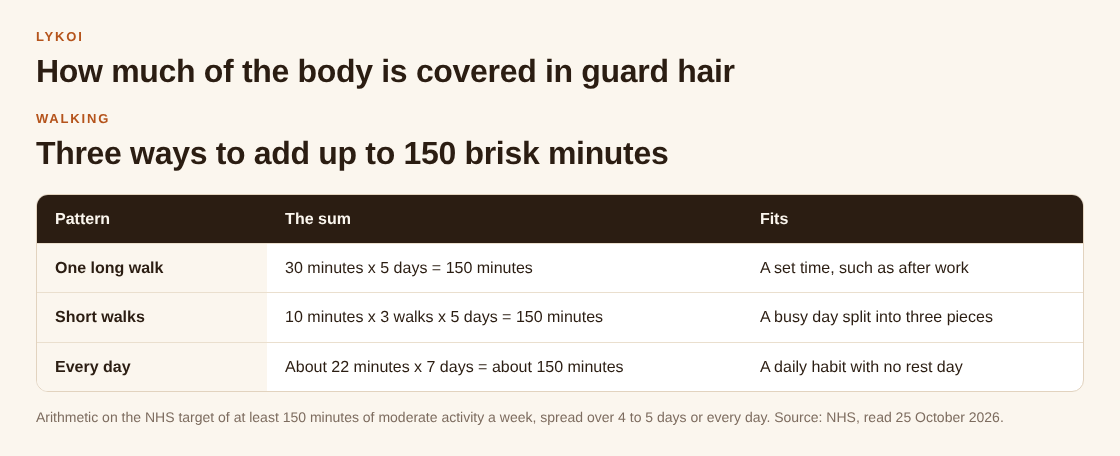
Three ways to add up to the NHS weekly target, as plain arithmetic.
If you are not very active, the NHS says to increase your walking distance gradually. Starting below 30 minutes is not a failure. Our post on starting to walk for exercise gives a five-week build-up.
What 30 minutes of walking leaves out
The NHS says strength work is a separate part of the guidelines: activities that work all the major muscle groups on at least 2 days a week. Its examples include carrying heavy shopping bags, yoga, pilates, tai chi, lifting weights, using resistance bands, body weight exercises such as push-ups and sit-ups, and heavy gardening. It says strength exercises are not always aerobic, so you need them as well as your 150 minutes.
The fourth part is sitting. The NHS says to reduce time spent sitting or lying down and to break up long periods of not moving with some activity. A 30-minute walk after eight hours at a desk helps, but the guideline asks for breaks during the day too.
A worked example: one week of 30-minute walks
Here is a week that meets the aerobic target and the other two parts. It uses only things the NHS pages name.
- Monday, Wednesday, Friday: one brisk 30-minute walk, such as part of your trip to work or a lunchtime loop. Check the pace with the talk test.
- Tuesday and Thursday: three brisk 10-minute walks, such as to the shops or a stroll after dinner. That gives 150 minutes over the five days.
- Two of those days: add a strength activity from the NHS list, such as carrying heavy shopping bags home or a yoga session.
- Every day: stand or walk for a few minutes when you have been sitting for a long time.
- Weekend: a longer, easier walk if you like, with a friend or a group. The NHS says walking in a group is a great way to start and stay motivated.
If a week goes wrong, count it as a week, not a failure, and start the next one. The target is a weekly one.
Making the 30 minutes happen with Cat Go
The hard part is usually not the arithmetic, it is going out. The NHS says the easiest way to walk more is to make it a habit, and that music or a podcast can take your mind off the effort. A reason to go somewhere helps too.
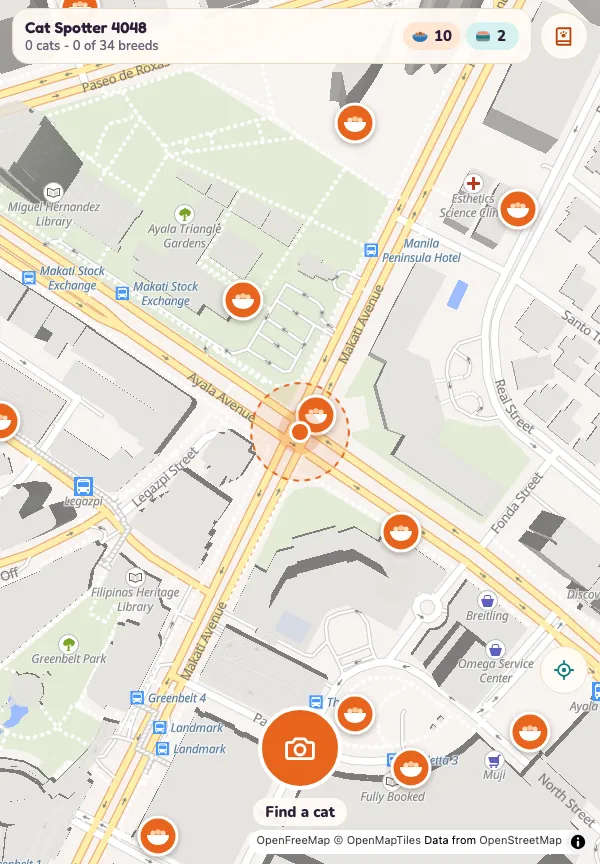
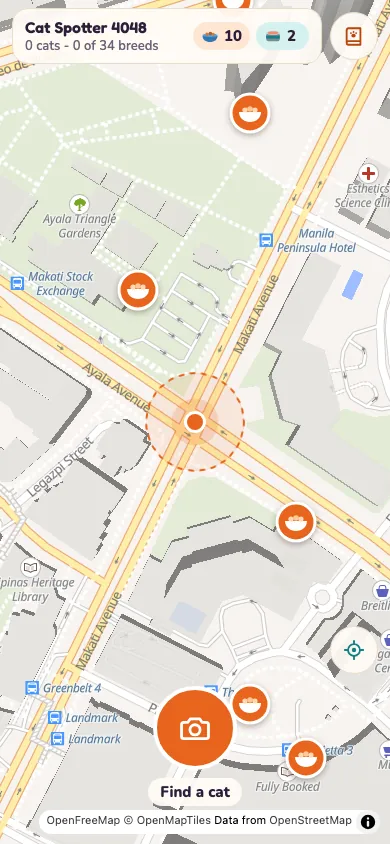
Cat Go gives you one. Its map shows treat stops. Away from a stop, the card tells you how far you are and says to walk within a set distance to collect kibble, and sometimes tuna. At the stop it says "You're here. Grab what's in the bowl." and shows a Collect treats button, and afterwards the stop shows "Refilling - ready in ... min." The food is in-game only. With food in hand, you can take a photo of a cat you meet, pick its breed, and keep the catch in your Catdex with the place you found it.
The game needs your camera and location allowed in the browser, and it says it uses location to find treat stops and to record where each cat was caught. A walk to the next treat stop can be your brisk 30 minutes. Keep the pace up on the way, and slow down only when you see a cat. Our post on finding new walking routes has more ideas for a different street each time.
Frequently asked questions
Is a 30-minute walk every day enough exercise?
For the aerobic target, 30 brisk minutes on 5 days equals the NHS's 150 minutes a week. The NHS also asks for strength work on 2 days and less sitting.
Does a slow walk count?
The 150 minutes are for moderate activity. The NHS says a brisk walk is about 3 miles an hour, and that you can still talk but not sing.
Can I split the 30 minutes into shorter walks?
Yes. The NHS says a brisk 10-minute daily walk counts towards your 150 minutes, so three 10-minute walks add up to one 30-minute walk.
Do I need to walk every day?
The NHS says to spread exercise over 4 to 5 days a week, or every day, and that adults should do some type of physical activity every day.
Should I see a doctor first?
The NHS says to speak to your GP first if you have not exercised for some time, or if you have medical conditions or concerns.
Get started
Pick the pattern that fits your week, then give the walk a reason. Play Cat Go in your browser: walk anywhere, photograph a real cat, lure it with food and catch it. The game needs your camera and location allowed in the browser. Each catch is saved to your Catdex with its breed and the place you found it.
Walk anywhere, find a real cat, and catch it.
Visit catgo.vlvd.net↗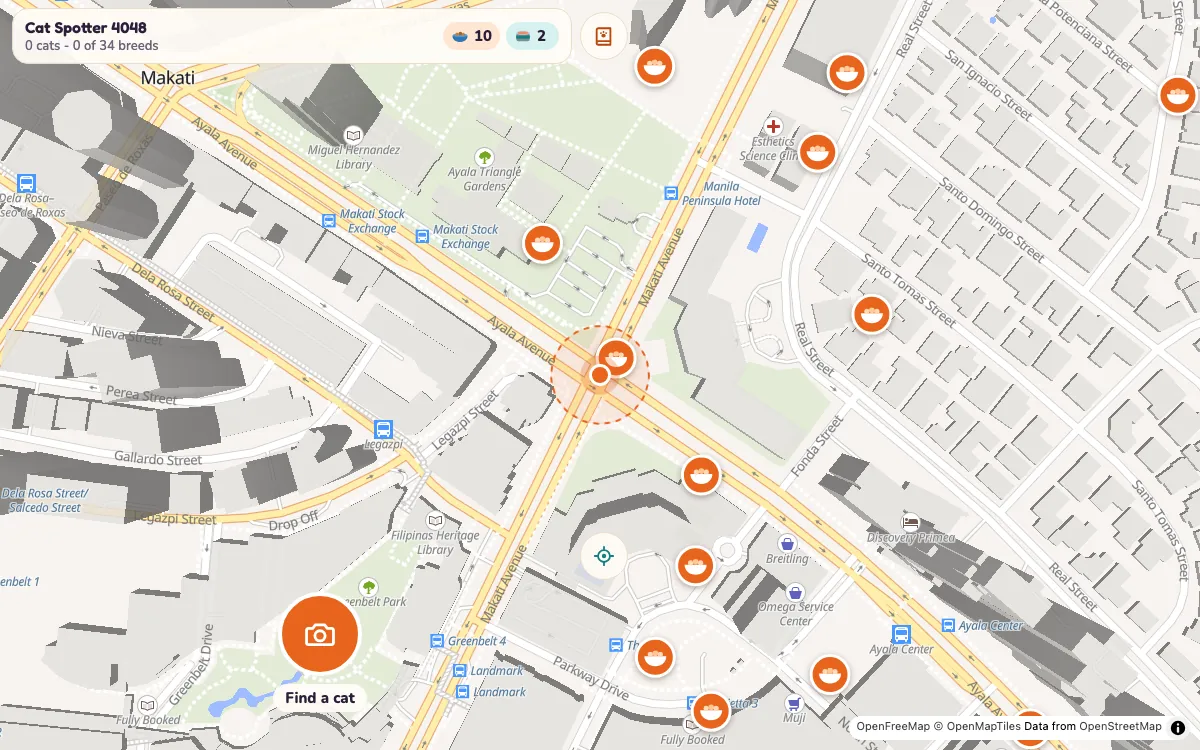
Comments
No comments yet.
Sign in or make an account to comment.