How to go on a mindful walk: a see-it, do-it plan
If you want to know how to go on a mindful walk, here is the short answer: walk a little slower than usual, give your attention one small job at a time, and bring it back gently each time it drifts. The simplest way to do that on an ordinary street is a list of things to look for, each with a short activity to do when you find it. This guide gives you that list, from Living Streets' Walkbook, plus a 20-minute plan you can try today.
If a small goal helps you get out of the door, Cat Go gives your walk one: you walk to treat stops on a map, photograph the real cats you meet, and keep each one with its breed and the place you found it.
What is a mindful walk?
A mindful walk is an ordinary walk where you pay attention to the walking itself and to what is around you, instead of to your plans and worries. Living Streets, the UK charity for everyday walking, puts it plainly in tip 15 of its #Try20 tips, "take a mindful meander": walking is not just about keeping fit, it is also a great way to unwind and connect with your environment. Its advice is to try to take in the sights, smells and sounds you meet as you walk.
It is not about emptying your mind. Thoughts will come. The practice is noticing that you have drifted, and coming back to your feet, your breath or the next thing you see, without telling yourself off.
Why a list helps you stay present
"Notice everything" is hard to do for twenty minutes. A short list gives your attention something concrete to hold, and each find gives you a reason to pause.
That is the idea behind "A Resilience and Wellbeing Walk" by Lydia Nightingale, a walk leader and eco-therapist, in The Walkbook: Recipes for Walking and Wellbeing, a free collection of walking recipes from Living Streets. It sits in the book's section called "Attending and Slowing". You look for the items on the list in any order. When you find one, you do its activity, straight away, later on the walk or at another time, for a few minutes or for as long as you feel comfortable. Her one line of advice for the whole walk: "Be easy with yourself, be mindful and be creative."
The see-it, do-it card for a mindful walk
Here are six items from her list that you will find on almost any street, with what to do at each one.
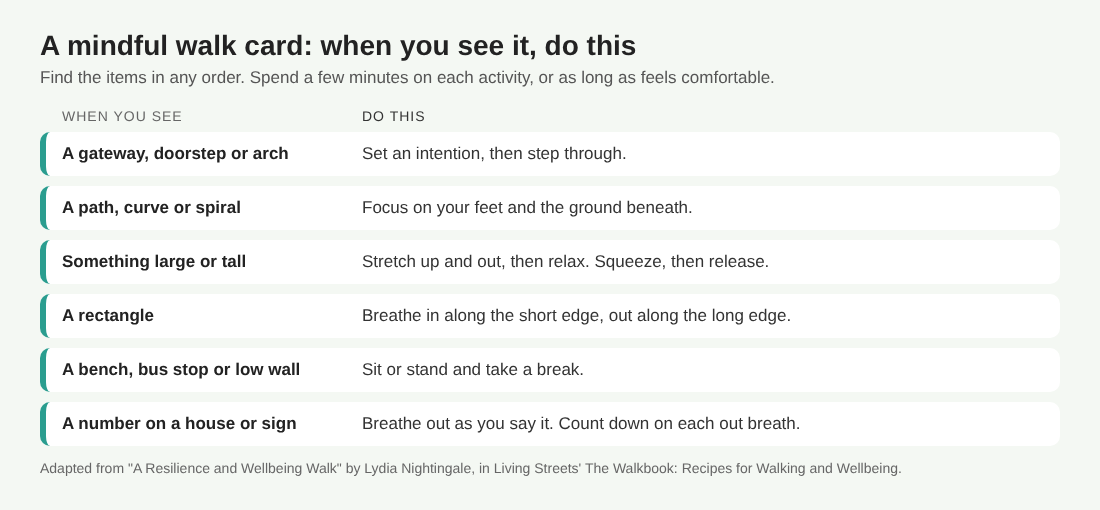
- A gateway, doorstep or arch. Make a wish, picture a goal or set your intention for the walk. Then step through or step forward.
- A path, line, curve or spiral. Focus on your feet as you move along it: the type of surface, how you are walking, the ground beneath you.
- Something large or tall, like a tree, a building or a lamppost. Stretch up and out with your body, then relax. Squeeze your muscles tight, then let go.
- A rectangle, such as a window or a door. As you breathe in, let your eyes follow the short edge. As you breathe out, follow the long edge. Let your out breath be longer than your in breath, and keep "walking" your eyes round the shape.
- A seat, bench, bus stop or low wall. Sit or stand and take a break. Think of one way to rest and recharge each day.
- A number on a house, bus or sign. Breathe out as you say the number in your head. Count backwards by one on each out breath.
The full recipe has more items, among them something unusual you notice with your senses (explore the details and be curious) and meeting people or animals (say something positive to someone, on the walk or afterwards). You can shorten the walk by looking for fewer items. It works alone or with others, in a town or the countryside.
How to go on a mindful walk on a route you know
You do not need a new place. Another Walkbook recipe, "Finding Pleasure in Repetition" by Harriette Meynell, is written for when you are bored of walking the same route. It needs no equipment, only shoes and clothes for the weather, and one firm rule: leave your phone at home.
Her points, in short:
- Enjoy not having to think. Repetition gives comfort in stressful times. You do not have to plan the route or where to cross, which frees your mind.
- Look for what changed since yesterday. The smells, the sounds, whether the birds are louder, reflections in puddles, the shapes of leaves, the sound of your steps on different surfaces.
- Now and then, go the other way. If your walk is a loop, walk it in the opposite direction once in a while. Uphill becomes downhill, and the start becomes the end.
- Look up often. Stop, breathe deeply and watch the clouds, the birds or a vapour trail.
- Smile, at yourself and at the people you pass, whatever the weather.
Her promise is a modest one: you get back to where you started with a fresh view, knowing that what you noticed today will be different tomorrow.
A 20-minute mindful walk, worked through
Here is one way to put the card and the familiar route together. It's a weekday morning and you have 20 minutes.
- At your door (1 minute). Your doorstep is the first item on the card. Stand still, set one intention ("walk slowly, notice three new things"), then step out.
- The first street (5 minutes). The pavement is your path. Walk at a slightly slower pace than usual and notice only your feet: heel, sole, toes, the change from paving to tarmac.
- A row of houses (4 minutes). Look for a number. Say it in your head as you breathe out and count down: 27, 26, 25. When you lose count, start again from the next number you see.
- A tall tree or lamppost (2 minutes). Stop. Stretch up, then relax. Squeeze your shoulders and hands, then release.
- The bench at the corner (3 minutes). Sit. Find a window across the road and breathe round its edges, short edge in, long edge out, until your breath slows.
- The way home (5 minutes). Walk your usual loop backwards for once. Listen for one sound and one smell you did not notice on the way out.
Back home, write one line: "Doorstep, house numbers, bench window. New: a blackbird on the gate." That is one mindful walk done, and the line gives you something to compare with tomorrow.
When your mind wanders on a mindful walk
It will, usually within a minute. A few ways back:
- Name it and return. Say "planning" or "worrying" in your head, then go back to the next item on the card.
- Slow down for ten steps. If you catch yourself rushing, slow right down on purpose, then carry on.
- Use the noise. If a siren or a drill breaks in, make it the thing you notice: how it rises and fades.
- Be easy with yourself. Coming back is the practice, not a sign that you are bad at it.
If your walks feel stale, the creative walking ideas to try near home give each walk a different job, and a colour walk is another simple way to train your eyes. For what the NHS says about walking and mood, see is walking good for your mental health.
Frequently asked questions
How long should a mindful walk be?
Start with 10 to 20 minutes. Living Streets' #Try20 tips are built around fitting 20 minutes of walking into your day, and a short walk you actually take beats a long one you put off.
Can I take my phone on a mindful walk?
The Walkbook's "Finding Pleasure in Repetition" walk asks you to leave it at home. If you need it, keep it on silent and decide before you leave when you will take it out.
Do I need a park or the countryside?
No. Lydia Nightingale's walk works in towns or the countryside, indoors or out, because doorsteps, rectangles, benches and numbers are everywhere.
Is mindful walking the same as walking meditation?
They are close. A mindful walk is an everyday walk done with attention, often on your usual route, rather than a set practice on a short path.
Get started: a mindful cat walk with Cat Go
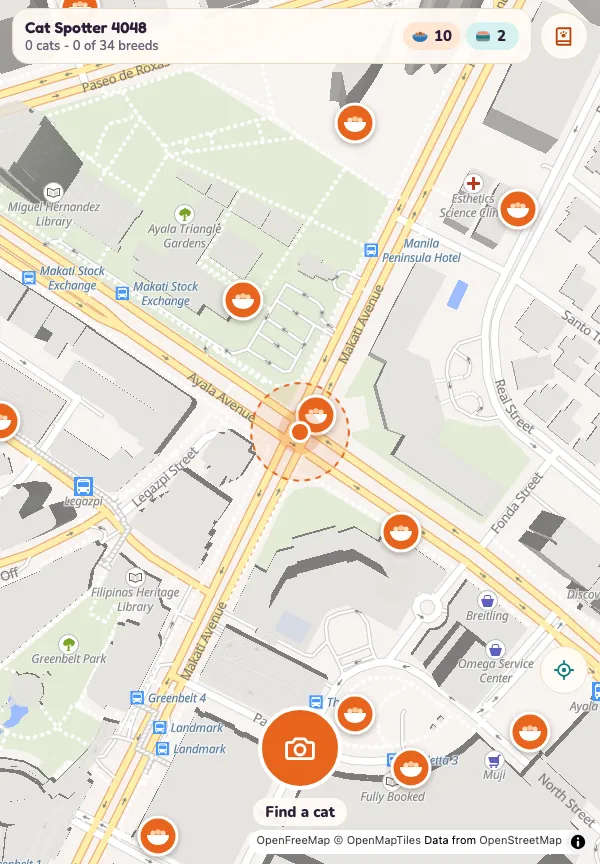
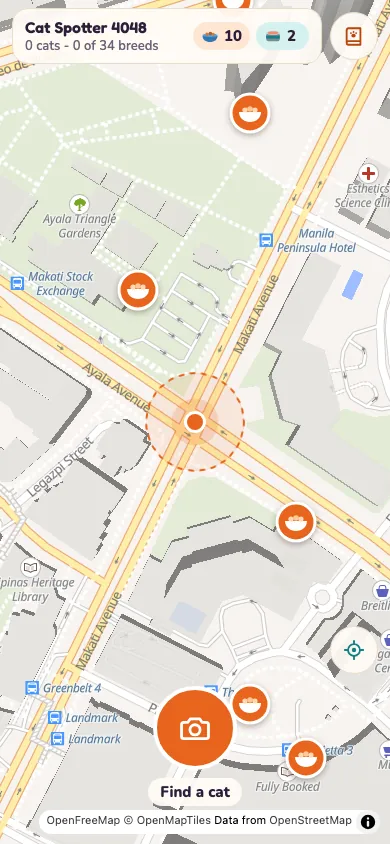
Cat Go adds one more item to your card: a cat. Open it at catgo.vlvd.net and allow your camera and location, which the game uses "to find treat stops and to record where each cat was caught." Make the nearest treat stop your turning point. When you get there, the card says "You're here. Grab what's in the bowl." Tap Collect treats and put the phone away again.
When you see a cat on a wall or a doorstep, stand still and take its photo, with the whole cat in the frame. Pick its breed from the list ("Mixed breed is always a safe pick"), then toss the in-game treats. The game's own tip fits a mindful walk: "Stay calm with your tosses." The cat is saved to your Catdex with its breed and the place you met it. Saving your record with an email is optional.
Play Cat Go in your browser: walk anywhere, photograph a real cat, lure it with food and catch it.
Walk anywhere, find a real cat, and catch it.
Visit catgo.vlvd.net↗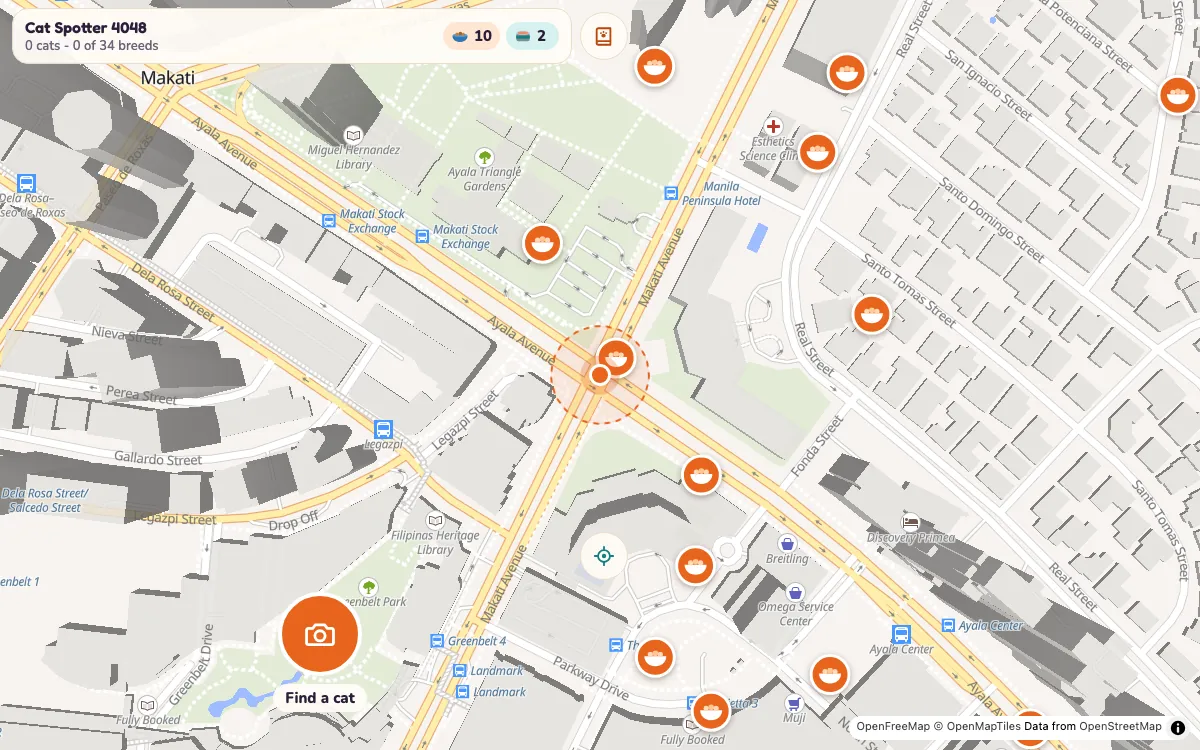
Comments
No comments yet.