What is a colour walk? How to walk the rainbow near home
What is a colour walk? It is a walk where you choose a colour before you set off, or the whole rainbow, and look for it as you go. The charity Living Streets lists it as one of its #Try20 tips, "Walk the rainbow", and says walking with a purpose can help you spot things you might not have noticed before. You need no kit and no special route: a street you know well works fine.
If a cat sitting on a wall would make your walk, Cat Go gives you a reason to look for one: it is a game in your browser where you photograph a real cat you meet and keep it in your Catdex with its breed and where you found it.
What a colour walk is, in plain terms
A colour walk is an ordinary walk with one job added. Before you leave, you pick a colour. Then, as you walk, you look for things in that colour: a door, a sign, a flower, a coat, a car.
There are two common ways to play it:
- One colour. You pick red, say, and count or photograph every red thing you pass.
- The whole rainbow. You try to find something in every colour before you get home.
Living Streets puts it simply: "choose a colour that you're going to look for, or search for the whole rainbow." It also suggests taking photos of the colourful things you spot. That is the whole idea. The rest is up to you.
Why looking for a colour changes a walk
Think about the last time you walked to the shop. If you are like most people, you had headphones in, hands in pockets, eyes on the pavement. Living Streets describes that exact walk in its blog about colour walks, and then describes what happened when one of its staff tried the opposite.
Sarah Lamey, who mainly works from home, set herself a 20-minute walk on her lunch break on a grey, drizzly January day. She writes that she finds walking "without a purpose" a bit of a mental challenge, because she can get caught up in repetitive thoughts when she has nothing to focus on. So she gave herself a purpose: find as many colours as she could.
She left her headphones at home and looked properly, from the sky above to the pavement below. Her area is urban and mostly grey, yet she filled her palette quickly, from candyfloss pink berries to crocheted colour on top of a red post box. She was surprised how much fun it was on a route she had walked many times. In her words, the walk "focussed my busy mind."
That is the point of a colour walk. The street does not change. What changes is that you have a reason to look at it.
What is a colour walk good for?
A colour walk is not a fitness plan, and you do not need one for it to be worth doing. Still, it fits neatly into a few goals people often have:
- Walking more often. The NHS says the easiest way to walk more is to make walking a habit. A small game makes the same walk feel new, which helps you go again tomorrow.
- A short walk that counts. The NHS says a brisk 10-minute daily walk has lots of health benefits and counts toward the 150 minutes of weekly activity in its guidelines for adults. A 20-minute colour walk can include a brisk stretch or two.
- A break from screens and thoughts. As Sarah found, a simple thing to look for can give a busy mind somewhere to rest.
For more on that last point, our post on whether walking is good for your mental health sets out what the NHS says.
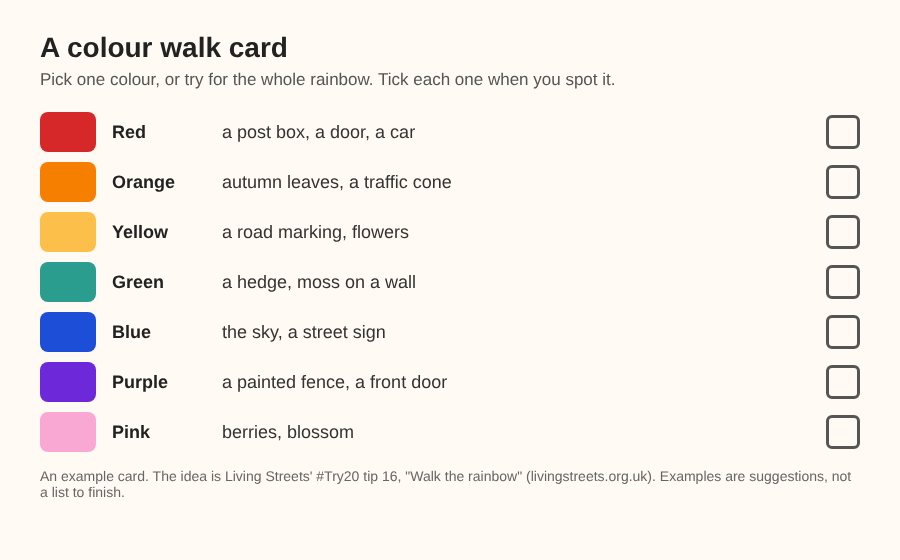
An example card. Pick one row, or try for all seven.
How to do a colour walk in 20 minutes
Living Streets' #Try20 tips are built around fitting 20 minutes of walking into your day, so 20 minutes is a good length for your first go.
- Pick your colour before you leave. A common colour, like green or red, is easy. A rarer one, like purple, makes you look harder. If you want a challenge, go for the whole rainbow.
- Leave the headphones behind. This is the step that made the difference in the Living Streets blog. You will notice more with your eyes and ears both free.
- Look high and low. Check the sky, roofs and windows, then fences and front gardens, then the pavement and road. Colour hides at every height.
- Keep moving between finds. Stop for a moment to look or take a photo, then walk on. If you want part of it brisk, walk fast enough that you could talk but not sing, which is how the NHS says to tell.
- Keep a light record. Snap a photo of each find, or keep a tally in your head. A photo makes it easy to look back later.
- Look back when you get home. Which find surprised you most? Which colour was hardest? That tells you what to pick next time.
A worked example: a red walk on a grey day
Here is how a first colour walk might go, on a dull afternoon in a built-up street.
- Minute 0. You pick red. Phone in your pocket, headphones on the table.
- Minutes 1 to 5. Easy finds first: a post box, a car, the brake lights at a junction. You start to see how much red there is once you look.
- Minutes 5 to 10. You walk briskly to the end of a long road and spot a red front door, a shop sign and a scarf on someone walking past.
- Minutes 10 to 15. On a side street you look up. Red brick chimneys, a window box, berries on a hedge. You take two photos.
- Minutes 15 to 20. You head home the same way. On the way back, a cat is sitting on a wall you passed before and did not notice.
At home you count twelve red things and choose your three best photos. Tomorrow you might try yellow, or walk the same loop with a friend and see who finds more. Sarah's own suggestion in the Living Streets blog is just that: take a friend along and see who can find the most colours.
Ways to play it with other people
A colour walk works alone, but it is easy to share.
- With a friend. Each of you counts the same colour, and whoever finds more picks the next one. Our post on finding a walking partner has ideas for who to ask.
- With children. Give each child their own colour, so nobody argues over the same find. The family walking game plan has more ways to keep a walk with kids moving.
- Online. Living Streets invites people to share photos of their colourful finds with the #Try20 hashtag. Its blog describes one January when it ran the idea as #MulticolouredMonday with Leeds Mind.
If you like this kind of walk, there are more in our list of walking challenge ideas, and a photo-first version in how to go on a photo walk near home.
Frequently asked questions
What is a colour walk?
A colour walk is a walk where you pick a colour, or the whole rainbow, before you set off and look for it as you go. Living Streets calls it "Walk the rainbow" in its #Try20 tips.
How long should a colour walk be?
Twenty minutes is a good start, since Living Streets' #Try20 tips are about fitting 20 minutes of walking into your day. A shorter walk still works if that is what you have time for.
Do I need a camera for a colour walk?
No. You can count finds in your head. Living Streets suggests taking photos of what you spot, so a phone helps if you want to look back later.
What colour should I pick first?
Pick one you will see often, such as red or green, so the first walk feels rewarding. Save a rarer colour, or the whole rainbow, for when you want a challenge.
Get started
Choose a colour now, put your headphones down and give yourself 20 minutes outside. Look high and low, keep moving between finds, and count what you see when you get home.
If you would like a cat to look out for on the way, Cat Go turns that part into a game. It needs your location, to find treat stops on its map and to record where each cat was caught, and your camera. You collect in-game kibble, and sometimes tuna, at treat stops as you walk. When you meet a cat, you take its photo, fitting the whole cat in the frame, then say which breed you think it is; "Mixed breed is always a safe pick." The food and the catch stay inside the game, so there is nothing to give the real cat. You can start under a made-up name, and saving your record with an email is optional.
Play Cat Go in your browser: walk anywhere, photograph a real cat, lure it with food and catch it.
Walk anywhere, find a real cat, and catch it.
Visit catgo.vlvd.net↗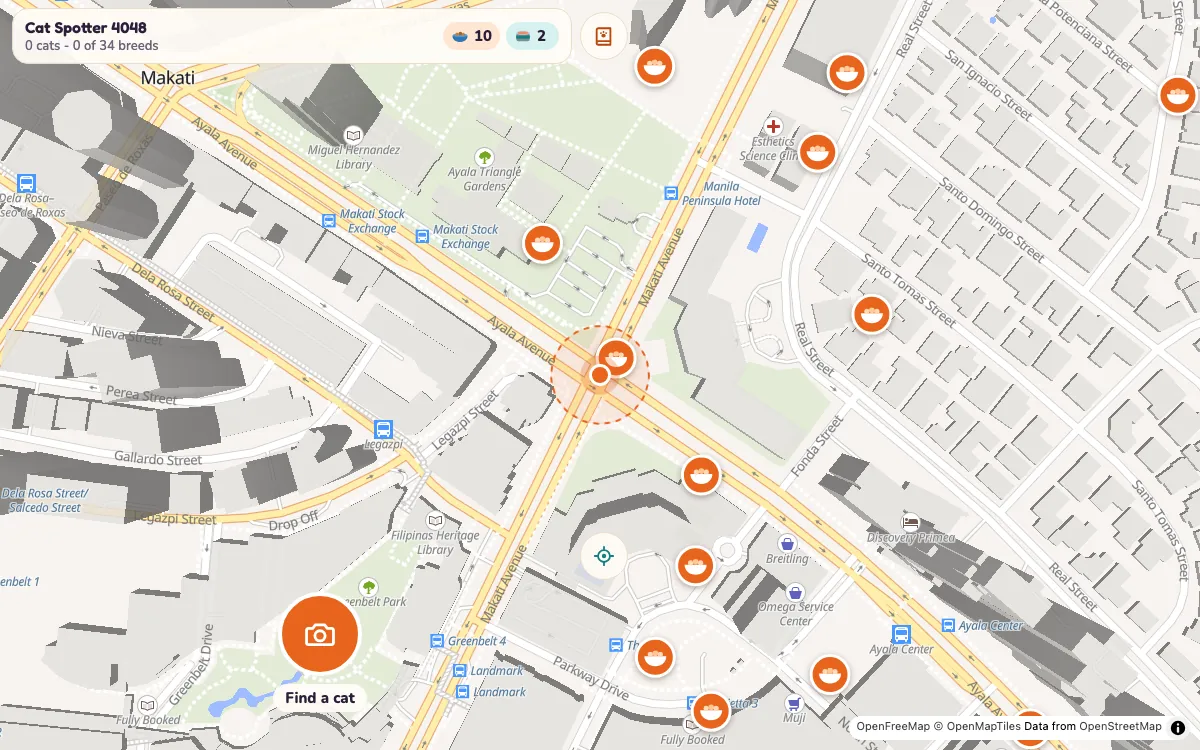
Comments
No comments yet.