How to go for a walk when you can't be bothered: the postbox rule
How to go for a walk when you can't be bothered: make the walk so small that saying no feels silly. Pick one near target, like the postbox at the end of your street, and let that be the whole walk. The NHS says you do not have to walk for hours, and a brisk 10-minute daily walk already counts. This guide gives you a tiny walk to start with, small fixes for the usual excuses, and a 10-minute plan to try today.
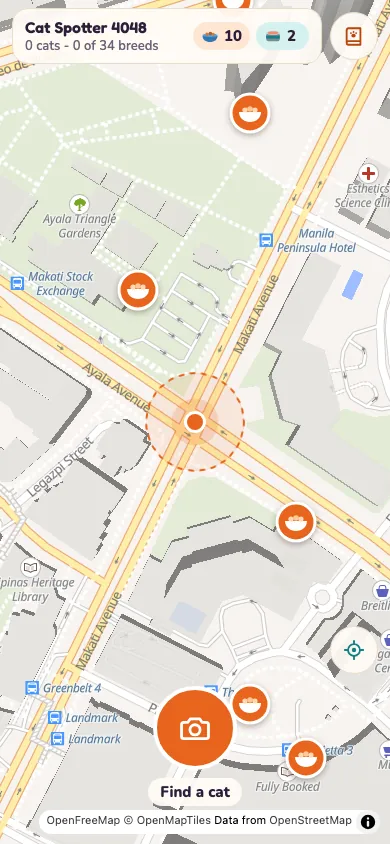
If a game helps you get out of the door, Cat Go gives you a near target too: walk to the closest treat stop on its map, and photograph any real cat you meet on the way.
Not being bothered is a real reason people stop walking
You are not alone in this. Living Streets' The Walkbook: Recipes for Walking and Wellbeing came out of a research project on how people in the UK walked during COVID-19. In spring 2021 its team ran a large public survey and asked people what got in the way of walking. The answers included bad weather, nowhere to walk, being bored of the same route, a lack of time, and, plainly, "can't be bothered".
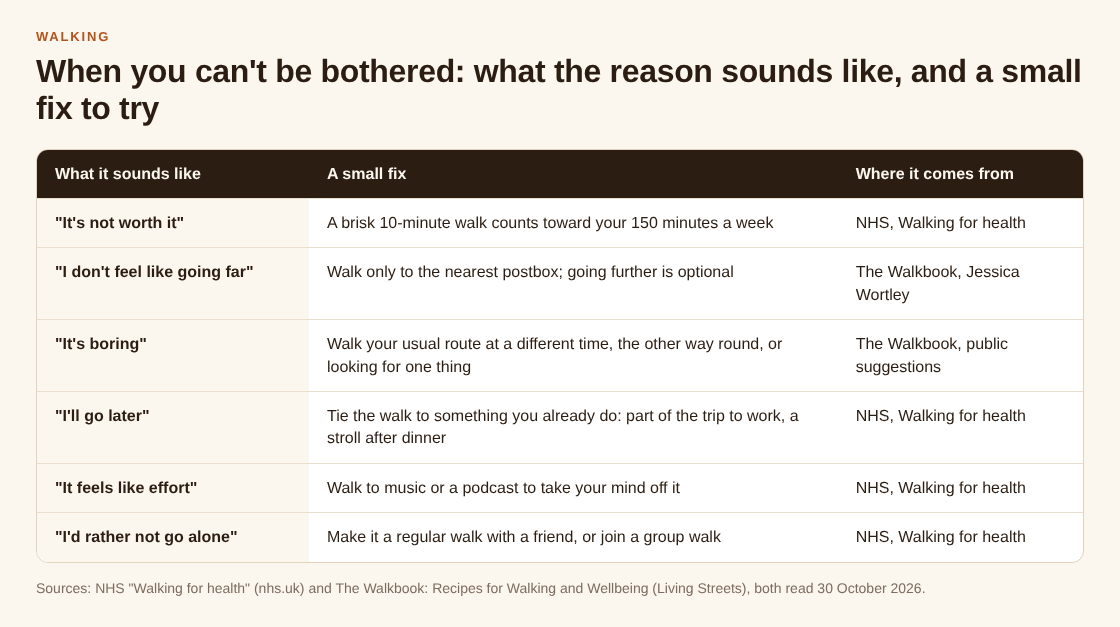
The book then asked 30 artists to write walking recipes for those barriers. Its authors are careful: they do not claim a creative walk fixes health problems, only that it offers a way to keep walking. That is the right size of promise for a day when you cannot face the door.
The postbox rule: a walk too small to refuse
One recipe in the book speaks straight to not being bothered. It is called "Just go to the Postbox at the end of the Street", by the artist Jessica Wortley, and she calls it a guide for walking as an act of self-care.
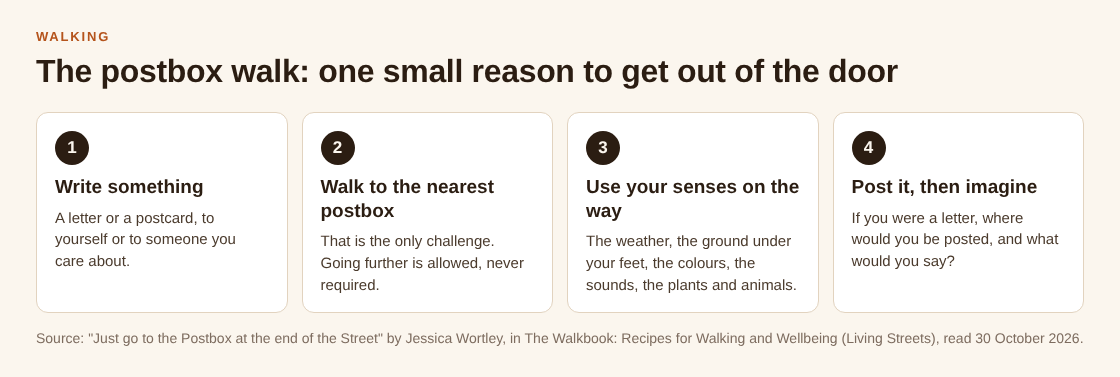
- Write something first. A letter or a postcard, to yourself or to someone you care about.
- Head to the nearest postbox. Your only challenge is to go that far. You can go further if you want, but you do not have to.
- Use your senses on the way. What is the weather like? What does the ground under your feet feel like? How many colours can you see? What can you hear? Which plants and animals can you spot?
- Post it, then imagine. Think of a place you would like to travel to. If you were a letter and could be posted, where would you go, and what would you say?
The trick is in step 2. A walk with a fixed, near end point has a clear finish line, and the letter gives you a reason to reach it. No postcard to hand? Any short errand with a clear end works the same way.
How to go for a walk when you can't be bothered: 5 small fixes
Most excuses come back to the same few thoughts. Here is a small fix for each, from the NHS Walking for health page and the Walkbook's suggestions from the public.
- "It is not worth it." The NHS says a brisk 10-minute daily walk has lots of health benefits and counts toward your 150 minutes of weekly exercise. Ten minutes is worth it.
- "I will go later." Tie the walk to something you already do. The NHS suggests walking part of your journey to work, leaving the car for short trips, or a stroll with family or friends after dinner.
- "It feels like effort." Walk to music or a podcast. The NHS says it can take your mind off the effort and help you get into a rhythm.
- "It is boring." Walk your usual route at a different time of day, go the other way round, or pick one thing to look for, such as only the colour red. These come from the Walkbook's public suggestions.
- "I would rather not go alone." Make it a regular walk with a friend, or try a group walk. The NHS calls walking in a group a great way to start and stay motivated.
For more ways to change a walk you are tired of, see creative walking ideas to try near home, and for company, how to find a walking partner.
A 10-minute walk, worked through
Here is the postbox rule and the NHS tips put together. It is a grey Tuesday, you have been sitting since lunch, and you do not feel like it.
- Lower the bar (1 minute). Do not decide to "go for a walk". Decide to post one card. Write two lines to a friend, or to yourself.
- Shoes on, nothing else (1 minute). The NHS says any comfortable shoes that support your feet and do not cause blisters will do. No kit, no plan.
- Walk to the postbox (3 minutes). Put on one song you like. On the way, count the colours you can see and notice what the ground feels like.
- Post the card (a few seconds). That is the walk done. You have kept your promise.
- Choose: home or one more street (5 minutes). If you feel like it, take a different way back. If not, go home the way you came. Both count.
Tomorrow, keep the same small target. The NHS says that if you are not very active but able to walk, you should build your distance up gradually, so let the extra street come when it wants to. When the walk feels easy, the walking plan for beginners takes you from 10 minutes a day upward.
From one walk to a habit
The NHS calls making walking a habit the easiest way to walk more. A habit needs the same cue each day, so keep the postbox walk at the same time, after the same thing: after lunch, after the school run, or after you shut the laptop.
Once the walk is regular, you can ask a bit more of it. The NHS guidelines for adults suggest some physical activity every day and at least 150 minutes of moderate activity a week, and they say to break up long periods of sitting. To check your pace, the NHS gives a simple test: walking briskly means you can still talk but cannot sing the words to a song. Our post on what counts as a brisk walk covers it in more detail.
If you have not exercised for some time, or you have a medical condition or concern, the NHS says to speak to your GP first.
Frequently asked questions
How do I make myself go for a walk when I can't be bothered?
Make the walk tiny and give it a clear end, such as the nearest postbox. The Walkbook's postbox recipe says your only challenge is to go that far.
Is a 10-minute walk worth it?
Yes. The NHS says a brisk 10-minute daily walk has lots of health benefits and counts toward your 150 minutes of weekly exercise.
How do I make a walk less boring?
Walk your usual route at a different time of day or the other way round, or pick one thing to look for. Walking to music or a podcast also helps, the NHS says.
How do I turn a short walk into a habit?
Tie it to something you already do each day, such as part of your trip to work or a stroll after dinner. Add distance gradually.
Get started: a near target with Cat Go
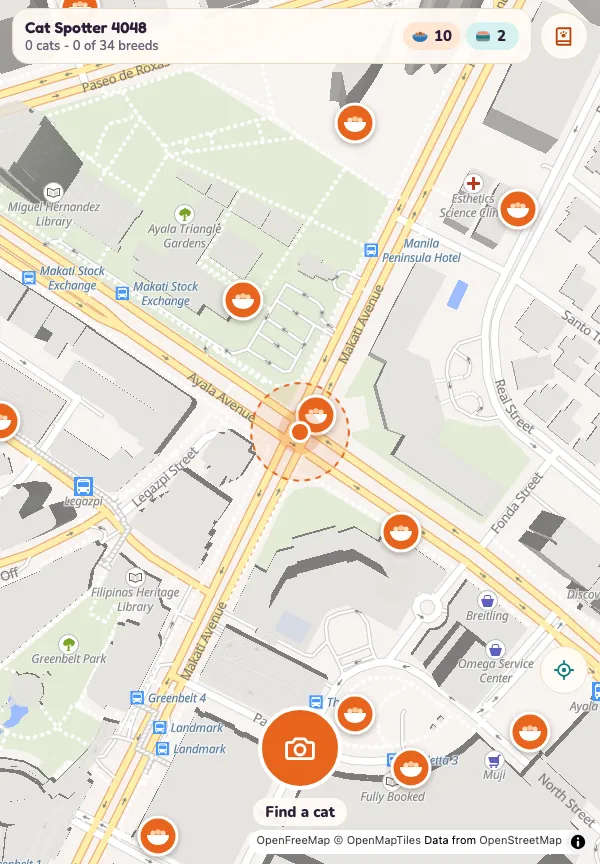
Cat Go can be your postbox. Open it at catgo.vlvd.net and allow your camera and location, which it uses to find treat stops and to record where each cat was caught. Pick the nearest treat stop on the map as today's only challenge. When you are close enough, the card says "You're here. Grab what's in the bowl." Tap Collect treats, and the walk is done. The stop then refills, so it is there again tomorrow.
If you meet a real cat on the way, take its photo with the whole cat in the frame, pick its breed from the list ("Mixed breed is always a safe pick") and toss the in-game treats. The cat stays in your Catdex with the place you met it: one more reason to have gone out.
Play Cat Go in your browser: walk anywhere, photograph a real cat, lure it with food and catch it.
Walk anywhere, find a real cat, and catch it.
Visit catgo.vlvd.net↗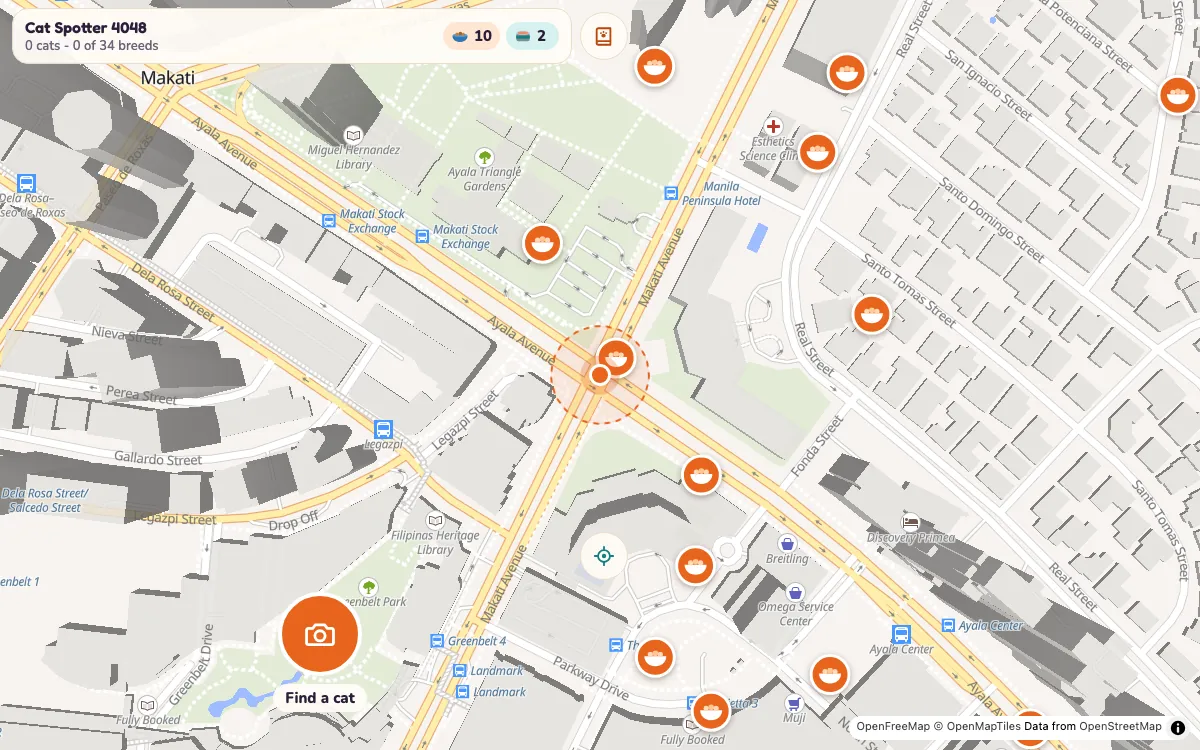
Comments
No comments yet.