How to plan a walking scavenger hunt in your own street
A walking scavenger hunt is a list of things to find, taken on a walk near home: a post box, a feather, a puddle, something yellow. The charity Living Streets suggests it as tip 8 of its #Try20 tips, to "see how many different things you can spot in your local area". Planning one takes about ten minutes, and this guide walks you through it.
If you want one more thing on the list that is a little harder to find, Cat Go adds it: a game in your browser where you photograph a real cat you meet on your walk and keep it in your Catdex with its breed and where you found it.
What a walking scavenger hunt is
A scavenger hunt on foot is simple. You make a list, you walk, and you tick things off as you spot them. Nobody collects anything. You look, you point, and maybe you take a photo.
Living Streets adds a second way to play: counting. Instead of spotting something once, you count how many times you see it on the walk. Its own examples are park benches, pedestrian crossings and people. Counting keeps a hunt going even after the easy finds are ticked.
It suits almost anyone. Children like the list. Adults like having a reason to look up from the pavement. And a group of mixed ages can all play the same game at their own level.
Step 1: pick a route and a time
Start with the walk, not the list. A route you already know is fine, because the hunt is what makes it new.
- Keep it short the first time. Living Streets' #Try20 tips are about fitting 20 minutes of walking into your day. Twenty minutes out and back is plenty for a first hunt.
- Mix the scenery. A route that passes houses, a few shops and a bit of green gives you more to find than a single long road.
- Stay on pavements and paths. Everything on the list should be something you can see from a public path, never something that means going into a garden or onto private land.
If you want ideas for routes, our post on how to find new walking routes near you goes street by street.
Step 2: build the list in three parts
The best lists mix easy finds with a few that take real looking. Living Streets' own printable scavenger hunt sheet does this well. It has street things like a post box, a street light, a gate and a park bench; nature finds like a feather, a twig, a pebble and a green leaf; and open ones like "something smooth" and "something yellow".
That gives you a simple shape for your own list:
- On the street. Five or six things you will almost surely pass: a post box, a pedestrian crossing, a street light.
- In nature. Five or six things that depend on the season and the route: a brown leaf, a flower, a feather.
- Look twice. A few open items, where the walker decides what counts: something smooth, something yellow, a footprint.
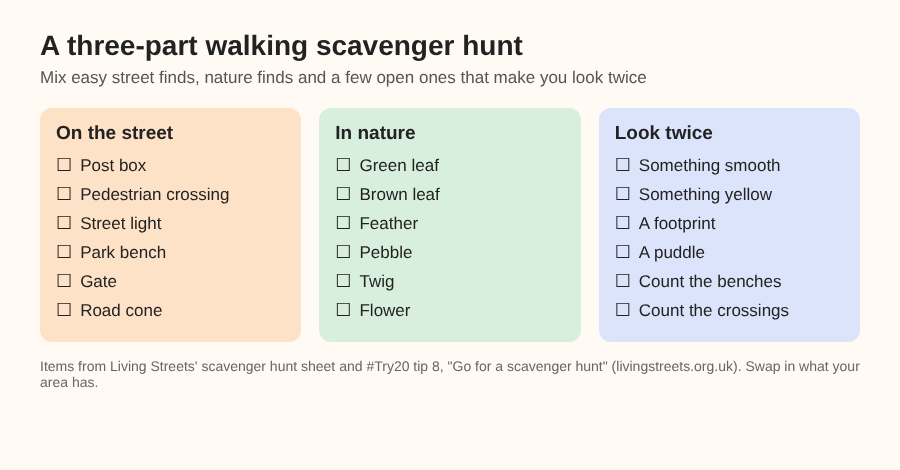
An example list built from Living Streets' scavenger hunt sheet. Swap in what your area has.
Fifteen to twenty items is a good size. Too few and the hunt ends in five minutes. Too many and the walk becomes a chore.
Step 3: add counting and a few rules
Counting is what makes a hunt last. Pick one or two things to count all the way round, like benches or crossings, as Living Streets suggests. At the end, compare totals with what you guessed before you left.
Then agree a few rules before you set off:
- Look, do not take. A feather or a leaf can be photographed where it is.
- Stop to point. When someone spots something, everyone stops on the pavement first, then looks.
- Animals are for looking at. A dog, a duck or a cat on a wall goes on the list from a distance. Nobody chases, feeds or touches an animal they meet.
- Keep walking between finds. If you want some of the walk to be brisk, the NHS says you are walking briskly if you can still talk but cannot sing the words to a song.
How to plan a walking scavenger hunt for different ages
Living Streets' family walking activities booklet, made for primary school-aged children, splits its activities by age. Two of them show how to tune a hunt:
- Ages 4 to 7: I Spy. A short list of things a young child can spot on most streets, such as a post box, a bus stop, flowers, and a stream, pond or puddle, with a last question: "What else did you see?"
- Ages 8 to 11: local snapshots. Photograph three local landmarks, then say which one is your favourite and why.
So for young children, keep the list short and visual. For older children, swap some items for tasks: photograph something, count something, explain a choice. For adults, open items like "something smooth" and counting work best.
For more ways to keep a walk with children moving, see our outdoor walking game plan for families with kids.
A worked example: a 20-minute after-dinner hunt
Here is how one evening hunt might go for a family of three.
- Before you leave (5 minutes). Write a list of 15 things in three parts: six street things, six nature things, three look-twice items. Everyone guesses how many benches you will pass.
- Minutes 0 to 8. Easy finds come fast: a post box, a street light, a gate, a green leaf. The youngest calls each one out.
- Minutes 8 to 14. You turn down a quieter road. Finds slow down, so someone starts counting crossings. A puddle and a feather go on the list.
- Minutes 14 to 20. On the way home you hunt the last few. "Something smooth" turns out to be a pebble by a wall. Nobody has seen anything yellow until a road sign.
- Back home. You tally: 13 of 15 found, and four benches against a guess of six. The two missing items go to the top of tomorrow's list.
The NHS lists a stroll with family or friends after dinner as one way to make walking a habit, and a hunt gives everyone a reason to come along again. Our post on making an evening walk a habit has more on that. For more one-idea walks like this, see our walking challenge ideas.
Frequently asked questions
What should be on a walking scavenger hunt list?
Mix easy street things, such as a post box or a park bench, with nature finds, such as a feather or a leaf, and a few open items like "something yellow". Living Streets' printable sheet uses this mix.
How long should a walking scavenger hunt take?
About 20 minutes is a good first hunt, in line with Living Streets' #Try20 idea of fitting 20 minutes of walking into your day. Lengthen the list, not the rules, if you want a longer walk.
Can adults do a walking scavenger hunt?
Yes. Adults often enjoy counting challenges and open items most, since they make you look at a familiar street in a new way.
Do you need to print a list?
No. A list on paper, on your phone or in your head all work. Living Streets offers a printable sheet if you want one ready made.
Get started
Write your list now: six street things, six nature things and three look-twice items, plus one thing to count. Pick a 20-minute route on public paths, agree the rules, and go.
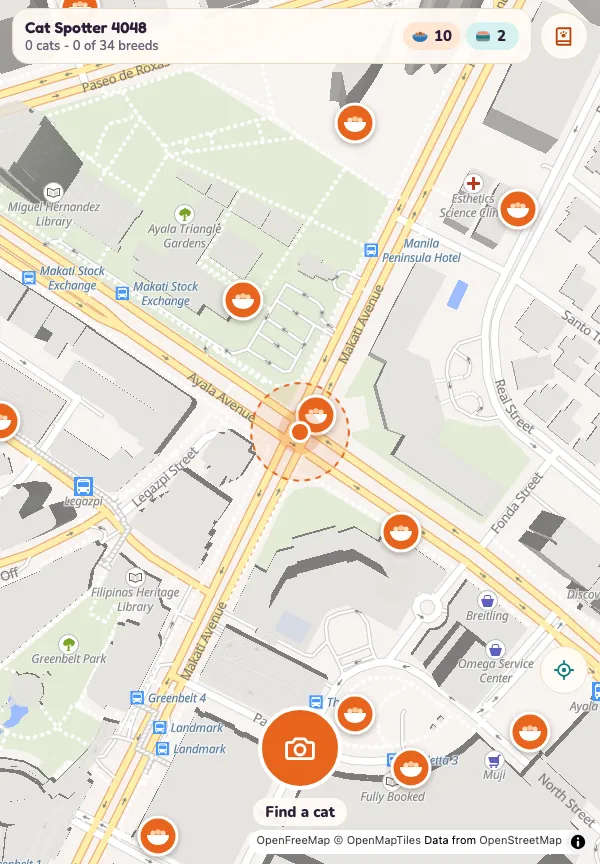
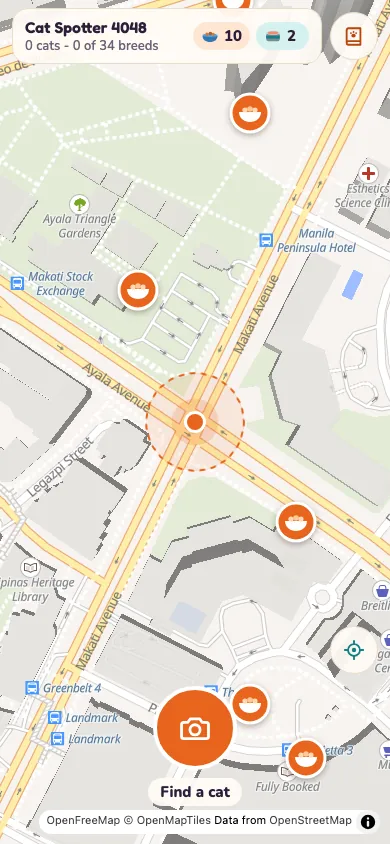
If you would like a cat on your list, Cat Go makes that part a game. It needs your location, to find treat stops on its map and to record where each cat was caught, and your camera. You collect in-game kibble, and sometimes tuna, at treat stops as you walk. When you meet a cat, you take its photo, fitting the whole cat in the frame, then say which breed you think it is; "Mixed breed is always a safe pick." The food and the catch stay inside the game, so the real cat is only looked at. You can start under a made-up name, and saving your record with an email is optional.
Play Cat Go in your browser: walk anywhere, photograph a real cat, lure it with food and catch it.
Walk anywhere, find a real cat, and catch it.
Visit catgo.vlvd.net↗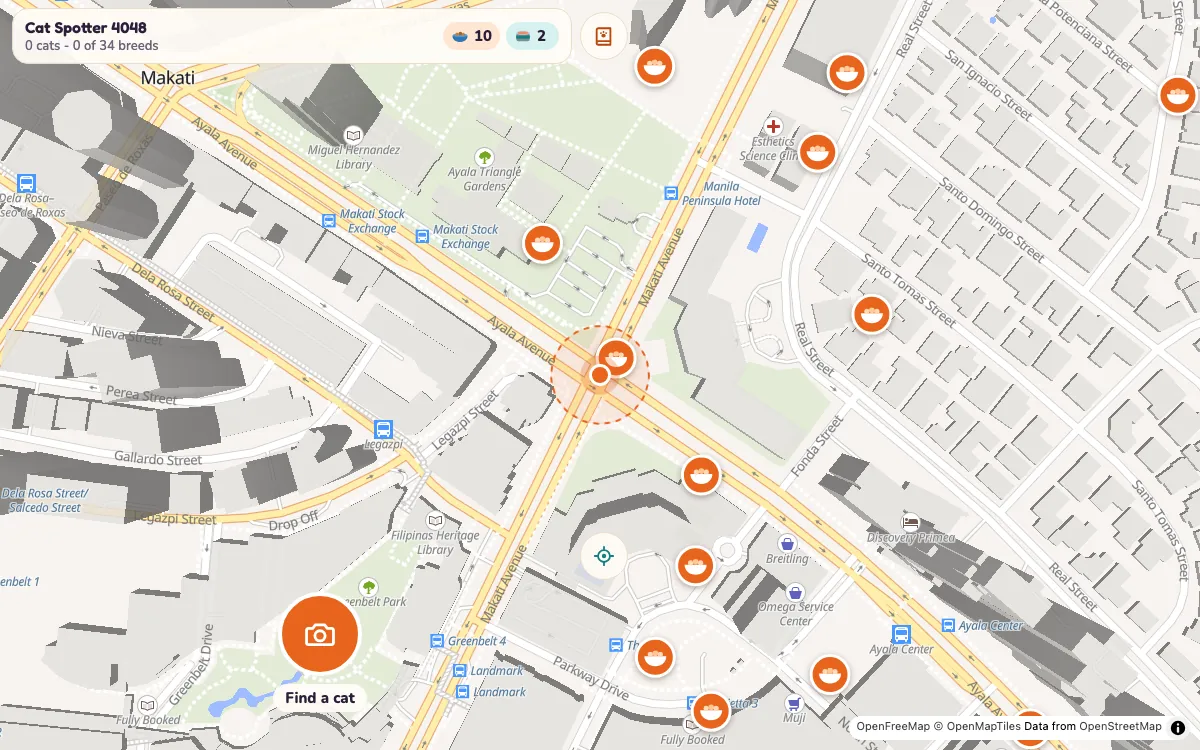
Comments
No comments yet.